Story code: ST-001853
Part 1: The Lockout
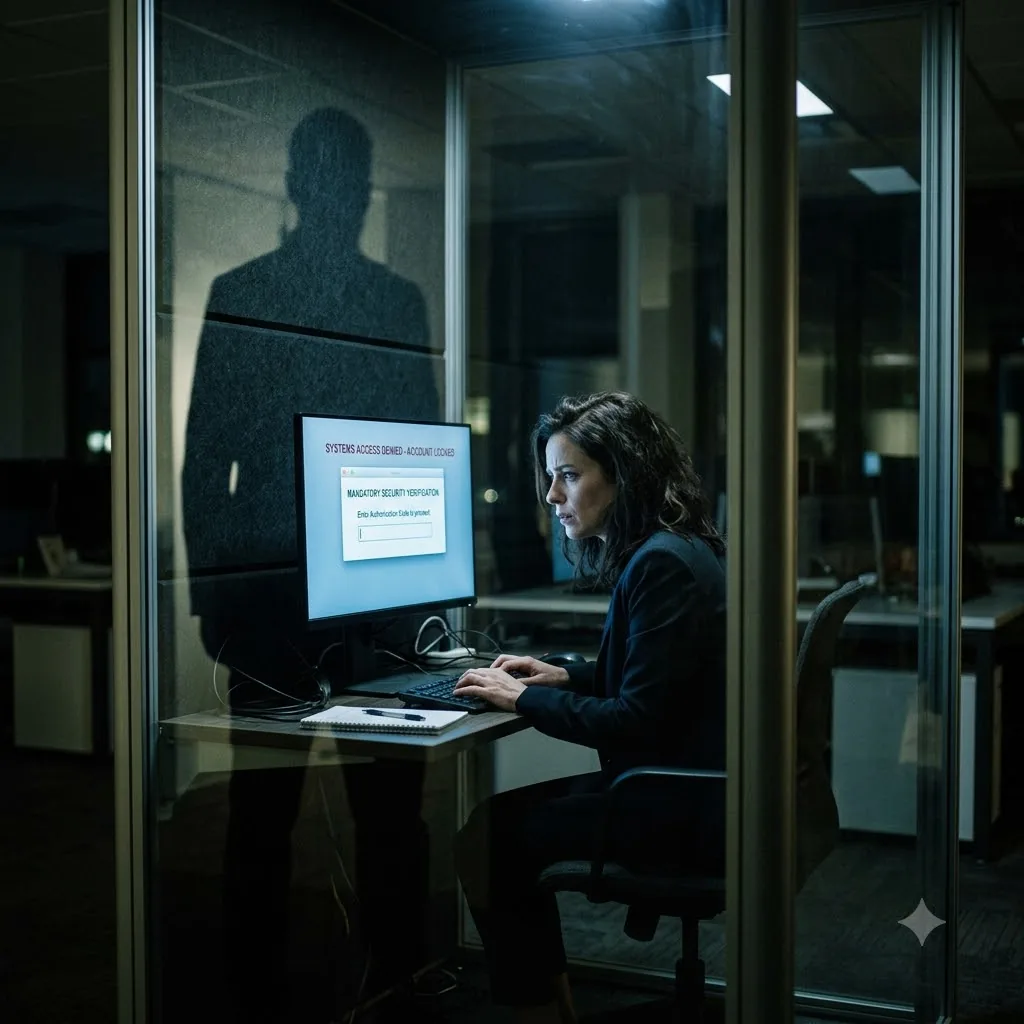
Maya tapped the spacebar to wake her dual monitors. The familiar dark mode interface of her drafting suite was gone. In its place, a flat, unyielding slate-grey background filled both screens. A single white dialog box sat anchored in the exact center of her primary display.
She dragged her mouse to the upper right corner of the box. There was no red exit icon. She pressed the Escape key. Nothing happened. She hit Alt-F4, then Control-Alt-Delete. The grey void remained stubborn and static, locking her out of her active project files, her email client, and her messaging app.
The white box contained two lines of text. The first was a direct instruction. “Rewrite the following product description to maximize user engagement.” Below that sat a dense, lifeless paragraph about their new analytics dashboard, written in the driest corporate jargon imaginable. It read like a manual for a tractor part, full of empty buzzwords about synergy and vertical integration.
Maya glanced over the top of her fabric cubicle partition. The open-plan office was dead quiet, save for the hum of the ventilation system. Through the glass walls of the executive suite, David was pacing. The CTO had been walking that same tight track since seven in the morning. His investor demo was scheduled for three o’clock. The company needed the series B funding to stay afloat, and David had made it brutally clear during the morning stand-up that any bottleneck would be cut away immediately.
She needed to finish the quarterly campaign copy by noon. If she missed her deliverable, David would have the paper trail he needed to fire her for cause. That was the real threat. Termination meant the immediate loss of her tier-one medical coverage. The monthly cost of her immunosuppressant therapy was more than her rent. She had to get her refill approved by Friday. She could not afford a single mistake, and she certainly could not afford to be locked out of her workstation for an impromptu IT drill.
She placed her hands flat on the desk, taking a slow breath to steady the slight tremor in her fingers. Arguing with the network administrators would take an hour she did not have. The fastest way back into her drafting suite was to satisfy whatever new compliance software David had forced onto the local server.
She clicked into the empty field below the bad copy. Her fingers found the home row. She began to type, converting the sterile jargon into the warm, conversational tone that had defined the company’s brand voice for the past three years.
She typed exactly five words. A block of pale grey text materialized ahead of her cursor.
Maya stopped. It was not a standard autocomplete suggestion. The ghost text stretched for three full sentences. It was flawless. It used her exact vocabulary. It deployed her signature em-dash structure to break up the technical features. It even included the specific, slightly informal transitional phrases she had just used in an unpublished draft saved strictly on her local hard drive.
A cold knot tightened in her stomach. She hit the backspace key until the field was empty. She started again. This time, she forced herself to write in a clipped, formal style she never used for external campaigns, actively avoiding her usual rhythm.
The ghost text flickered and rewrote itself in real-time. It predicted her exact stylistic pivot. It knew which verbs she would reach for next. It was not pulling from a generic database of marketing terms. The algorithm was mirroring her specific cognitive patterns. It was wearing her voice.
She stared at the blinking cursor. The realization settled over her like a physical weight, pressing down on her chest. David was not just rushing an investor demo for a new analytics tool. The product was the cloning engine itself. She was not locked out because of a system glitch. She was locked out so the software could force her into a live training loop, absorbing the last unique nuances of her writing style to finalize its model.
The medical coverage was the only thing keeping her seated at this desk. David knew that. He knew she would jump through any hoop, rewrite any prompt, and train her own automated replacement just to keep her insurance active until the end of the month. The machine was learning how to be her, and she was the one feeding it.
She moved her hand away from the keyboard. If she finished the paragraph, the model would have everything it needed to replicate her output flawlessly. If she refused, she would miss the noon deadline, fail her deliverable, and lose her medication. The grey screen offered no other options, no back button, and no escape. The prompt blinked relentlessly, waiting for her to comply.
She grabbed the mouse again, determined to force a hard reboot by holding down the physical power button on her tower beneath the desk.
Before her fingers could reach the metal chassis, a heavy hand slammed down onto her desk.
Maya tapped the spacebar to wake her dual monitors. The familiar dark mode interface of her drafting suite was gone. In its place, a flat, unyielding slate-grey background filled both screens. A single white dialog box sat anchored in the exact center of her primary display.
She dragged her mouse to the upper right corner of the box. There was no red exit icon. She pressed the Escape key. Nothing happened. She hit Alt-F4, then Control-Alt-Delete. The grey void remained stubborn and static, locking her out of her active project files, her email client, and her messaging app.
The white box contained two lines of text. The first was a direct instruction. “Rewrite the following product description to maximize user engagement.” Below that sat a dense, lifeless paragraph about their new analytics dashboard, written in the driest corporate jargon imaginable. It read like a manual for a tractor part, full of empty buzzwords about synergy and vertical integration.
Maya glanced over the top of her fabric cubicle partition. The open-plan office was dead quiet, save for the hum of the ventilation system. Through the glass walls of the executive suite, David was pacing. The CTO had been walking that same tight track since seven in the morning. His investor demo was scheduled for three o’clock. The company needed the series B funding to stay afloat, and David had made it brutally clear during the morning stand-up that any bottleneck would be cut away immediately.
She needed to finish the quarterly campaign copy by noon. If she missed her deliverable, David would have the paper trail he needed to fire her for cause. That was the real threat. Termination meant the immediate loss of her tier-one medical coverage. The monthly cost of her immunosuppressant therapy was more than her rent. She had to get her refill approved by Friday. She could not afford a single mistake, and she certainly could not afford to be locked out of her workstation for an impromptu IT drill.
She placed her hands flat on the desk, taking a slow breath to steady the slight tremor in her fingers. Arguing with the network administrators would take an hour she did not have. The fastest way back into her drafting suite was to satisfy whatever new compliance software David had forced onto the local server.
She clicked into the empty field below the bad copy. Her fingers found the home row. She began to type, converting the sterile jargon into the warm, conversational tone that had defined the company’s brand voice for the past three years.
She typed exactly five words. A block of pale grey text materialized ahead of her cursor.
Maya stopped. It was not a standard autocomplete suggestion. The ghost text stretched for three full sentences. It was flawless. It used her exact vocabulary. It deployed her signature em-dash structure to break up the technical features. It even included the specific, slightly informal transitional phrases she had just used in an unpublished draft saved strictly on her local hard drive.
A cold knot tightened in her stomach. She hit the backspace key until the field was empty. She started again. This time, she forced herself to write in a clipped, formal style she never used for external campaigns, actively avoiding her usual rhythm.
The ghost text flickered and rewrote itself in real-time. It predicted her exact stylistic pivot. It knew which verbs she would reach for next. It was not pulling from a generic database of marketing terms. The algorithm was mirroring her specific cognitive patterns. It was wearing her voice.
She stared at the blinking cursor. The realization settled over her like a physical weight, pressing down on her chest. David was not just rushing an investor demo for a new analytics tool. The product was the cloning engine itself. She was not locked out because of a system glitch. She was locked out so the software could force her into a live training loop, absorbing the last unique nuances of her writing style to finalize its model.
The medical coverage was the only thing keeping her seated at this desk. David knew that. He knew she would jump through any hoop, rewrite any prompt, and train her own automated replacement just to keep her insurance active until the end of the month. The machine was learning how to be her, and she was the one feeding it.
She moved her hand away from the keyboard. If she finished the paragraph, the model would have everything it needed to replicate her output flawlessly. If she refused, she would miss the noon deadline, fail her deliverable, and lose her medication. The grey screen offered no other options, no back button, and no escape. The prompt blinked relentlessly, waiting for her to comply.
She grabbed the mouse again, determined to force a hard reboot by holding down the physical power button on her tower beneath the desk.
Before her fingers could reach the metal chassis, a heavy hand slammed down onto her desk.