Story code: ST-001883
Part 1: The Relief Check
The ticket printer rattled out another three orders, but the sound was quickly drowned out by the hiss of flank steak hitting the flat top. Mateo stood at the center of the line, his white coat clinging to his back, sweat stinging the corners of his eyes. The exhaust fan above him had been rattling a broken rhythm since Tuesday, doing nothing to pull the heavy, grease-laden air out of the cramped kitchen. It was only three days after the ridge fires had swept through the valley, and the smell of burning pine and melting plastic still seemed baked into Mateo’s skin. He flipped the steaks, wiping a flour-dusted hand on his apron.
The swinging metal door from the front of house slammed open. Hector, the shift manager, shoved his head into the suffocating heat of the line, waving a stack of damp napkins at Mateo to get his attention. Hector pointed a thumb over his shoulder toward the back alley exit. He told Mateo there was a government man sitting in a dark SUV out by the dumpsters, asking for the guy who lived at lot forty-two in the burned-out trailer park.
Mateo’s chest tightened, a sudden rush of adrenaline cutting right through his exhaustion. He had submitted the disaster relief application from a library computer the morning after the evacuation, desperate for the federal survival cash. He nodded at Hector, pulling his tongs from the grill and handing them blindly to the prep cook. He stripped off his stained apron, his mind racing through the rehearsed details of his claim. He needed that direct deposit to secure a weekly motel room before the crowded church shelter kicked everyone out on Sunday.
He stepped off the line and jogged to the cramped employee locker area. His fingers fumbled with the combination lock, slick with fry grease and sudden nerves. Inside his locker, resting perfectly flat beneath his street shoes, was a plastic zip-top bag. He pulled it out, handling it with extreme care. Inside was the lease agreement. It was a complete forgery, drafted on a borrowed laptop and printed at an all-night copy shop, carefully aged with a dusting of ash and a few precise folds to look like it had survived the chaotic escape from the fire zone. He needed the paper to prove residency since he paid his rent in cash to a landlord who had vanished the moment the evacuation orders were issued.
Mateo tucked the plastic bag into the breast pocket of his chef’s coat and pushed the heavy steel bar of the back exit.
The midday valley sun hit him like a physical blow. The light was blinding, a harsh, shadowless glare bouncing off the cracked concrete of the alleyway. The air outside was actually hotter than the kitchen, thick with the stagnant, acrid haze of the lingering wildfires. Mateo squinted, raising a hand to shield his eyes as the heavy metal door clicked shut behind him, cutting off the chaotic noise of the restaurant.
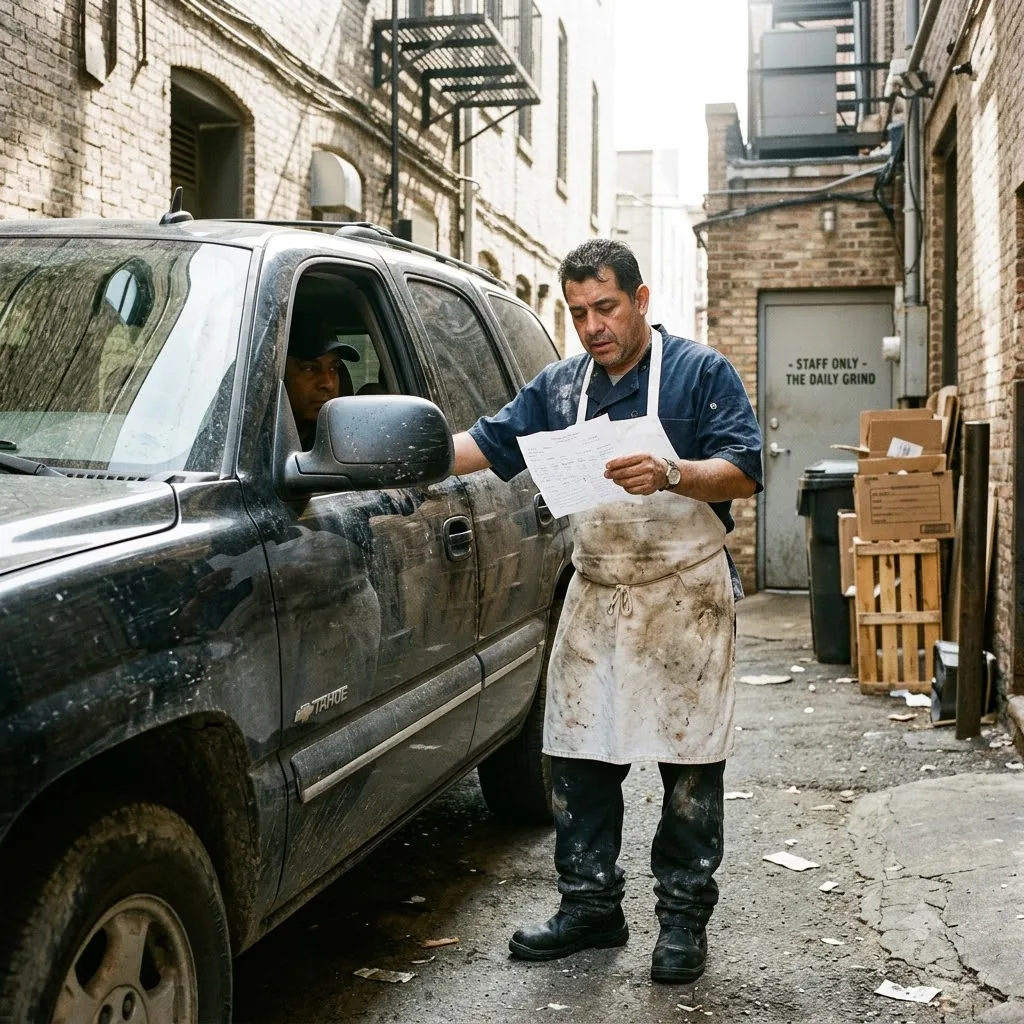
Parked illegally across the loading zone was a black SUV with dark tinted windows. The engine was idling, a low, powerful hum vibrating against the brick walls of the alley. A man leaned against the front grille, his arms crossed over a dark blue polo shirt. He wore dark sunglasses and tactical cargo pants, looking entirely out of place next to the overflowing grease traps and stacks of broken cardboard boxes.
Mateo took a deep breath, pasting on a respectful, desperate expression, and walked toward the vehicle. He pulled the plastic bag from his pocket, extracting the forged lease with trembling fingers. He stopped a few feet from the man, instantly launching into his prepared explanation. He stated his name clearly, pointing to the printed name on the document. He described the total loss of the trailer at lot forty-two, the towering wall of flame that had taken everything he owned, the frantic drive out of the canyon in the middle of the night. He held the paper forward, explaining that this was his only proof of address, the single document he had managed to save from the ashes.
The man in the polo shirt did not reach for the paper. He did not look at the carefully forged signatures or the intentionally faded ink. He remained perfectly still, leaning against the humming grille of the unmarked vehicle with his arms crossed over his chest.
Mateo stopped talking. The silence in the alley stretched out, thick and suffocating, broken only by the low rumble of the SUV engine and the distant wail of a siren on the main avenue. Mateo pushed the paper a little closer, his voice wavering as he insisted the inspector needed to see the lot number to authorize the relief funds.
The man slowly tilted his head down. His gaze, hidden completely behind the mirrored lenses of his sunglasses, dropped past the forged lease, past Mateo’s shaking hands, and settled firmly on Mateo’s flour-dusted, grease-stained non-slip work boots. The man stared at the shoes for a long, agonizing moment, entirely ignoring the desperate man holding the paper.
Then, without looking back up, the man reached his right hand to his left shoulder. His fingers wrapped around a black plastic radio microphone clipped to his collar. He pressed the heavy button on the side, filling the quiet alley with a sharp, loud burst of static.
The ticket printer rattled out another three orders, but the sound was quickly drowned out by the hiss of flank steak hitting the flat top. Mateo stood at the center of the line, his white coat clinging to his back, sweat stinging the corners of his eyes. The exhaust fan above him had been rattling a broken rhythm since Tuesday, doing nothing to pull the heavy, grease-laden air out of the cramped kitchen. It was only three days after the ridge fires had swept through the valley, and the smell of burning pine and melting plastic still seemed baked into Mateo’s skin. He flipped the steaks, wiping a flour-dusted hand on his apron.
The swinging metal door from the front of house slammed open. Hector, the shift manager, shoved his head into the suffocating heat of the line, waving a stack of damp napkins at Mateo to get his attention. Hector pointed a thumb over his shoulder toward the back alley exit. He told Mateo there was a government man sitting in a dark SUV out by the dumpsters, asking for the guy who lived at lot forty-two in the burned-out trailer park.
Mateo’s chest tightened, a sudden rush of adrenaline cutting right through his exhaustion. He had submitted the disaster relief application from a library computer the morning after the evacuation, desperate for the federal survival cash. He nodded at Hector, pulling his tongs from the grill and handing them blindly to the prep cook. He stripped off his stained apron, his mind racing through the rehearsed details of his claim. He needed that direct deposit to secure a weekly motel room before the crowded church shelter kicked everyone out on Sunday.
He stepped off the line and jogged to the cramped employee locker area. His fingers fumbled with the combination lock, slick with fry grease and sudden nerves. Inside his locker, resting perfectly flat beneath his street shoes, was a plastic zip-top bag. He pulled it out, handling it with extreme care. Inside was the lease agreement. It was a complete forgery, drafted on a borrowed laptop and printed at an all-night copy shop, carefully aged with a dusting of ash and a few precise folds to look like it had survived the chaotic escape from the fire zone. He needed the paper to prove residency since he paid his rent in cash to a landlord who had vanished the moment the evacuation orders were issued.
Mateo tucked the plastic bag into the breast pocket of his chef’s coat and pushed the heavy steel bar of the back exit.
The midday valley sun hit him like a physical blow. The light was blinding, a harsh, shadowless glare bouncing off the cracked concrete of the alleyway. The air outside was actually hotter than the kitchen, thick with the stagnant, acrid haze of the lingering wildfires. Mateo squinted, raising a hand to shield his eyes as the heavy metal door clicked shut behind him, cutting off the chaotic noise of the restaurant.
Parked illegally across the loading zone was a black SUV with dark tinted windows. The engine was idling, a low, powerful hum vibrating against the brick walls of the alley. A man leaned against the front grille, his arms crossed over a dark blue polo shirt. He wore dark sunglasses and tactical cargo pants, looking entirely out of place next to the overflowing grease traps and stacks of broken cardboard boxes.
Mateo took a deep breath, pasting on a respectful, desperate expression, and walked toward the vehicle. He pulled the plastic bag from his pocket, extracting the forged lease with trembling fingers. He stopped a few feet from the man, instantly launching into his prepared explanation. He stated his name clearly, pointing to the printed name on the document. He described the total loss of the trailer at lot forty-two, the towering wall of flame that had taken everything he owned, the frantic drive out of the canyon in the middle of the night. He held the paper forward, explaining that this was his only proof of address, the single document he had managed to save from the ashes.
The man in the polo shirt did not reach for the paper. He did not look at the carefully forged signatures or the intentionally faded ink. He remained perfectly still, leaning against the humming grille of the unmarked vehicle with his arms crossed over his chest.
Mateo stopped talking. The silence in the alley stretched out, thick and suffocating, broken only by the low rumble of the SUV engine and the distant wail of a siren on the main avenue. Mateo pushed the paper a little closer, his voice wavering as he insisted the inspector needed to see the lot number to authorize the relief funds.
The man slowly tilted his head down. His gaze, hidden completely behind the mirrored lenses of his sunglasses, dropped past the forged lease, past Mateo’s shaking hands, and settled firmly on Mateo’s flour-dusted, grease-stained non-slip work boots. The man stared at the shoes for a long, agonizing moment, entirely ignoring the desperate man holding the paper.
Then, without looking back up, the man reached his right hand to his left shoulder. His fingers wrapped around a black plastic radio microphone clipped to his collar. He pressed the heavy button on the side, filling the quiet alley with a sharp, loud burst of static.