Story code: ST-001894
Part 1: The Glossy Petition
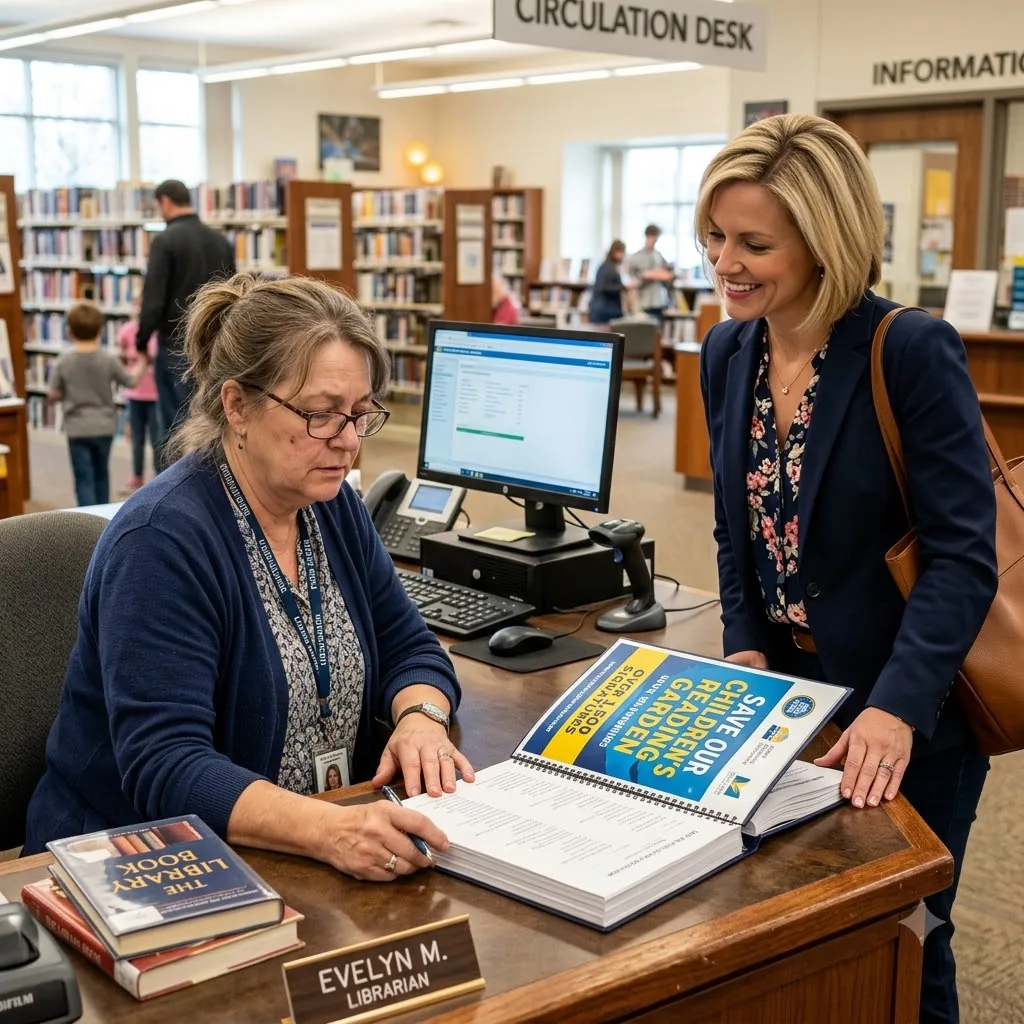
The fifty-page, spiral-bound document hit the worn oak of the circulation desk with the heavy, expensive thud of a high-end corporate prospectus. Eleanor blinked at the glossy cover, then looked up to find Chloe standing on the other side of the counter. Chloe’s hands were planted flat on the wood, her knuckles white, her posture rigid in her organic linen sundress.
This was the same Chloe who usually arrived on Tuesday mornings with warm vegan muffins for the staff. The same Chloe who, just last October, had written a glowing letter to the local paper praising the library’s new inclusive youth programming. Today, her smile was completely absent. Her eyes had a flat, rehearsed focus that made Eleanor step back from the desk.
Chloe began to speak in a clipped, breathless cadence, stating that the library had become a breeding ground for dangerous historical revisionism. She pointed a trembling finger at the thick document, declaring it a formal community demand to immediately remove three specific picture books from the children’s wing.
Eleanor stared at the woman in stunned silence. The phrasing coming out of Chloe’s mouth did not match her usual progressive, coastal-mom vocabulary. She was using terms like “coordinated ideological subversion” and “taxpayer-funded indoctrination.” It sounded exactly like the verbatim transcript of a syndicated, outrage-bait political podcast. She recited the talking points without pausing for breath, her tone robotic and completely devoid of her usual neighborhood warmth.
Eleanor tried to process the sudden shift. She told Chloe in a calm, practiced voice that the library had a standard review form for community book challenges. Chloe immediately interrupted, tapping the heavy glossy cover with a manicured nail, insisting that standard forms were no longer sufficient for the scale of the threat. She recited another paragraph of dense political rhetoric about protecting the innocence of the next generation from insidious institutional decay.
Eleanor reached for the document, dragging it across the smooth wood of the desk. The cover was printed on heavy-stock photo paper, displaying a professionally designed graphic of a shield protecting a stylized family. It was far too slick for a grassroots neighborhood complaint. A normal parent concerned about a book usually brought in a crumpled sticky note or sent a passionate, slightly misspelled email. This object looked like it had been rush-printed by a downtown law firm with an unlimited budget.
Chloe took a step back as Eleanor’s fingers brushed the plastic binding. She stated that the petition already had two hundred signatures from concerned residents and that the library board was legally required to respond within forty-eight hours. She added a final, rehearsed line about reclaiming the community. Then she turned on her heel and marched out the glass double doors, leaving a heavy silence in the circulation lobby.
Eleanor pulled the heavy document closer. The sheer weight of it felt wrong. She flipped open the cover. The first dozen pages were dedicated to tearing apart three incredibly mundane historical picture books. One was about the construction of the transcontinental railroad, another detailed the daily life of a nineteenth-century textile mill, and the third was a gentle watercolor story about a depression-era community garden. The text of the petition used extreme, inflammatory language, accusing these dry historical narratives of harboring radical, dangerous agendas designed to dismantle traditional values.
None of it sounded like Chloe. It felt entirely copy-pasted from a national outrage campaign, dropped randomly into their quiet branch library to create maximum chaos. Eleanor turned the thick pages, expecting to see the signatures Chloe had bragged about. She wanted to see which of their regular patrons had supposedly signed onto this bizarre crusade.
Instead, the middle of the document was filled with more boilerplate outrage, long lists of out-of-context quotes, and bullet points demanding immediate censorship. She flipped past a strange section analyzing the specific color palette of the textile mill book, feeling a deep sense of unease. The production value was too high. The target was too strange.
Then she reached the back of the packet.
The formatting changed abruptly on page forty. The large, bold fonts and bulleted talking points vanished entirely. In their place was a solid wall of dense, single-spaced text. Eleanor ran her finger down the page. It was a legal rider. The language was suffocating, filled with aggressive clauses, severe civil liability threats, and dense statutory citations that had absolutely nothing to do with children’s literature or library curation. It was an ironclad, incredibly hostile legal maneuver buried beneath a thick layer of podcast-scripted book panic. Eleanor’s eyes caught a string of severe penalty clauses as a cold, heavy knot formed at the bottom of her stomach.
The fifty-page, spiral-bound document hit the worn oak of the circulation desk with the heavy, expensive thud of a high-end corporate prospectus. Eleanor blinked at the glossy cover, then looked up to find Chloe standing on the other side of the counter. Chloe’s hands were planted flat on the wood, her knuckles white, her posture rigid in her organic linen sundress.
This was the same Chloe who usually arrived on Tuesday mornings with warm vegan muffins for the staff. The same Chloe who, just last October, had written a glowing letter to the local paper praising the library’s new inclusive youth programming. Today, her smile was completely absent. Her eyes had a flat, rehearsed focus that made Eleanor step back from the desk.
Chloe began to speak in a clipped, breathless cadence, stating that the library had become a breeding ground for dangerous historical revisionism. She pointed a trembling finger at the thick document, declaring it a formal community demand to immediately remove three specific picture books from the children’s wing.
Eleanor stared at the woman in stunned silence. The phrasing coming out of Chloe’s mouth did not match her usual progressive, coastal-mom vocabulary. She was using terms like “coordinated ideological subversion” and “taxpayer-funded indoctrination.” It sounded exactly like the verbatim transcript of a syndicated, outrage-bait political podcast. She recited the talking points without pausing for breath, her tone robotic and completely devoid of her usual neighborhood warmth.
Eleanor tried to process the sudden shift. She told Chloe in a calm, practiced voice that the library had a standard review form for community book challenges. Chloe immediately interrupted, tapping the heavy glossy cover with a manicured nail, insisting that standard forms were no longer sufficient for the scale of the threat. She recited another paragraph of dense political rhetoric about protecting the innocence of the next generation from insidious institutional decay.
Eleanor reached for the document, dragging it across the smooth wood of the desk. The cover was printed on heavy-stock photo paper, displaying a professionally designed graphic of a shield protecting a stylized family. It was far too slick for a grassroots neighborhood complaint. A normal parent concerned about a book usually brought in a crumpled sticky note or sent a passionate, slightly misspelled email. This object looked like it had been rush-printed by a downtown law firm with an unlimited budget.
Chloe took a step back as Eleanor’s fingers brushed the plastic binding. She stated that the petition already had two hundred signatures from concerned residents and that the library board was legally required to respond within forty-eight hours. She added a final, rehearsed line about reclaiming the community. Then she turned on her heel and marched out the glass double doors, leaving a heavy silence in the circulation lobby.
Eleanor pulled the heavy document closer. The sheer weight of it felt wrong. She flipped open the cover. The first dozen pages were dedicated to tearing apart three incredibly mundane historical picture books. One was about the construction of the transcontinental railroad, another detailed the daily life of a nineteenth-century textile mill, and the third was a gentle watercolor story about a depression-era community garden. The text of the petition used extreme, inflammatory language, accusing these dry historical narratives of harboring radical, dangerous agendas designed to dismantle traditional values.
None of it sounded like Chloe. It felt entirely copy-pasted from a national outrage campaign, dropped randomly into their quiet branch library to create maximum chaos. Eleanor turned the thick pages, expecting to see the signatures Chloe had bragged about. She wanted to see which of their regular patrons had supposedly signed onto this bizarre crusade.
Instead, the middle of the document was filled with more boilerplate outrage, long lists of out-of-context quotes, and bullet points demanding immediate censorship. She flipped past a strange section analyzing the specific color palette of the textile mill book, feeling a deep sense of unease. The production value was too high. The target was too strange.
Then she reached the back of the packet.
The formatting changed abruptly on page forty. The large, bold fonts and bulleted talking points vanished entirely. In their place was a solid wall of dense, single-spaced text. Eleanor ran her finger down the page. It was a legal rider. The language was suffocating, filled with aggressive clauses, severe civil liability threats, and dense statutory citations that had absolutely nothing to do with children’s literature or library curation. It was an ironclad, incredibly hostile legal maneuver buried beneath a thick layer of podcast-scripted book panic. Eleanor’s eyes caught a string of severe penalty clauses as a cold, heavy knot formed at the bottom of her stomach.