Story code: ST-001902
Part 1: Air-Gapped
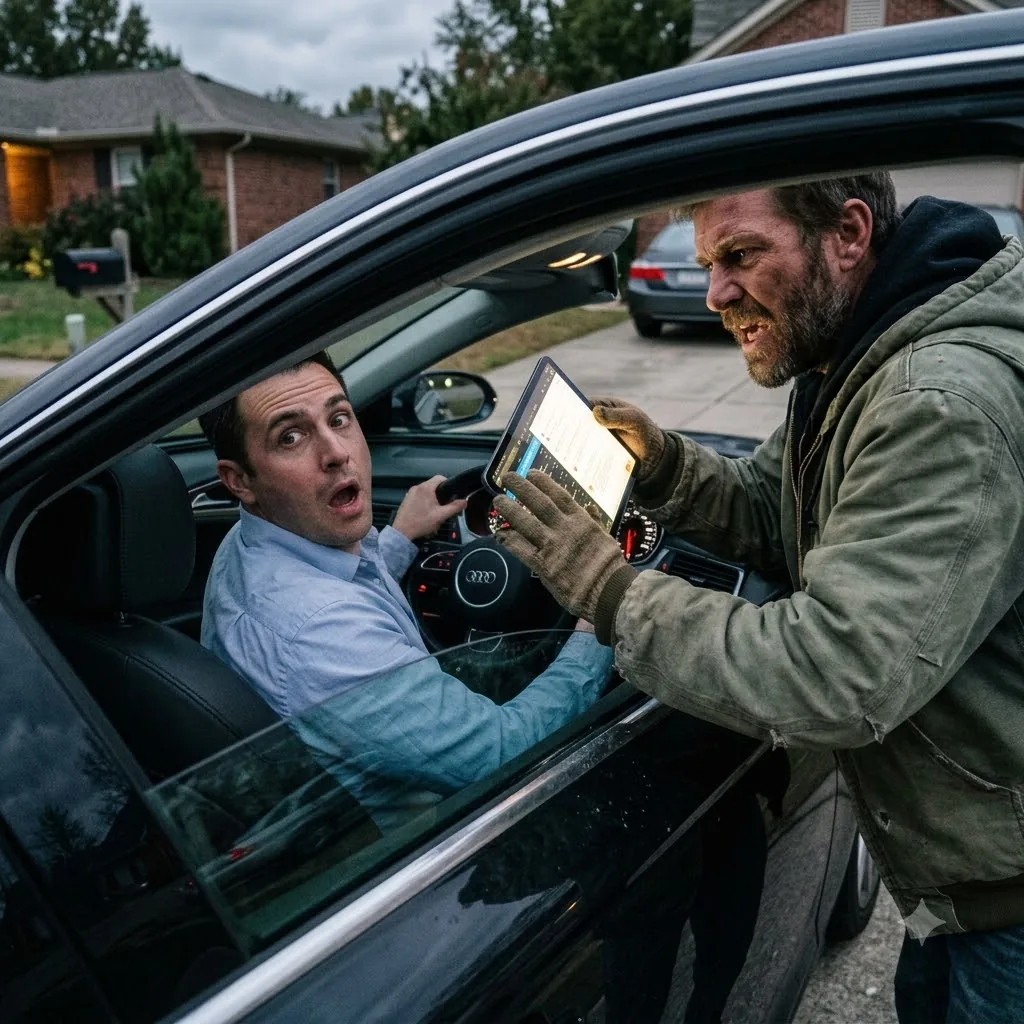
David shifted his luxury sedan into reverse, his leather dress shoe resting heavily on the brake pedal as he checked the center console monitor. A man wearing a faded canvas jacket stepped squarely into the backup camera’s red trajectory lines and planted his heavy work boots on the driveway concrete. David pressed the steering wheel horn, fully expecting the guy to flinch and step aside, but the man just crossed his arms and stared flatly down at the bumper lens.
Anger flashed hot in David’s chest. He slammed the gear shift back into park and stabbed the power window switch. He leaned out into the crisp morning air, his lungs filling to scream a threat about trespassing and calling the police.
The stranger did not wait for the confrontation to begin. He closed the distance to the car in three long strides, stepping right up to the driver’s side door and bypassing every normal script of suburban interaction. Before David could even unlatch his seatbelt or roll the window back up, the man thrust a ruggedized, mud-smudged tablet through the open gap.
David recoiled hard, knocking his elbow painfully against the interior B-pillar. He stared at the screen, assuming he was about to see a delivery signature pad, a charity petition, or a lost dog flyer.
He saw a dark-mode terminal window.
The screen was filled with lines of syntax highlighted in neon green and pale blue. David blinked, his brain aggressively refusing to process the string of characters hovering inches from his nose. He rubbed his eyes with his free hand, convinced the early hour and the lack of coffee were causing a severe visual hallucination.
It was a Git commit log. It was his personal Git commit log.
More specifically, it was the detailed, heavily annotated commit history for the proprietary backend routing architecture David had pushed to the secure staging server at two in the morning. The repository name, core-logistics-v4-beta, sat glaringly at the top left corner of the screen.
David stopped breathing. He stared at the stranger’s hand holding the device. The man had dark grease embedded deep under his fingernails and a faded yellow contractor badge clipped to his worn belt loop. A warehouse worker. A floor-level picker from the regional distribution center.
The man remained completely silent. He reached into his canvas jacket with his free hand, pulled out a crumpled stack of stapled agency termination notices, and tossed them casually through the window. The thin sheets of paper fluttered across the center console and landed face-up on the pristine leather of the passenger seat.
Then, with terrifying precision, the man reached his arm fully into the cabin, brushing right past David’s shoulder, and hit the master unlock button on the interior door panel.
The heavy mechanical clack of all four doors unlocking echoed like a gunshot in the quiet, sound-dampened cabin.
David froze completely. His hand hovered uselessly over the gear shift. He forced his eyes down to the termination notices resting on the passenger seat. They were standard boilerplate forms from the third-party staffing firm the company used to supply cheap labor for the fulfillment centers. The name printed in block letters at the top was Mateo Varga. The reason for termination was a blank line with a single hastily drawn checkmark next to a generic policy violation code.
David looked back at the tablet. The initial shock started to curdle into sheer impossibility. The code on that screen was supposed to be completely inaccessible from outside the executive engineering floor in the downtown tower. The deployment keys were locked behind biometric retinal scans and rotating hardware tokens. The system required a multi-layer VPN handshake that only three senior developers in the entire global corporation possessed. The repository was effectively a digital fortress, air-gapped from the public-facing logistics tools.
Yet here was Mateo Varga, a discarded temporary warehouse worker, holding the uncompiled, raw architecture in his calloused hand in a quiet suburban driveway.
Mateo tapped the reinforced glass of the tablet. He dragged his finger down the screen, smoothly scrolling to reveal the exact variables David had altered to bypass the standard overtime calculation loops. These were the specific, highly illegal lines of code that systematically shaved fractions of cents off the labor overhead by rounding down shift hours across forty thousand regional employees. It was a phantom tax on the blue-collar workforce, an algorithmic skimming operation that funded David’s quarterly bonuses. It was buried deep in the logic gates, obfuscated by layers of legitimate routing protocols.
David opened his mouth to order the man out of his car. He wanted to demand the tablet, to grab the device and smash it on the asphalt, to do absolutely anything to reclaim control of the shattered morning. His voice caught entirely in his throat, dry and useless. If this warehouse picker took that screen down to the labor board, it would be a massive legal headache. If he took it to their primary competitor, it would be a total corporate extinction event.
Mateo withdrew his hand from the lock button and rested his heavy forearm on the window frame. He looked slowly around the expensive leather interior of the sedan, taking in the heated seats and the premium sound system, then brought his dark eyes back to David.
David reached slowly for his phone sitting in the cupholder, determined to dial corporate security.
Mateo did not flinch or try to stop him. He just swiped left on the tablet, closing the terminal window and opening a live, high-definition video feed.
The feed showed the interior of a massive, dimly lit server room.
David recognized the heavy steel-caged enclosure immediately. It was the off-site backup facility. The highly classified underground location where the physical redundant data drives were kept in case of a catastrophic corporate system failure.
Mateo pointed a dirty finger at the screen, tapping the digital timestamp ticking away in the bottom right corner. The feed was live, and the camera angle was slowly panning across the blinking server racks, moving steadily closer to the master control terminal.
David shifted his luxury sedan into reverse, his leather dress shoe resting heavily on the brake pedal as he checked the center console monitor. A man wearing a faded canvas jacket stepped squarely into the backup camera’s red trajectory lines and planted his heavy work boots on the driveway concrete. David pressed the steering wheel horn, fully expecting the guy to flinch and step aside, but the man just crossed his arms and stared flatly down at the bumper lens.
Anger flashed hot in David’s chest. He slammed the gear shift back into park and stabbed the power window switch. He leaned out into the crisp morning air, his lungs filling to scream a threat about trespassing and calling the police.
The stranger did not wait for the confrontation to begin. He closed the distance to the car in three long strides, stepping right up to the driver’s side door and bypassing every normal script of suburban interaction. Before David could even unlatch his seatbelt or roll the window back up, the man thrust a ruggedized, mud-smudged tablet through the open gap.
David recoiled hard, knocking his elbow painfully against the interior B-pillar. He stared at the screen, assuming he was about to see a delivery signature pad, a charity petition, or a lost dog flyer.
He saw a dark-mode terminal window.
The screen was filled with lines of syntax highlighted in neon green and pale blue. David blinked, his brain aggressively refusing to process the string of characters hovering inches from his nose. He rubbed his eyes with his free hand, convinced the early hour and the lack of coffee were causing a severe visual hallucination.
It was a Git commit log. It was his personal Git commit log.
More specifically, it was the detailed, heavily annotated commit history for the proprietary backend routing architecture David had pushed to the secure staging server at two in the morning. The repository name, core-logistics-v4-beta, sat glaringly at the top left corner of the screen.
David stopped breathing. He stared at the stranger’s hand holding the device. The man had dark grease embedded deep under his fingernails and a faded yellow contractor badge clipped to his worn belt loop. A warehouse worker. A floor-level picker from the regional distribution center.
The man remained completely silent. He reached into his canvas jacket with his free hand, pulled out a crumpled stack of stapled agency termination notices, and tossed them casually through the window. The thin sheets of paper fluttered across the center console and landed face-up on the pristine leather of the passenger seat.
Then, with terrifying precision, the man reached his arm fully into the cabin, brushing right past David’s shoulder, and hit the master unlock button on the interior door panel.
The heavy mechanical clack of all four doors unlocking echoed like a gunshot in the quiet, sound-dampened cabin.
David froze completely. His hand hovered uselessly over the gear shift. He forced his eyes down to the termination notices resting on the passenger seat. They were standard boilerplate forms from the third-party staffing firm the company used to supply cheap labor for the fulfillment centers. The name printed in block letters at the top was Mateo Varga. The reason for termination was a blank line with a single hastily drawn checkmark next to a generic policy violation code.
David looked back at the tablet. The initial shock started to curdle into sheer impossibility. The code on that screen was supposed to be completely inaccessible from outside the executive engineering floor in the downtown tower. The deployment keys were locked behind biometric retinal scans and rotating hardware tokens. The system required a multi-layer VPN handshake that only three senior developers in the entire global corporation possessed. The repository was effectively a digital fortress, air-gapped from the public-facing logistics tools.
Yet here was Mateo Varga, a discarded temporary warehouse worker, holding the uncompiled, raw architecture in his calloused hand in a quiet suburban driveway.
Mateo tapped the reinforced glass of the tablet. He dragged his finger down the screen, smoothly scrolling to reveal the exact variables David had altered to bypass the standard overtime calculation loops. These were the specific, highly illegal lines of code that systematically shaved fractions of cents off the labor overhead by rounding down shift hours across forty thousand regional employees. It was a phantom tax on the blue-collar workforce, an algorithmic skimming operation that funded David’s quarterly bonuses. It was buried deep in the logic gates, obfuscated by layers of legitimate routing protocols.
David opened his mouth to order the man out of his car. He wanted to demand the tablet, to grab the device and smash it on the asphalt, to do absolutely anything to reclaim control of the shattered morning. His voice caught entirely in his throat, dry and useless. If this warehouse picker took that screen down to the labor board, it would be a massive legal headache. If he took it to their primary competitor, it would be a total corporate extinction event.
Mateo withdrew his hand from the lock button and rested his heavy forearm on the window frame. He looked slowly around the expensive leather interior of the sedan, taking in the heated seats and the premium sound system, then brought his dark eyes back to David.
David reached slowly for his phone sitting in the cupholder, determined to dial corporate security.
Mateo did not flinch or try to stop him. He just swiped left on the tablet, closing the terminal window and opening a live, high-definition video feed.
The feed showed the interior of a massive, dimly lit server room.
David recognized the heavy steel-caged enclosure immediately. It was the off-site backup facility. The highly classified underground location where the physical redundant data drives were kept in case of a catastrophic corporate system failure.
Mateo pointed a dirty finger at the screen, tapping the digital timestamp ticking away in the bottom right corner. The feed was live, and the camera angle was slowly panning across the blinking server racks, moving steadily closer to the master control terminal.