Story code: ST-000343
Part 1: The Wrong Word on the Chart
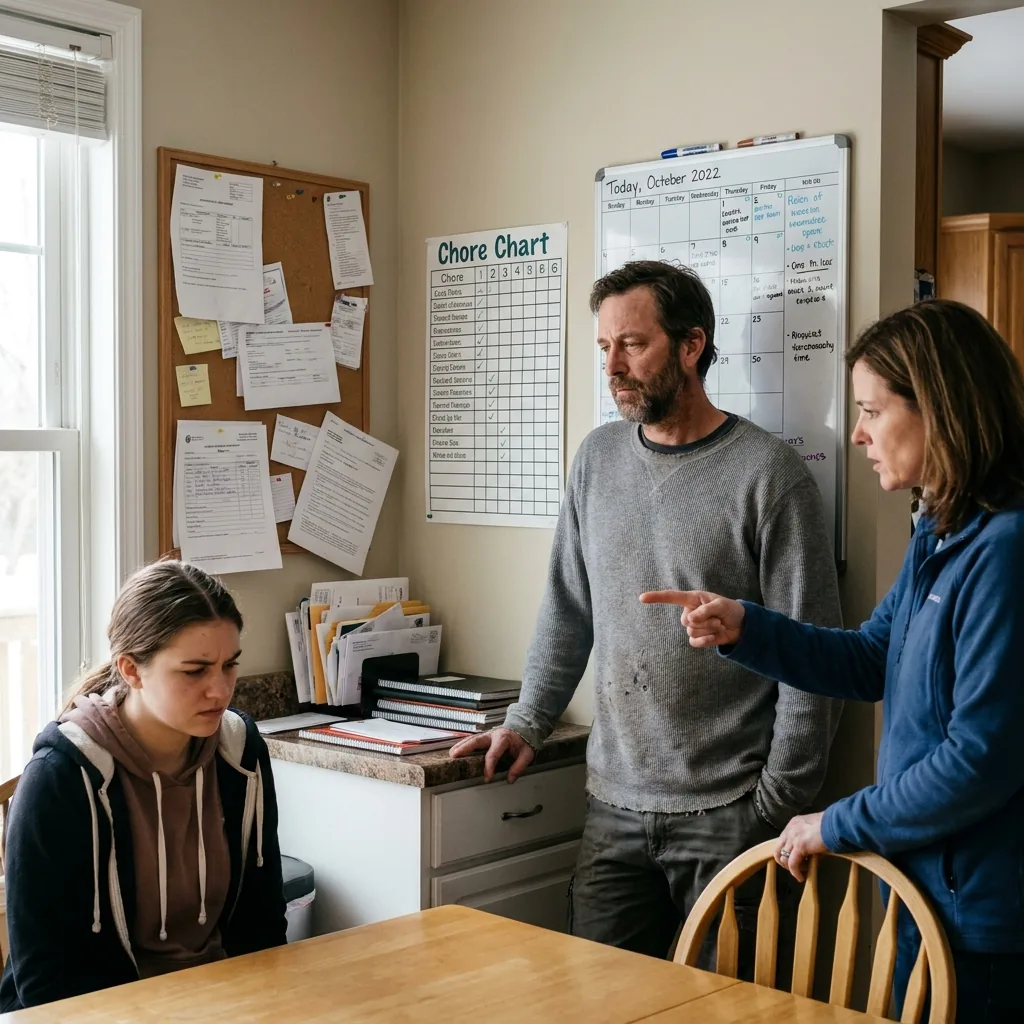
Evan kept repeating the same prepared line in the kitchen command center while Lila stood by the chore chart proxy script break texture and pointed at Mara like the blame was settled: “It says you were supposed to handle it,” he said, over and over, in the middle of ordinary activity inside kitchen command center family school or group scene. Mara had just reached for the fridge door when the coached phrase stopped her cold, because the line was not only repeated, it was wrong by one word, and that one word changed who the chart was accusing. Nora was at the counter folding a school notice, eyes moving between the chart and Evan’s mouth, the kind of quiet look people give when they are waiting for a sentence to hold still long enough to be checked.
The chart itself was taped to the side of the cabinet, right above the paper basket and the magnet strip where school forms, lunch menus, and a dry-erase marker lived. It was the usual family grid: names across the top, days down the side, little boxes filled with initials and clipped shorthand. Mara had written it out on Sunday because nobody else did. She had put soccer pickup on Tuesday, violin on Thursday, trash on Friday, and the dishwasher rotation in the corner where everyone could see it. The visible thing in the room was simple enough. The problem was the way Evan kept making it sound like the chart said something else.
“You heard me,” he said, still using the same careful tone. “It said you were on it.”
Mara looked at the sheet. She did not touch it yet. She checked the same line twice, then once more, because that was the only way to be sure in a room where one word could get repeated until it sounded like a fact. The box for Wednesday morning had been changed in black marker. Not erased. Changed. The chore chart now said “take out bins,” but the version Evan was repeating had been “take out trash.” It was a small difference on paper. In the room, it was the difference between a routine task and a blame assignment.
Lila, standing too close to the counter, copied the adult voice before anyone asked her to. “Mom always leaves it for everybody else,” she said, using the same borrowed wording Evan had used seconds before. The sentence landed on Mara like a hand on the back of the neck. Nora stopped folding the notice and looked up at the chart again.
Mara did not answer the accusation right away. She waited for the repeat. Evan gave it to her. He said the line again, almost word for word, and with each repetition his finger tapped the same square on the chart. He was not pointing to the actual change. He was pointing to the place where the change would have been if the chart had said what he wanted it to say.
“Read it out loud,” Mara said.
He did not move at first. Then he leaned in, eyes on the paper, and read it. The words came out tighter the second time, and one word shifted. He said “bin” instead of “trash.” The room did not go loud. It went still. Nora’s hand flattened on the counter. Lila looked from the chart to Evan and then back again, as if she could see the difference and could not decide what it meant.
Mara took the marker from the fridge. She did not raise her voice. She underlined the changed box and wrote the original note beside it: trash, not bins. The writing was clear enough for anyone in the room to read. Then she asked the one question that had not been answered since the first repetition.
“Who told you to say it that way?”
Evan’s mouth opened, but the sentence that came out was not an answer. It was the same prepared line again, only thinner this time, and it stopped halfway through the word he had changed. He looked at the chart, then at Nora, then at Lila, but he did not give a source. He could repeat the instruction. He could not explain it. And when Mara asked again, he only said, “It was on the chart,” while the chart in front of them showed the wrong word in his own handwriting.
Evan kept repeating the same prepared line in the kitchen command center while Lila stood by the chore chart proxy script break texture and pointed at Mara like the blame was settled: “It says you were supposed to handle it,” he said, over and over, in the middle of ordinary activity inside kitchen command center family school or group scene. Mara had just reached for the fridge door when the coached phrase stopped her cold, because the line was not only repeated, it was wrong by one word, and that one word changed who the chart was accusing. Nora was at the counter folding a school notice, eyes moving between the chart and Evan’s mouth, the kind of quiet look people give when they are waiting for a sentence to hold still long enough to be checked.
The chart itself was taped to the side of the cabinet, right above the paper basket and the magnet strip where school forms, lunch menus, and a dry-erase marker lived. It was the usual family grid: names across the top, days down the side, little boxes filled with initials and clipped shorthand. Mara had written it out on Sunday because nobody else did. She had put soccer pickup on Tuesday, violin on Thursday, trash on Friday, and the dishwasher rotation in the corner where everyone could see it. The visible thing in the room was simple enough. The problem was the way Evan kept making it sound like the chart said something else.
“You heard me,” he said, still using the same careful tone. “It said you were on it.”
Mara looked at the sheet. She did not touch it yet. She checked the same line twice, then once more, because that was the only way to be sure in a room where one word could get repeated until it sounded like a fact. The box for Wednesday morning had been changed in black marker. Not erased. Changed. The chore chart now said “take out bins,” but the version Evan was repeating had been “take out trash.” It was a small difference on paper. In the room, it was the difference between a routine task and a blame assignment.
Lila, standing too close to the counter, copied the adult voice before anyone asked her to. “Mom always leaves it for everybody else,” she said, using the same borrowed wording Evan had used seconds before. The sentence landed on Mara like a hand on the back of the neck. Nora stopped folding the notice and looked up at the chart again.
Mara did not answer the accusation right away. She waited for the repeat. Evan gave it to her. He said the line again, almost word for word, and with each repetition his finger tapped the same square on the chart. He was not pointing to the actual change. He was pointing to the place where the change would have been if the chart had said what he wanted it to say.
“Read it out loud,” Mara said.
He did not move at first. Then he leaned in, eyes on the paper, and read it. The words came out tighter the second time, and one word shifted. He said “bin” instead of “trash.” The room did not go loud. It went still. Nora’s hand flattened on the counter. Lila looked from the chart to Evan and then back again, as if she could see the difference and could not decide what it meant.
Mara took the marker from the fridge. She did not raise her voice. She underlined the changed box and wrote the original note beside it: trash, not bins. The writing was clear enough for anyone in the room to read. Then she asked the one question that had not been answered since the first repetition.
“Who told you to say it that way?”
Evan’s mouth opened, but the sentence that came out was not an answer. It was the same prepared line again, only thinner this time, and it stopped halfway through the word he had changed. He looked at the chart, then at Nora, then at Lila, but he did not give a source. He could repeat the instruction. He could not explain it. And when Mara asked again, he only said, “It was on the chart,” while the chart in front of them showed the wrong word in his own handwriting.