Story code: ST-000348
Part 2: The Receipt in the Case
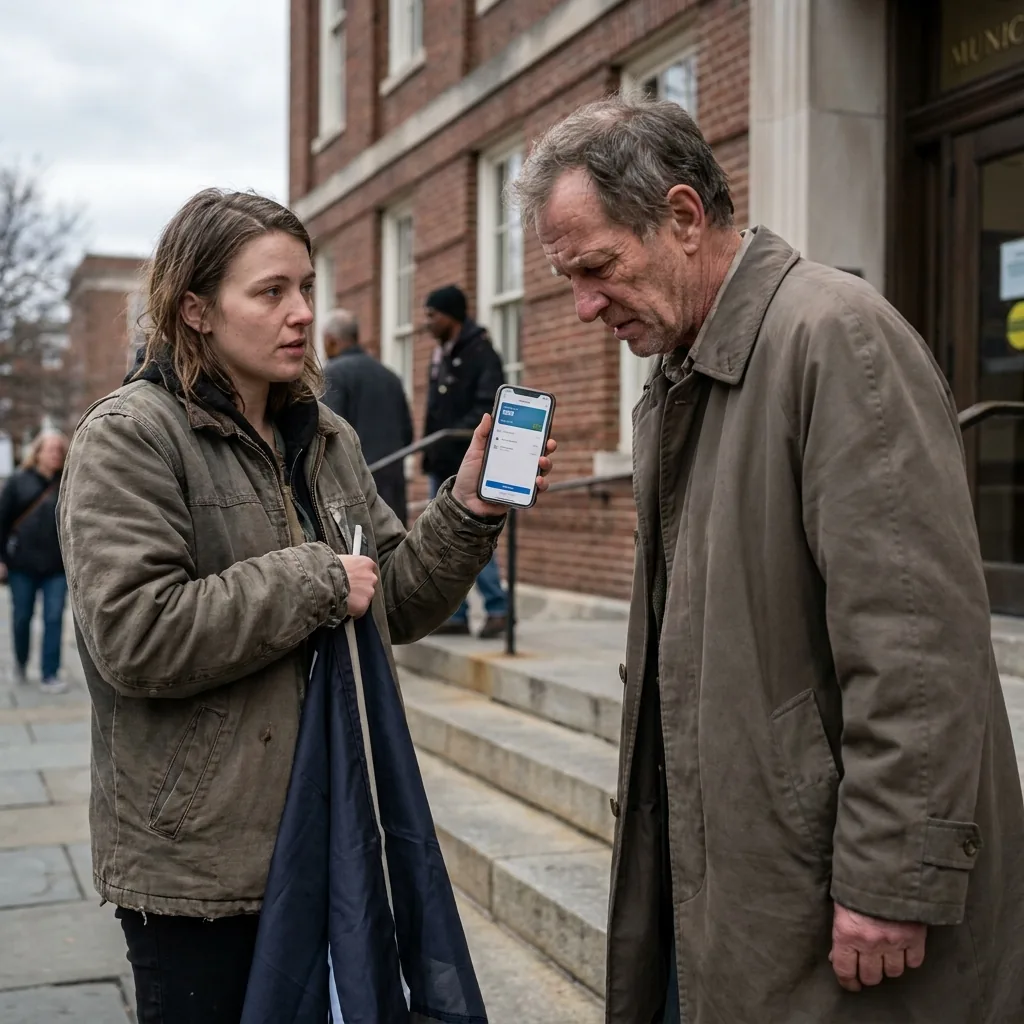
The receipt corner kept showing every time Leah shifted her grip on the phone. It was a small thing, no bigger than a thumb, but it changed the scene more than her banner did. The banner was for the crowd. The receipt was for the gap between her words and the way she was holding the phone case.
I asked her to take the receipt out.
She laughed once, short and sharp, and said I was trying to make her campaign look dishonest because I did not want to support her. The council steps were still busy. People moved around us with coffee cups and folders, and the staffer came back through the landing twice without stopping. Leah kept her body angled toward the crowd, like she wanted the public shape of the argument more than the answer itself.
Daniel spoke up for the first time. He asked what store the receipt was from.
Leah said it was none of his business.
That was a mistake. He stepped closer to the railing and held out his hand, not touching her, just asking for the paper. Leah turned the phone case over so fast the receipt nearly slipped free, then pressed it flat with her thumb. I saw enough to catch the store logo: a coffee shop two blocks from the steps, not a print shop, not a supply house, not anything that matched the story she had told me.
She noticed me looking and moved again. The receipt edge flashed. A second line showed under the total, and that was worse than the logo. It was a small purchase, not a campaign deposit, not a bulk order, not a volunteer supply run. A sandwich. A drink. Something bought in the middle of a morning she had called an emergency.
Leah saw that I had read enough to know the type of purchase, if not every line item. She reached into the phone case and yanked the receipt free, then folded it so tight it became a white square between her fingers. She said the campaign had people running all morning, and anyone who cared about the cause would understand that expenses happen. Then she shifted the story again and said she only stopped for food because she had been working since dawn.
But the payment screen was still open when she said it.
I saw the time stamp at the top. Not dawn. Late morning. After the supposed emergency. After the money ask. After she had told me the whole thing could not move without help. Daniel saw it too, and he did not look at Leah this time. He looked at the screen, then at the folded banner, then at the receipt square in her hand.
The shape of the lie got clearer, but not all at once. The food receipt did not prove where the money went, only that the story had holes in it. Leah tried to fill those holes with more pressure. She said family should not need proof before caring. She said I was acting like a stranger when I was the one person who should have understood the stakes. She said if I refused, I would be choosing not just against her, but against everything she was trying to do.
That was the moment the public part of the scene stopped being about a campaign and started being about control.
I did not raise my voice. I asked her to show me the rest of the purchases.
She froze for one beat, the folded receipt pinched between two fingers, and then she slid the phone into her pocket instead of handing it over. Not away from me. Away from Daniel, who had already seen enough to know the coffee-shop stop did not fit the emergency she had described.
Leah said she was done being judged by people who only cared about technicalities.
A woman passing behind us glanced at the banner and the receipt in Leah’s hand. Leah tucked the paper deeper into her palm. Daniel kept his eyes on the pocket where the phone had disappeared. The steps kept moving around us, but the story had narrowed to one thing: if the money was never for the stated need, what else had she bought with it before she asked me to call that duty?