Story code: ST-000355
Part 1: He Brought Her Voice In His Hand
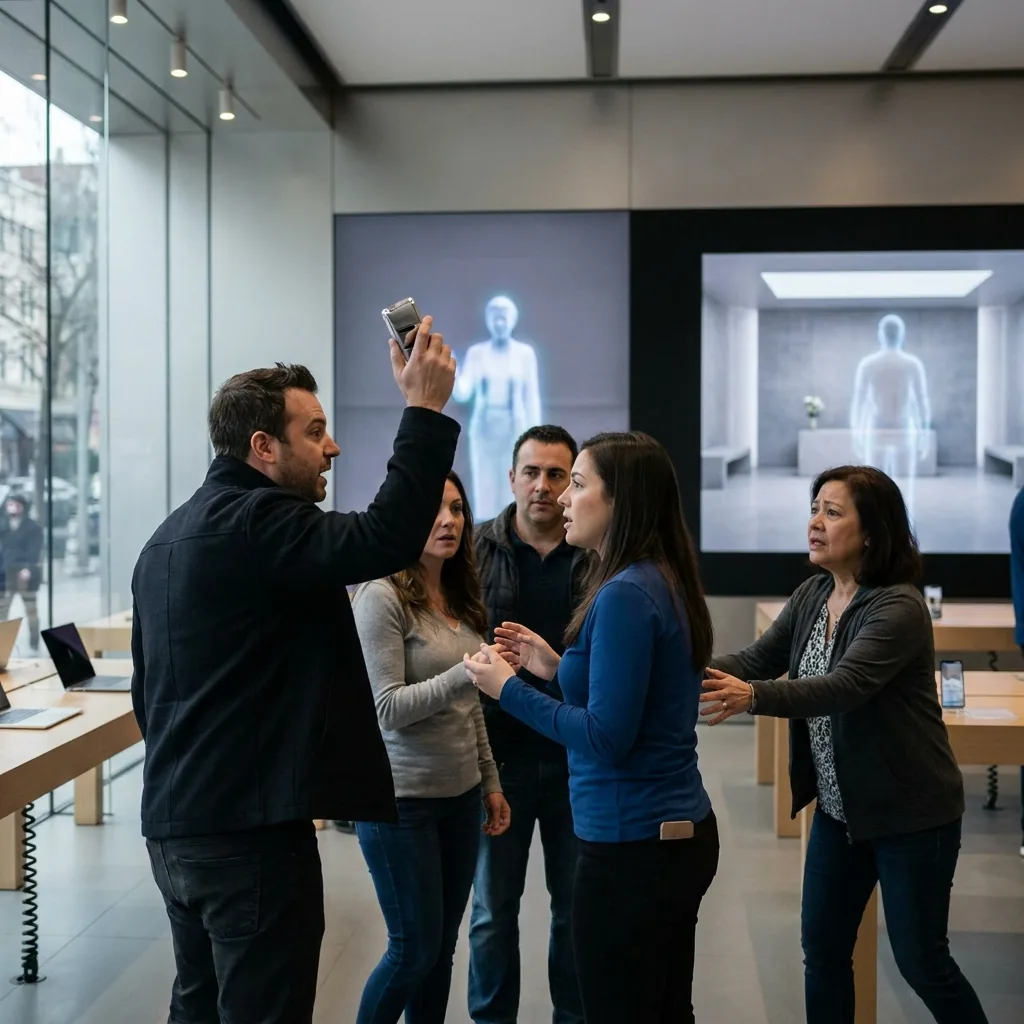
Derek Halpern came across our memorial showroom floor holding a silver voice-model drive over his head like it was an ambulance siren, and before I could finish helping a couple compare tribute backdrops, he pointed at me and said his dead sister’s hologram was failing right now and I needed to load this immediately. He said it loud enough for the whole front half of the showroom to hear, with preview projectors cycling soft memorial scenes behind him and three families sitting in our consultation lounge. Then he added the part that put everyone on me: if we waited for procedure, Lena Halpern’s display would break during her scheduled memorial.
I stepped back behind the intake station and held my hand out for the drive. He didn’t give it to me. He kept it pinched between two fingers and leaned over the counter instead.
“I don’t need intake,” he said. “I need you to put this in a live bay now. Her voice is glitching. The event is today.”
Our intake tablet was already awake beside me, open to the authorization screen. I kept my voice even.
“If there’s a live failure, I have to escalate it to the operator line. I can’t load a customer drive straight into the system without verification and logged approval.”
He cut right over me.
“She’s my sister. I’m not asking for some extra feature. I’m telling you her memorial is going to break in front of people. Do you want that on your showroom?”
A woman near the sample urn display looked up. One of the men waiting in a demo bay took out one earbud. Nothing in our showroom is private once somebody says the word memorial in that tone.
Derek slapped the drive on the counter hard enough to make the intake pen jump.
“You can do this in thirty seconds if you want to.”
I picked up the drive carefully. It was labeled in black print: LENA HALPERN VOICE MODEL. There was a barcode sticker from a prior chain-of-custody log, half peeled at one corner. I turned it over once, buying myself exactly one breath, and pulled the memorial schedule onto the side screen.
Lena Halpern was on it. Same day. Late afternoon public viewing in Bay Three, then transmission to the chapel site at six.
That changed the room. Derek saw me see it.
“There,” he said, jabbing a finger at the schedule. “Now do you get why I’m not standing here filling out forms?”
“I get why you’re saying it’s urgent,” I said. “Urgent still goes to Noah.”
“Noah can look after you fix it.”
That was the part he kept pressing, like procedure was something you did after the danger passed. He wanted the rule break first and the proof later.
I tapped the escalation channel on the intake tablet. The operator console sat in full view across the showroom behind a glass partition, dark except for the status strip. While the call pushed through, Derek shifted sideways, not leaving the counter, and kept talking to fill every second.
“She already had voice drift last week. I was told it was stable. Now it’s dropping words. I brought the clean model myself because nobody here moves unless there’s a disaster.”
He said “clean model” like that settled something. It didn’t. Customer-provided drives are exactly what we don’t load without logging.
I asked, “Where is the current failure happening? Here in the showroom feed, or at the chapel mirror?”
He looked at me for half a beat too long, then said, “It’s in the system. That’s why I’m here.”
“Which system?”
“Your system. The memorial system.”
The operator console lit up. Noah Velez answered on speaker with his usual flat voice. “Operator desk.”
I gave the shortest version. “Front intake. Family member reporting active failure on Lena Halpern scheduled display. Customer brought a voice-model drive and is requesting an immediate manual load outside intake procedure.”
Derek leaned toward the speaker before I could say anything else. “Because it needs to happen now. Her memorial is today.”
Noah didn’t match his volume. “Do not insert the drive. Keep it at intake. I am coming to the front.”
Derek straightened. “No, if you’re coming down just remote in and patch it. We don’t need a whole scene.”
Noah said, “If there is an active failure, we verify source, chain of custody, and current system state in person. Two minutes.”
He disconnected.
The room got quiet in that specific public way where nobody pretends not to hear anymore. Derek put both hands on the counter and looked past me toward the operator console. His jaw worked once.
“You made this bigger than it had to be,” he said.
“I followed the emergency path you asked for.”
“I asked for help.”
“This is help.”
He gave a quick breath through his nose and reached for the drive. I moved it back an inch and set it beside the intake tablet.
“It stays here until Noah checks it,” I said.
He didn’t touch me, but he planted his palm flat on the counter near the drive and stayed there, close enough that I couldn’t miss what he was guarding.
Behind him, Bay Two was still looping a sample daughter speaking to a rendered image of her father. Soft piano. Warm light. Ordinary showroom business, except now every head was angled toward our station.
When Noah stepped out from behind the glass partition and started across the floor, Derek turned to face him fast.
And for the first time since he came in demanding rescue, Derek said, “Actually, hold on. He doesn’t need to touch anything yet.”
Derek Halpern came across our memorial showroom floor holding a silver voice-model drive over his head like it was an ambulance siren, and before I could finish helping a couple compare tribute backdrops, he pointed at me and said his dead sister’s hologram was failing right now and I needed to load this immediately. He said it loud enough for the whole front half of the showroom to hear, with preview projectors cycling soft memorial scenes behind him and three families sitting in our consultation lounge. Then he added the part that put everyone on me: if we waited for procedure, Lena Halpern’s display would break during her scheduled memorial.
I stepped back behind the intake station and held my hand out for the drive. He didn’t give it to me. He kept it pinched between two fingers and leaned over the counter instead.
“I don’t need intake,” he said. “I need you to put this in a live bay now. Her voice is glitching. The event is today.”
Our intake tablet was already awake beside me, open to the authorization screen. I kept my voice even.
“If there’s a live failure, I have to escalate it to the operator line. I can’t load a customer drive straight into the system without verification and logged approval.”
He cut right over me.
“She’s my sister. I’m not asking for some extra feature. I’m telling you her memorial is going to break in front of people. Do you want that on your showroom?”
A woman near the sample urn display looked up. One of the men waiting in a demo bay took out one earbud. Nothing in our showroom is private once somebody says the word memorial in that tone.
Derek slapped the drive on the counter hard enough to make the intake pen jump.
“You can do this in thirty seconds if you want to.”
I picked up the drive carefully. It was labeled in black print: LENA HALPERN VOICE MODEL. There was a barcode sticker from a prior chain-of-custody log, half peeled at one corner. I turned it over once, buying myself exactly one breath, and pulled the memorial schedule onto the side screen.
Lena Halpern was on it. Same day. Late afternoon public viewing in Bay Three, then transmission to the chapel site at six.
That changed the room. Derek saw me see it.
“There,” he said, jabbing a finger at the schedule. “Now do you get why I’m not standing here filling out forms?”
“I get why you’re saying it’s urgent,” I said. “Urgent still goes to Noah.”
“Noah can look after you fix it.”
That was the part he kept pressing, like procedure was something you did after the danger passed. He wanted the rule break first and the proof later.
I tapped the escalation channel on the intake tablet. The operator console sat in full view across the showroom behind a glass partition, dark except for the status strip. While the call pushed through, Derek shifted sideways, not leaving the counter, and kept talking to fill every second.
“She already had voice drift last week. I was told it was stable. Now it’s dropping words. I brought the clean model myself because nobody here moves unless there’s a disaster.”
He said “clean model” like that settled something. It didn’t. Customer-provided drives are exactly what we don’t load without logging.
I asked, “Where is the current failure happening? Here in the showroom feed, or at the chapel mirror?”
He looked at me for half a beat too long, then said, “It’s in the system. That’s why I’m here.”
“Which system?”
“Your system. The memorial system.”
The operator console lit up. Noah Velez answered on speaker with his usual flat voice. “Operator desk.”
I gave the shortest version. “Front intake. Family member reporting active failure on Lena Halpern scheduled display. Customer brought a voice-model drive and is requesting an immediate manual load outside intake procedure.”
Derek leaned toward the speaker before I could say anything else. “Because it needs to happen now. Her memorial is today.”
Noah didn’t match his volume. “Do not insert the drive. Keep it at intake. I am coming to the front.”
Derek straightened. “No, if you’re coming down just remote in and patch it. We don’t need a whole scene.”
Noah said, “If there is an active failure, we verify source, chain of custody, and current system state in person. Two minutes.”
He disconnected.
The room got quiet in that specific public way where nobody pretends not to hear anymore. Derek put both hands on the counter and looked past me toward the operator console. His jaw worked once.
“You made this bigger than it had to be,” he said.
“I followed the emergency path you asked for.”
“I asked for help.”
“This is help.”
He gave a quick breath through his nose and reached for the drive. I moved it back an inch and set it beside the intake tablet.
“It stays here until Noah checks it,” I said.
He didn’t touch me, but he planted his palm flat on the counter near the drive and stayed there, close enough that I couldn’t miss what he was guarding.
Behind him, Bay Two was still looping a sample daughter speaking to a rendered image of her father. Soft piano. Warm light. Ordinary showroom business, except now every head was angled toward our station.
When Noah stepped out from behind the glass partition and started across the floor, Derek turned to face him fast.
And for the first time since he came in demanding rescue, Derek said, “Actually, hold on. He doesn’t need to touch anything yet.”