Story code: ST-000374
Part 1: The Capsule He Kept Pointing At
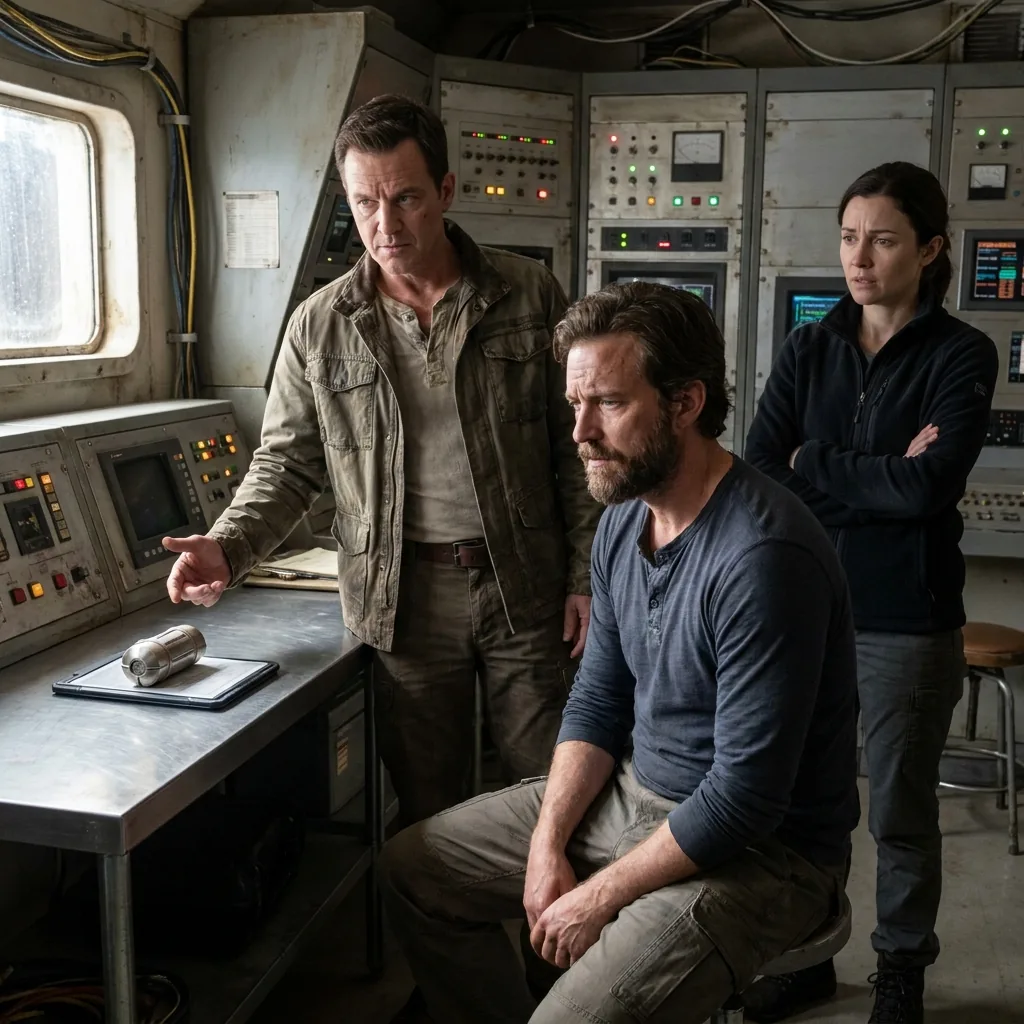
Cal Mercer did it again in the relay room, right in front of the others: he told the same sacrifice story, pointed at the delayed message capsule on the workbench, and used it like a badge that meant I owed him obedience. I was still inside the normal relay shift, hands on a panel, while the capsule sat under the strip lights and the room kept doing ordinary work around us. He said my compliance was the least I could give after everything he had “given up,” and the way he said it made it sound like refusal would make me the problem.
Mara stood at the cable rack with a splicer in one hand, pretending to focus on the line she was reseating. She kept looking from me to Cal and back again, the way people do when they can tell a room has gone wrong but nobody has named it yet. One of the junior techs was still checking a relay readout. Nobody stopped working. That was the part Cal counted on. He did not have to shout. He just had to keep speaking in that careful, wounded voice that made the story sound bigger every time he repeated it.
“You know what it cost me,” he said, loud enough for the room to hear but aimed at me. “I took the hit so this station could keep moving. I stayed behind when others wouldn’t. I didn’t ask for thanks. I asked for follow-through.”
I said nothing at first. My job was still my job. The relay needed a clean handoff on the east channel, and the capsule could not be jostled while the transfer rails were live. I kept one hand on the console and one eye on the capsule because that was the only part of the room that looked like it might matter later. Cal saw me looking and stepped closer, using the bench as if it belonged to him.
“Open it,” he said, softer this time. “You can do one decent thing after all that.”
It was the tone that made my jaw lock. Not the words. The tone said he had already decided what I should feel. It said the debt existed because he said it did. It said the room would remember his version if I let it.
Mara finally set the splicer down. “The transfer window is still open,” she said, like she was reminding all of us of the one thing that did not move when people did.
Cal barely glanced at her. “This isn’t about the schedule.”
“Everything in this room is about the schedule,” I said, because that much was true and because it gave me a second to watch him react.
He smiled without warmth. “You want to make this complicated? After what I covered for?”
There it was again: covered for, carried, stayed behind, took the hit. The whole story pressed against me like a hand on my chest. And the strange part was that he kept circling the capsule without touching it, like he needed it to stay visible but not available. He wanted the object seen and the contents ignored.
I slid the channel log closer and glanced at the delivery mark printed on the outer tag. The capsule had been logged five hours after Cal said he pulled it from damage control. That should not have been possible. The seal was intact. The timing was not.
I looked up at him and saw his hand tighten on the edge of the bench when he noticed what I was reading. He still had his public story. He still had the room. But the capsule sitting between us had a time stamp that did not match the sacrifice he kept selling, and now I had to decide whether to say that out loud or keep watching what he did next.
Cal Mercer did it again in the relay room, right in front of the others: he told the same sacrifice story, pointed at the delayed message capsule on the workbench, and used it like a badge that meant I owed him obedience. I was still inside the normal relay shift, hands on a panel, while the capsule sat under the strip lights and the room kept doing ordinary work around us. He said my compliance was the least I could give after everything he had “given up,” and the way he said it made it sound like refusal would make me the problem.
Mara stood at the cable rack with a splicer in one hand, pretending to focus on the line she was reseating. She kept looking from me to Cal and back again, the way people do when they can tell a room has gone wrong but nobody has named it yet. One of the junior techs was still checking a relay readout. Nobody stopped working. That was the part Cal counted on. He did not have to shout. He just had to keep speaking in that careful, wounded voice that made the story sound bigger every time he repeated it.
“You know what it cost me,” he said, loud enough for the room to hear but aimed at me. “I took the hit so this station could keep moving. I stayed behind when others wouldn’t. I didn’t ask for thanks. I asked for follow-through.”
I said nothing at first. My job was still my job. The relay needed a clean handoff on the east channel, and the capsule could not be jostled while the transfer rails were live. I kept one hand on the console and one eye on the capsule because that was the only part of the room that looked like it might matter later. Cal saw me looking and stepped closer, using the bench as if it belonged to him.
“Open it,” he said, softer this time. “You can do one decent thing after all that.”
It was the tone that made my jaw lock. Not the words. The tone said he had already decided what I should feel. It said the debt existed because he said it did. It said the room would remember his version if I let it.
Mara finally set the splicer down. “The transfer window is still open,” she said, like she was reminding all of us of the one thing that did not move when people did.
Cal barely glanced at her. “This isn’t about the schedule.”
“Everything in this room is about the schedule,” I said, because that much was true and because it gave me a second to watch him react.
He smiled without warmth. “You want to make this complicated? After what I covered for?”
There it was again: covered for, carried, stayed behind, took the hit. The whole story pressed against me like a hand on my chest. And the strange part was that he kept circling the capsule without touching it, like he needed it to stay visible but not available. He wanted the object seen and the contents ignored.
I slid the channel log closer and glanced at the delivery mark printed on the outer tag. The capsule had been logged five hours after Cal said he pulled it from damage control. That should not have been possible. The seal was intact. The timing was not.
I looked up at him and saw his hand tighten on the edge of the bench when he noticed what I was reading. He still had his public story. He still had the room. But the capsule sitting between us had a time stamp that did not match the sacrifice he kept selling, and now I had to decide whether to say that out loud or keep watching what he did next.