Story code: ST-000382
Part 2: The Name Inside the Access Chain
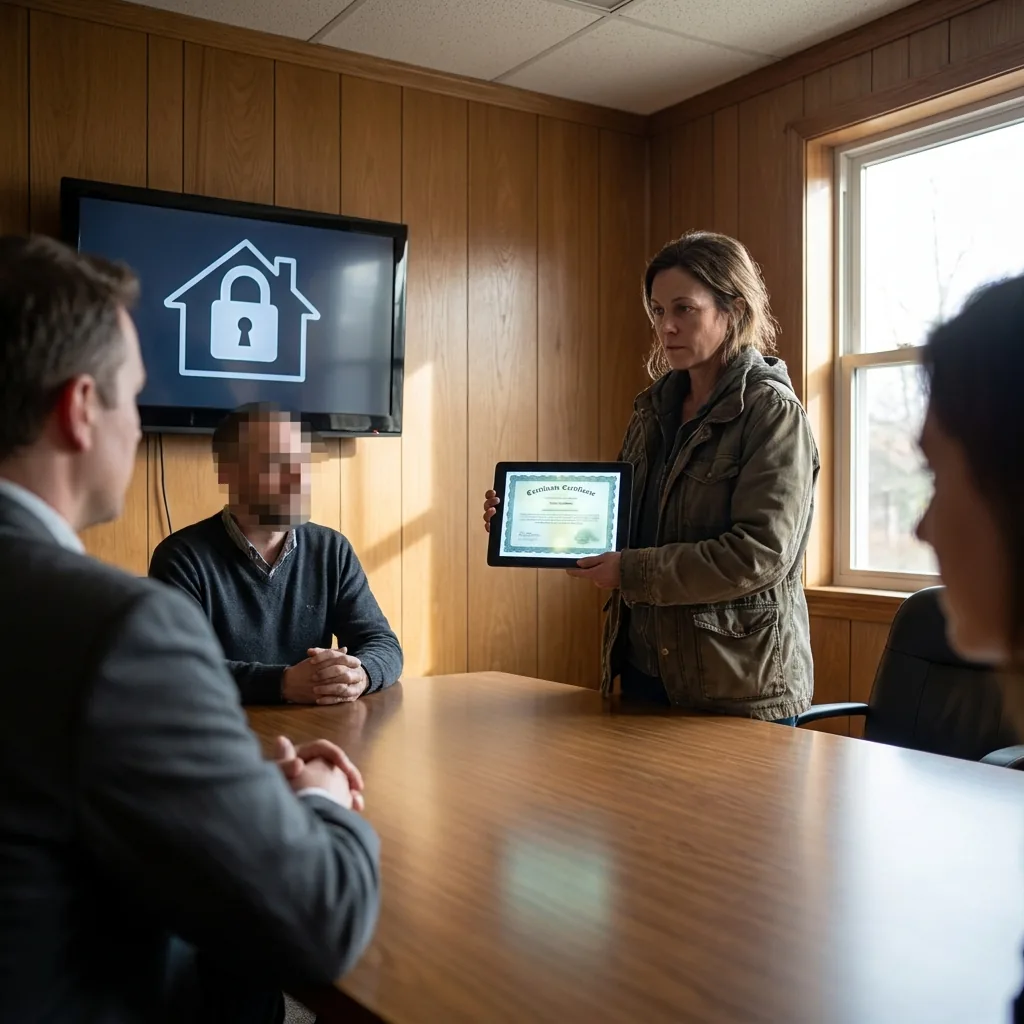
Nobody in that room moved for a full second after Eli Vaughn’s name locked onto the shared record. In a virtual space, that kind of stillness stands out more than shouting. Tessa kept her digital deed open in front of her, but her hand dropped away from it like the display had turned hot. Grant Mercer stopped pointing at policy language. Judge Ortega did not widen the proof lane. She just let the frozen line sit there between them until somebody had to speak into it.
“State your relationship to that credential,” she said.
Tessa answered first, because the question was hanging nearest her side of the room. “Eli Vaughn is my brother.”
She said it without looking up. The deed remained centered in the air, blue threshold ring intact, the residence seal steady, that cold little entry timestamp still fixed at 9:14.
Grant shifted his stance. “A surname link does not prove unauthorized conduct by me.”
“It proves your earlier answer was incomplete,” Judge Ortega said. “You denied threshold crossing by you. The record now shows an indirect route touching a close credential. So we narrow from speeches to mechanics.”
That was her way every time a room started heating up. She cut away everything that sounded human first and left only the machine trail. I kept my station open on the side wall, logging each authorized display change and watching for any unauthorized pull from the parties. Tessa made no move to alter her evidence. Grant tried once to open a supplemental policy pane, and the judge blocked it before it rendered.
“No broad policy library,” she said. “Stay on the deed and access route.”
Tessa swallowed hard enough for the motion to show in her throat line. “He keeps talking like this was normal management access. My deed says he cannot cross the private threshold without notice or permission. He was inside anyway.”
Judge Ortega gave a short nod toward me. “Expand one level. Actor path only. No full network tree.”
I did what she asked. The access display unfolded by a narrow margin beside the deed. It still did not expose the whole chain, just the next visible layer: residence threshold event, credential handshake, routed management tool request, deed authority mismatch flag.
Grant spoke quickly now, trying to get ahead of the screen. “A handshake event can be stale. Shared credentials create echoes. Anyone who has ever been granted access can leave residual routing behavior.”
Tessa looked at him then, straight across the room. “I revoked everybody two weeks before that.”
“The deed shows revocation timing,” Judge Ortega said.
She touched the date marker and pinned it beside the entry timestamp. Two clean lines appeared: guest permissions revoked, then the later threshold event. The distance between them was enough to kill the easy explanation.
Grant changed lanes again. “That still does not place me over the threshold.”
The judge’s expression barely shifted. “It places your management authority on a route the deed did not permit. That is the problem you are now answering.”
He went quiet.
I heard the low system hum that always comes when the courthouse platform verifies older logs from cold storage. Then a side notice blinked in my panel: linked credential holder available in queue. I looked to the judge before doing anything. She saw the same thing on her bench controls.
“Bring him in,” she said.
The threshold opened behind Tessa. Eli Vaughn stepped through like somebody entering the wrong room by accident and realizing too late that the walls were already recording. He was plain compared to the other two, no polished effects, no branding skin, just a basic avatar with his hands held close to his sides. He looked first at Tessa, then at the floating routing line with his name on it, then nowhere at all.
Tessa’s shoulders pulled back so hard I heard the fabric effect on her jacket snap into place. She did not greet him.
Judge Ortega kept her voice level. “State your name for the record.”
“Eli Vaughn.”
“Do you dispute that this credential is yours?”
He looked at the string, took one breath, and said, “No.”
Tessa made a sound like she had started to say something and cut herself off halfway through.
Grant turned toward Eli for the first time since the display had changed. “Tell the court if you directly authorized any access event to that residence.”
The judge lifted a hand before Eli could answer. “No leading. I will ask the questions.”
She brought the deed back to center, bigger than before, as if to remind everyone what the room was actually built around. Private residence. Protected threshold. Limited landlord permissions. Revocations logged. Then she placed the narrowed access path beside it like a blade laid parallel to a ruler.
“Mr. Vaughn,” she said, “did you provide, lend, or leave active any credential that could be routed into this residence after the revocation date shown here? Answer only that.”
Eli’s jaw tightened. He did not challenge the deed. He did not challenge the timestamp. He stood there with his hands still close to his sides and gave the smallest nod I have ever seen a court force out of somebody.
Tessa’s deed flickered once and steadied again.
Grant started talking over the silence immediately. “That does not establish intent, and it does not establish that I crossed personally.”
“No,” Judge Ortega said, eyes still on the two displays. “It establishes that your denial now depends on a route that should never have remained available at all.”
She rested her fingers on the bench controls after that, not pressing anything yet, just holding there while the deed and the access path hovered in the air between brother, tenant, and landlord.
Then she said, “The next question is how much of this chain I need to put on the public-facing record to decide what happens to Mr. Mercer.”