Story code: ST-000386
Part 1: They Said My Mother Was Already Run
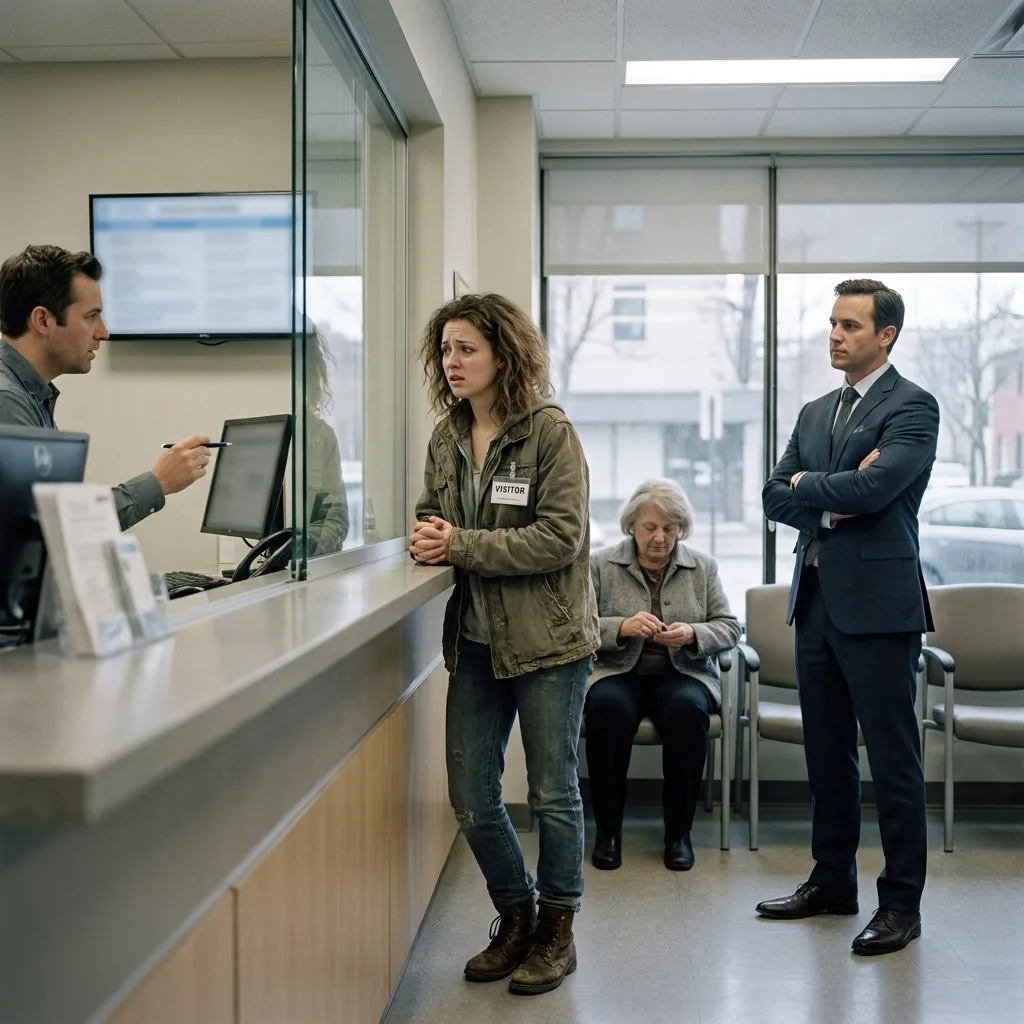
I got to the authority counter at Lattice Harbor Upload Clinic with my visitor badge still warm from the printer, and the man behind the monitor told me I was too late to approve my mother’s transfer because Marla Walsh had already posted two sequence events on her consciousness drive. He said it in the same voice people use to explain parking validation, while a technician rolled silver carts past us and scanner bays blinked green through the glass. When I said that was impossible because my mother was supposed to be waiting for me, Damon Pike rotated his screen away and told me family access could be restricted once an active sequence reached protected status.
I put both hands on the counter so I would not start pointing at him.
“Restricted by who?” I asked.
“By clinic protocol,” he said. He tapped his badge against the desk reader as if that answered the question. “Your mother’s case has already moved beyond the consent checkpoint visible to outside family.”
“I’m not outside family. I’m her daughter. I was told to be here at eleven-thirty to sign off as witness.”
“The system record is complete.”
That phrase would come back so many times it started to sound fake before noon.
Behind him, the reception floor kept moving like a normal medical office. A couple argued quietly over a charging cable. Someone at the beverage station shook powdered creamer into bad coffee. Luis Ortega, a tech whose name I only caught because his badge turned when he passed, moved a black drive case from one scanner bay cart to another and corrected a label under his breath. No alarms. No rushing. Just my mother’s name sitting inside a sentence that made no sense.
Damon finally turned the monitor an inch back toward me, not enough to share, enough to perform sharing. I leaned and read what I could.
Case: WALSH, MARLA.
Asset custody: confirmed.
Sequence event one: intake imprint received, 10:42.
Sequence event two: duplicate continuity reconciliation, 10:17.
I looked at him, then back at the screen.
“That second line says ten-seventeen.”
“Yes.”
“And the first line says ten-forty-two.”
“Yes.”
“So how do you reconcile a duplicate continuity event twenty-five minutes before the intake imprint was received?”
He pressed two fingers flat against the desk. “Families are shown summary language. The underlying sequencing includes machine-side steps that can make the order appear nonintuitive.”
“Nonintuitive isn’t the same as backward.”
He gave me a small, tired look that felt practiced. “The official record is valid.”
I took out my phone. I keep screenshots because my mother changed appointment times twice that week and then insisted she had not. I pulled up the text from Nina from last night: Mom checked in for prep at 10:50. You still coming for 11:30? I set the phone on the counter beside the monitor edge.
“My sister texted me at 10:50 saying our mother was checking in for prep. So explain how this drive was received at 10:42 and somehow already had a duplicate reconciliation at 10:17.”
Damon did not look at my phone. “I can note that you dispute the displayed sequence summary.”
“I don’t need you to note it. I need you to freeze the process until I see my mother.”
“Only authorized clinical staff can suspend an active upload sequence.”
“Then get one.”
“I am the posthuman advocate assigned to this case.”
“That’s not what I asked.”
His jaw shifted once. He reached for a printed sheet from a tray and slid it toward me. It looked like a discharge instruction page, except the top line read FAMILY AFTERCARE ORIENTATION. My mother’s name was already on it.
“This is premature,” I said.
“It’s standard preparation material.”
“Preparation for what, Damon? You keep using past tense and future handouts in the same breath. Is she uploaded, in transfer, or waiting in a room for me?”
He folded his hands. “I am not authorized to discuss protected internal stages while a sequence is active.”
“You just told me it moved beyond consent.”
“I said beyond the checkpoint visible to outside family.”
I stared at him long enough that he reached for the screen again and this time rotated it farther away.
On the far side of the glass corridor, a wheelchair came into view for half a second and disappeared behind a frosted door. The blanket over the lap was the same pale blue the clinic had stacked near intake. I could not see a face.
My phone buzzed. Nina, finally answering my earlier message.
Running late. Don’t make this harder on Mom.
I typed back, What happened before 10:50?
No response.
Luis came through the side door with another case in his hands. He paused at Damon’s station long enough for Damon to say, too fast, “Not here. Bay transfer only.”
Luis glanced at me, then at the monitor, then down at the case tag he was holding. “This one was already scanned at intake,” he said.
Damon’s head turned toward him. “Thank you, Luis.”
Luis stopped talking, but I had heard enough to step sideways and catch the tag before he moved on. The sticker wasn’t fully covered. I saw WALSH, M. and a time stamp starting with 10:1.
If my mother’s drive had already been scanned at intake before intake imprint was even received, then the clinic wasn’t just hiding details from me. They were showing me a timeline that could not stand up to one basic question: how can my mother’s official second event happen before the first one, and why was a technician carrying her drive as if the day had started long before they told me she even arrived?
I got to the authority counter at Lattice Harbor Upload Clinic with my visitor badge still warm from the printer, and the man behind the monitor told me I was too late to approve my mother’s transfer because Marla Walsh had already posted two sequence events on her consciousness drive. He said it in the same voice people use to explain parking validation, while a technician rolled silver carts past us and scanner bays blinked green through the glass. When I said that was impossible because my mother was supposed to be waiting for me, Damon Pike rotated his screen away and told me family access could be restricted once an active sequence reached protected status.
I put both hands on the counter so I would not start pointing at him.
“Restricted by who?” I asked.
“By clinic protocol,” he said. He tapped his badge against the desk reader as if that answered the question. “Your mother’s case has already moved beyond the consent checkpoint visible to outside family.”
“I’m not outside family. I’m her daughter. I was told to be here at eleven-thirty to sign off as witness.”
“The system record is complete.”
That phrase would come back so many times it started to sound fake before noon.
Behind him, the reception floor kept moving like a normal medical office. A couple argued quietly over a charging cable. Someone at the beverage station shook powdered creamer into bad coffee. Luis Ortega, a tech whose name I only caught because his badge turned when he passed, moved a black drive case from one scanner bay cart to another and corrected a label under his breath. No alarms. No rushing. Just my mother’s name sitting inside a sentence that made no sense.
Damon finally turned the monitor an inch back toward me, not enough to share, enough to perform sharing. I leaned and read what I could.
Case: WALSH, MARLA.
Asset custody: confirmed.
Sequence event one: intake imprint received, 10:42.
Sequence event two: duplicate continuity reconciliation, 10:17.
I looked at him, then back at the screen.
“That second line says ten-seventeen.”
“Yes.”
“And the first line says ten-forty-two.”
“Yes.”
“So how do you reconcile a duplicate continuity event twenty-five minutes before the intake imprint was received?”
He pressed two fingers flat against the desk. “Families are shown summary language. The underlying sequencing includes machine-side steps that can make the order appear nonintuitive.”
“Nonintuitive isn’t the same as backward.”
He gave me a small, tired look that felt practiced. “The official record is valid.”
I took out my phone. I keep screenshots because my mother changed appointment times twice that week and then insisted she had not. I pulled up the text from Nina from last night: Mom checked in for prep at 10:50. You still coming for 11:30? I set the phone on the counter beside the monitor edge.
“My sister texted me at 10:50 saying our mother was checking in for prep. So explain how this drive was received at 10:42 and somehow already had a duplicate reconciliation at 10:17.”
Damon did not look at my phone. “I can note that you dispute the displayed sequence summary.”
“I don’t need you to note it. I need you to freeze the process until I see my mother.”
“Only authorized clinical staff can suspend an active upload sequence.”
“Then get one.”
“I am the posthuman advocate assigned to this case.”
“That’s not what I asked.”
His jaw shifted once. He reached for a printed sheet from a tray and slid it toward me. It looked like a discharge instruction page, except the top line read FAMILY AFTERCARE ORIENTATION. My mother’s name was already on it.
“This is premature,” I said.
“It’s standard preparation material.”
“Preparation for what, Damon? You keep using past tense and future handouts in the same breath. Is she uploaded, in transfer, or waiting in a room for me?”
He folded his hands. “I am not authorized to discuss protected internal stages while a sequence is active.”
“You just told me it moved beyond consent.”
“I said beyond the checkpoint visible to outside family.”
I stared at him long enough that he reached for the screen again and this time rotated it farther away.
On the far side of the glass corridor, a wheelchair came into view for half a second and disappeared behind a frosted door. The blanket over the lap was the same pale blue the clinic had stacked near intake. I could not see a face.
My phone buzzed. Nina, finally answering my earlier message.
Running late. Don’t make this harder on Mom.
I typed back, What happened before 10:50?
No response.
Luis came through the side door with another case in his hands. He paused at Damon’s station long enough for Damon to say, too fast, “Not here. Bay transfer only.”
Luis glanced at me, then at the monitor, then down at the case tag he was holding. “This one was already scanned at intake,” he said.
Damon’s head turned toward him. “Thank you, Luis.”
Luis stopped talking, but I had heard enough to step sideways and catch the tag before he moved on. The sticker wasn’t fully covered. I saw WALSH, M. and a time stamp starting with 10:1.
If my mother’s drive had already been scanned at intake before intake imprint was even received, then the clinic wasn’t just hiding details from me. They were showing me a timeline that could not stand up to one basic question: how can my mother’s official second event happen before the first one, and why was a technician carrying her drive as if the day had started long before they told me she even arrived?