Story code: ST-000397
Part 1: The Rule at Pickup
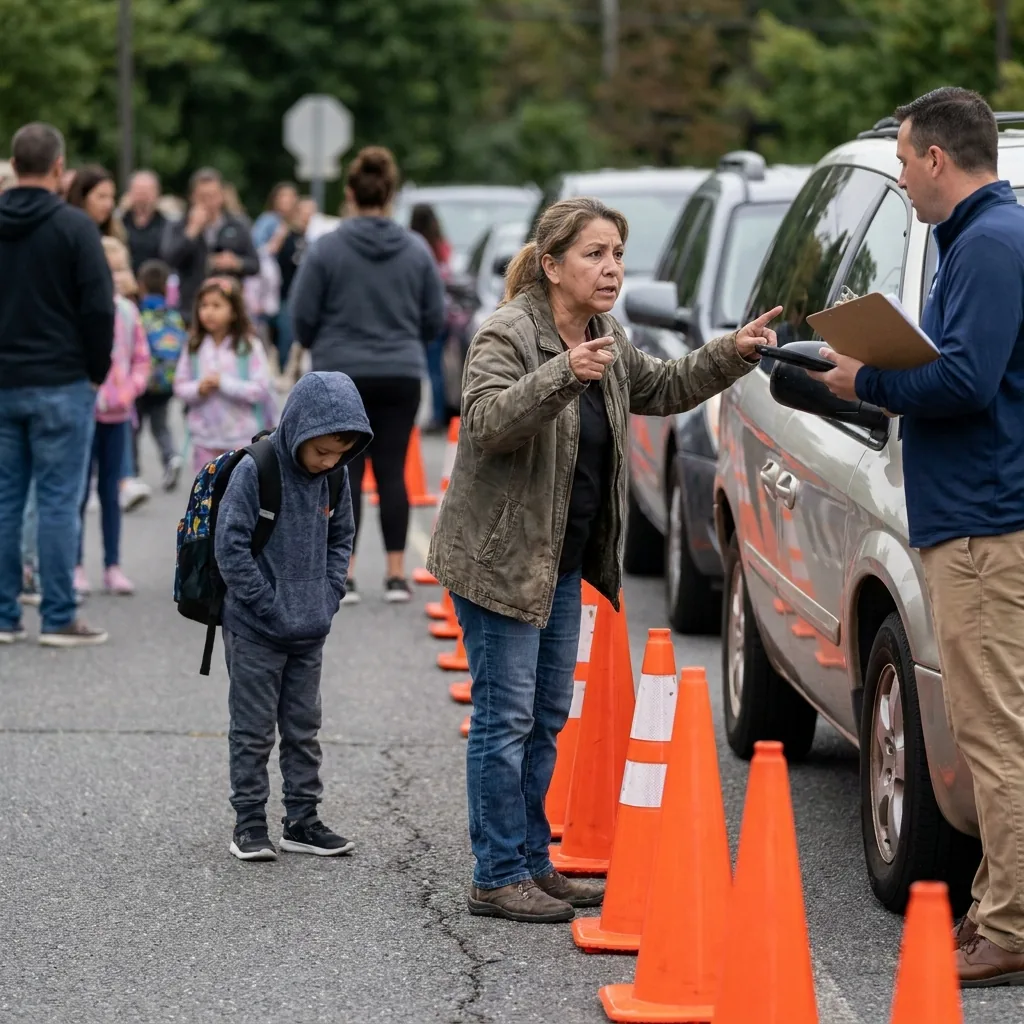
Denise Alvarez stepped into the school pickup lane by the cones and said her son could not hand over the broken tablet because of a rule nobody else could verify. Her voice carried over the waiting row of cars and the radio clipped to Mr. Pike’s shoulder, and Noah stood beside her with the tablet against his chest, the cracked screen catching the afternoon light. Maya Bennett was two cars back, watching the lane move in little jerks while the official-looking routine around the pickup station kept going as if the claim had already been checked.
Mr. Pike did not say it like a guess. He said it with the calm of someone reading from a board. “No device exchange in lane if the unit is damaged,” he told Maya when she asked what rule he meant. He pointed once toward the cones, then back toward the line of cars, as if the direction itself settled it. The clipboard in his hand stayed closed. The radio crackled with other pickups, other names, other cars sliding through.
Maya asked him to say it again, plain. He repeated the same sentence, same tone, same clipped rhythm. No device exchange in lane if the unit is damaged. When she asked where that rule was posted, he said, “It’s standard procedure.” When she asked who it applied to, he nodded at Noah and the tablet and said, “Anyone bringing a damaged device through pickup.”
That was the first hard block. Noah held the tablet tighter. The screen had a spiderweb crack across the center and a dark wedge near the top right corner. A piece of tape ran over one side where the edge had started to lift. He was already at the lane with the tablet visible in plain sight, and now he was being told the damage itself was the reason he could not pass it along. Denise stayed half a step in front of him, shoulders squared toward Mr. Pike, hands open at her sides like she expected the sentence to hold.
Maya looked past them toward the lane. Another parent farther up had a backpack, a lunch box, and a sports bag open on the passenger seat. A teacher walking the curb guided that car forward with one hand and took a clipboard mark with the other. No one stopped that exchange. No one asked whether the backpack had a zipper broken or the lunch box was cracked or the sports bag had a torn strap. The lane kept moving.
Maya said, “So the rule is about damaged devices only?”
Mr. Pike answered, “The rule is about damaged school property being transferred through pickup.”
Noah still had the tablet. Maya could see the school sticker on the back, bent at one corner, and the case hanging loose around the edges. She asked, “If it’s school property, why is it being held by a family in pickup instead of checked in somewhere else?”
Mr. Pike shifted his weight. He touched the radio, then let his hand fall. “That’s not how this lane is set up,” he said.
Denise cut in fast, using the same steady voice Mr. Pike had used. “We were told not to bring it to the front office,” she said. “We were told to handle it here.”
Maya turned to that part, because it was the first detail that sounded like a real lane rule and not a barrier made out of tone. “Who told you that?”
Denise looked at Mr. Pike. Mr. Pike looked past both of them toward the next car in line, then back. “It was communicated,” he said.
The words sat there without a source. Maya watched a second family roll forward. The driver window dropped. A child leaned out with a permission slip and a violin case. Mr. Pike took the slip, waved them on, and never asked about the case.
Maya said, “Then show me where the damaged tablet rule is posted, or send us to the place where you actually take damaged school property.”
Mr. Pike opened his mouth, closed it, and reached for the radio again. He did not answer the question. Denise did not answer it either. Noah stayed still with the tablet pressed to his shirt, the broken screen reflecting the cone line and the monitor station and the cars behind them. The pickup lane kept moving around them, and the rule they were using did not seem to exist anywhere except in the space between Mr. Pike’s voice and Denise’s insistence. What nobody would explain was why the same rule kept working for Noah in this lane, but nobody could point to a place where it lived.
Denise Alvarez stepped into the school pickup lane by the cones and said her son could not hand over the broken tablet because of a rule nobody else could verify. Her voice carried over the waiting row of cars and the radio clipped to Mr. Pike’s shoulder, and Noah stood beside her with the tablet against his chest, the cracked screen catching the afternoon light. Maya Bennett was two cars back, watching the lane move in little jerks while the official-looking routine around the pickup station kept going as if the claim had already been checked.
Mr. Pike did not say it like a guess. He said it with the calm of someone reading from a board. “No device exchange in lane if the unit is damaged,” he told Maya when she asked what rule he meant. He pointed once toward the cones, then back toward the line of cars, as if the direction itself settled it. The clipboard in his hand stayed closed. The radio crackled with other pickups, other names, other cars sliding through.
Maya asked him to say it again, plain. He repeated the same sentence, same tone, same clipped rhythm. No device exchange in lane if the unit is damaged. When she asked where that rule was posted, he said, “It’s standard procedure.” When she asked who it applied to, he nodded at Noah and the tablet and said, “Anyone bringing a damaged device through pickup.”
That was the first hard block. Noah held the tablet tighter. The screen had a spiderweb crack across the center and a dark wedge near the top right corner. A piece of tape ran over one side where the edge had started to lift. He was already at the lane with the tablet visible in plain sight, and now he was being told the damage itself was the reason he could not pass it along. Denise stayed half a step in front of him, shoulders squared toward Mr. Pike, hands open at her sides like she expected the sentence to hold.
Maya looked past them toward the lane. Another parent farther up had a backpack, a lunch box, and a sports bag open on the passenger seat. A teacher walking the curb guided that car forward with one hand and took a clipboard mark with the other. No one stopped that exchange. No one asked whether the backpack had a zipper broken or the lunch box was cracked or the sports bag had a torn strap. The lane kept moving.
Maya said, “So the rule is about damaged devices only?”
Mr. Pike answered, “The rule is about damaged school property being transferred through pickup.”
Noah still had the tablet. Maya could see the school sticker on the back, bent at one corner, and the case hanging loose around the edges. She asked, “If it’s school property, why is it being held by a family in pickup instead of checked in somewhere else?”
Mr. Pike shifted his weight. He touched the radio, then let his hand fall. “That’s not how this lane is set up,” he said.
Denise cut in fast, using the same steady voice Mr. Pike had used. “We were told not to bring it to the front office,” she said. “We were told to handle it here.”
Maya turned to that part, because it was the first detail that sounded like a real lane rule and not a barrier made out of tone. “Who told you that?”
Denise looked at Mr. Pike. Mr. Pike looked past both of them toward the next car in line, then back. “It was communicated,” he said.
The words sat there without a source. Maya watched a second family roll forward. The driver window dropped. A child leaned out with a permission slip and a violin case. Mr. Pike took the slip, waved them on, and never asked about the case.
Maya said, “Then show me where the damaged tablet rule is posted, or send us to the place where you actually take damaged school property.”
Mr. Pike opened his mouth, closed it, and reached for the radio again. He did not answer the question. Denise did not answer it either. Noah stayed still with the tablet pressed to his shirt, the broken screen reflecting the cone line and the monitor station and the cars behind them. The pickup lane kept moving around them, and the rule they were using did not seem to exist anywhere except in the space between Mr. Pike’s voice and Denise’s insistence. What nobody would explain was why the same rule kept working for Noah in this lane, but nobody could point to a place where it lived.