Story code: ST-000035
Part 1: He Said We Had to Break Procedure Right Now
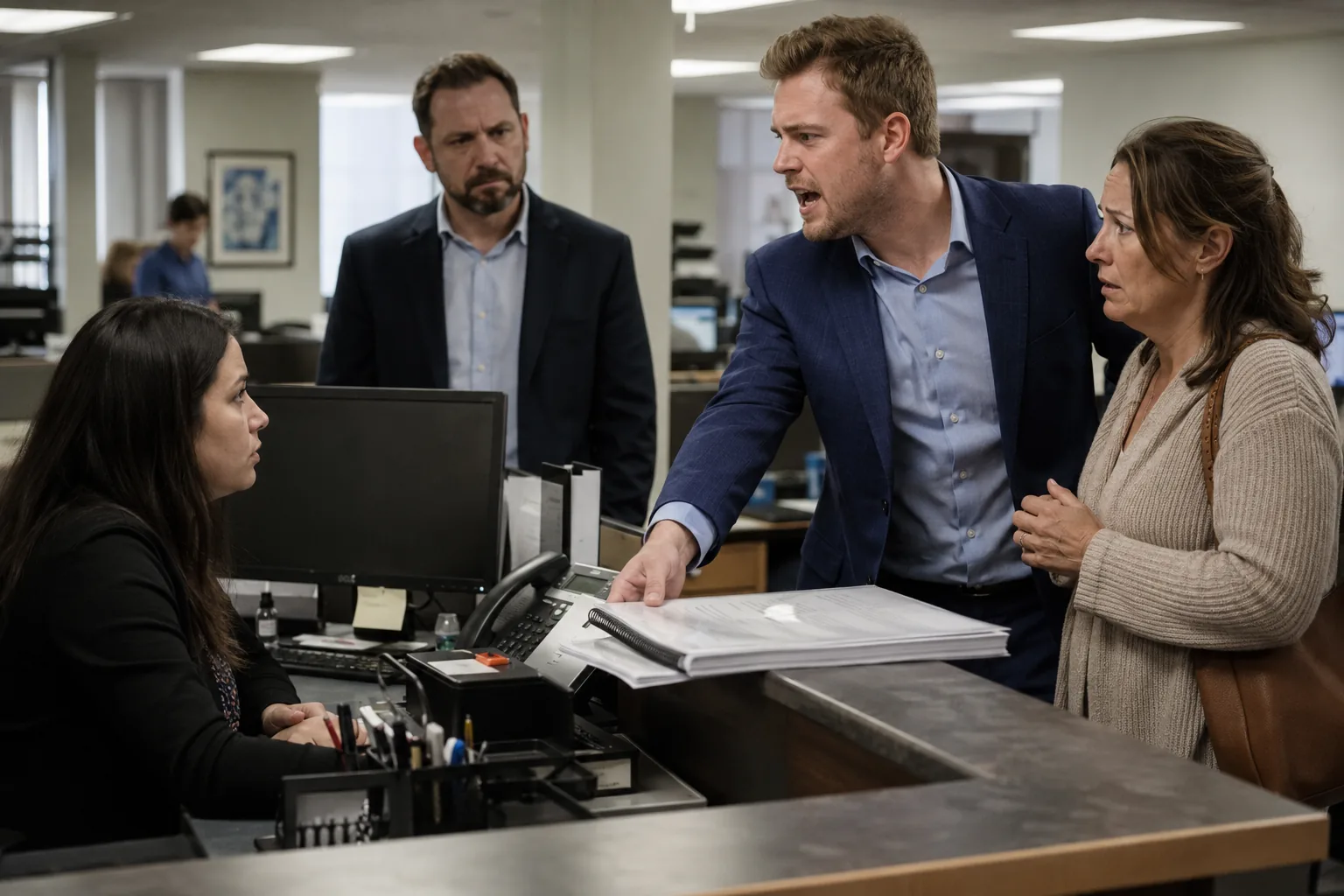
Grant Heller slapped an estate ledger onto our front desk and told the woman beside him that if we did not move money that day, her family could lose everything by close of business. He said it loud enough to cut through the printer noise, the ringing phone, and a man two chairs over asking for his W-2 envelope, and before I could finish asking for an intake form he was already telling me to skip procedure because this was family. Diane Mercer had her pen uncapped and her checkbook out before anyone in our office had verified a single number.
I work the front desk for a tax preparer office, so I see people arrive rushed all the time. Normal rushed still has a shape to it. Someone forgot a deadline. Someone needs a copy. Someone misread a notice. This was different from the first ten seconds because Grant did not start with a tax year, a filing issue, or a question. He started with an order.
“We need Evelyn now,” he said, one hand flat on the ledger. “Not a callback. Not a review slot. Right now. This estate has to be reallocated today or the inheritance exposure gets locked in.”
Diane stood close enough to his shoulder that she had to lean sideways to look at me. “He told me if we wait, it gets worse by the hour.”
I slid the intake clipboard toward her anyway. “I can route you to Evelyn Pike, but I need names, contact information, and what filing year we’re dealing with.”
Grant pushed the clipboard back with two fingers. “No. We are past that. If you people need a notation, make one later. Call Evelyn.”
He had the tone some outside professionals use when they expect the office to rearrange itself around them. Calm voice, clipped words, no pause for an answer. The ledger stayed between us like he had placed a weapon on the counter and wanted everybody to see it.
Diane looked down at the open pages. I could see columns, dates, account labels, handwritten tabs on the side. She kept touching the same page corner without turning it.
“What exactly are you asking us to do today?” I said.
Grant answered before Diane could. “I need Evelyn to authorize immediate treatment consistent with a family distribution correction. If we document it the wrong way first, the family eats the consequence. If we do it now, we can still protect them.”
That was a lot of words without one clear action step. I asked, “Do you need a filing prepared, a correction review, or a call to outside counsel?”
He looked at me hard when I said counsel, then went right back to Diane. “What I need is for no one to slow this down with unnecessary escalation. Diane, sign whatever office intake they need, but do not let this sit in a pile.”
Her hand moved to the clipboard. She wrote her name so fast the pen scratched. Then she stopped halfway through the phone number line and looked at Grant again.
“Should I put my cell or the house line?”
“Cell,” he said immediately. “You need to be reachable all afternoon.”
I picked up our internal line and told Evelyn I had an estate matter at the desk that needed her eyes. While I waited, Grant opened the ledger wider and began tapping one entry with his nail.
“This is the problem. This right here. If this stands overnight, we’re boxed in.”
I leaned just enough to see the line. There was a date, a notation about a transfer, and a figure written twice in two different inks. I did not pretend to know what that meant. What I did know was that people with clean emergencies usually want details read carefully. Grant kept covering the page the second I looked too closely.
Evelyn came out from the review tables with her glasses in one hand. She did not rush, which made Grant speak faster.
“Thank God,” he said. “I need you to help us fix this before the day closes. The estate can’t survive another delay.”
Evelyn set her glasses on and looked at Diane first, not him. “What are we doing today?”
Diane opened her mouth, but Grant answered again. “Immediate corrective handling. The family was exposed by prior timing. We need to move now and clean the reporting path after.”
Evelyn pulled the ledger closer by one inch. “No one cleans reporting after in this office. We identify the issue, confirm authority, and decide the right path. Maya, bring them to table three.”
At the review table, the office stayed busy around us. A stapler snapped twice at the copier station. Someone laughed too loudly in the waiting area and then dropped to a whisper when they saw Grant’s face. Diane kept her purse in her lap, unzipped, checkbook still visible.
Evelyn asked for dates, the estate name, who the fiduciary was, and what had already been filed. Grant answered in blocks, fast and polished, but every time she asked for a supporting document he redirected to timing.
“You can document later,” he said.
“No,” Evelyn said. “We document as we go.”
That was when Grant changed tactics. He pointed at the office phone on the corner of the table and said, “Fine. Then get the estate attorney or whoever outside you need on the line right now so they can confirm this is urgent.”
Evelyn nodded once. “Maya, start that call.”
I had my hand on the receiver when Grant reached across the table so fast Diane pulled back in her chair.
“Not yet,” he said. “Don’t do that until we’ve aligned the ledger entries first.”
The whole room did not go silent, but our table did. One second earlier he had demanded outside help. Now he was stopping the exact call he had just ordered us to make, and his palm was still planted over the ledger page he did not want fully read.
Grant Heller slapped an estate ledger onto our front desk and told the woman beside him that if we did not move money that day, her family could lose everything by close of business. He said it loud enough to cut through the printer noise, the ringing phone, and a man two chairs over asking for his W-2 envelope, and before I could finish asking for an intake form he was already telling me to skip procedure because this was family. Diane Mercer had her pen uncapped and her checkbook out before anyone in our office had verified a single number.
I work the front desk for a tax preparer office, so I see people arrive rushed all the time. Normal rushed still has a shape to it. Someone forgot a deadline. Someone needs a copy. Someone misread a notice. This was different from the first ten seconds because Grant did not start with a tax year, a filing issue, or a question. He started with an order.
“We need Evelyn now,” he said, one hand flat on the ledger. “Not a callback. Not a review slot. Right now. This estate has to be reallocated today or the inheritance exposure gets locked in.”
Diane stood close enough to his shoulder that she had to lean sideways to look at me. “He told me if we wait, it gets worse by the hour.”
I slid the intake clipboard toward her anyway. “I can route you to Evelyn Pike, but I need names, contact information, and what filing year we’re dealing with.”
Grant pushed the clipboard back with two fingers. “No. We are past that. If you people need a notation, make one later. Call Evelyn.”
He had the tone some outside professionals use when they expect the office to rearrange itself around them. Calm voice, clipped words, no pause for an answer. The ledger stayed between us like he had placed a weapon on the counter and wanted everybody to see it.
Diane looked down at the open pages. I could see columns, dates, account labels, handwritten tabs on the side. She kept touching the same page corner without turning it.
“What exactly are you asking us to do today?” I said.
Grant answered before Diane could. “I need Evelyn to authorize immediate treatment consistent with a family distribution correction. If we document it the wrong way first, the family eats the consequence. If we do it now, we can still protect them.”
That was a lot of words without one clear action step. I asked, “Do you need a filing prepared, a correction review, or a call to outside counsel?”
He looked at me hard when I said counsel, then went right back to Diane. “What I need is for no one to slow this down with unnecessary escalation. Diane, sign whatever office intake they need, but do not let this sit in a pile.”
Her hand moved to the clipboard. She wrote her name so fast the pen scratched. Then she stopped halfway through the phone number line and looked at Grant again.
“Should I put my cell or the house line?”
“Cell,” he said immediately. “You need to be reachable all afternoon.”
I picked up our internal line and told Evelyn I had an estate matter at the desk that needed her eyes. While I waited, Grant opened the ledger wider and began tapping one entry with his nail.
“This is the problem. This right here. If this stands overnight, we’re boxed in.”
I leaned just enough to see the line. There was a date, a notation about a transfer, and a figure written twice in two different inks. I did not pretend to know what that meant. What I did know was that people with clean emergencies usually want details read carefully. Grant kept covering the page the second I looked too closely.
Evelyn came out from the review tables with her glasses in one hand. She did not rush, which made Grant speak faster.
“Thank God,” he said. “I need you to help us fix this before the day closes. The estate can’t survive another delay.”
Evelyn set her glasses on and looked at Diane first, not him. “What are we doing today?”
Diane opened her mouth, but Grant answered again. “Immediate corrective handling. The family was exposed by prior timing. We need to move now and clean the reporting path after.”
Evelyn pulled the ledger closer by one inch. “No one cleans reporting after in this office. We identify the issue, confirm authority, and decide the right path. Maya, bring them to table three.”
At the review table, the office stayed busy around us. A stapler snapped twice at the copier station. Someone laughed too loudly in the waiting area and then dropped to a whisper when they saw Grant’s face. Diane kept her purse in her lap, unzipped, checkbook still visible.
Evelyn asked for dates, the estate name, who the fiduciary was, and what had already been filed. Grant answered in blocks, fast and polished, but every time she asked for a supporting document he redirected to timing.
“You can document later,” he said.
“No,” Evelyn said. “We document as we go.”
That was when Grant changed tactics. He pointed at the office phone on the corner of the table and said, “Fine. Then get the estate attorney or whoever outside you need on the line right now so they can confirm this is urgent.”
Evelyn nodded once. “Maya, start that call.”
I had my hand on the receiver when Grant reached across the table so fast Diane pulled back in her chair.
“Not yet,” he said. “Don’t do that until we’ve aligned the ledger entries first.”
The whole room did not go silent, but our table did. One second earlier he had demanded outside help. Now he was stopping the exact call he had just ordered us to make, and his palm was still planted over the ledger page he did not want fully read.