Story code: ST-000537
Part 1: He Said the Park Had a Custody Rule
My ex stood at the dog park gate and told the volunteer not to let me in with my own dog because of a “custody hold” policy, and the volunteer backed him up before anyone could show me a single line of that rule. Dogs were already chasing each other inside the fence, leashes were clipping loose at the entry bench, and somehow my Saturday check-in turned into a public ban that sounded official for exactly one reason: he said it first.
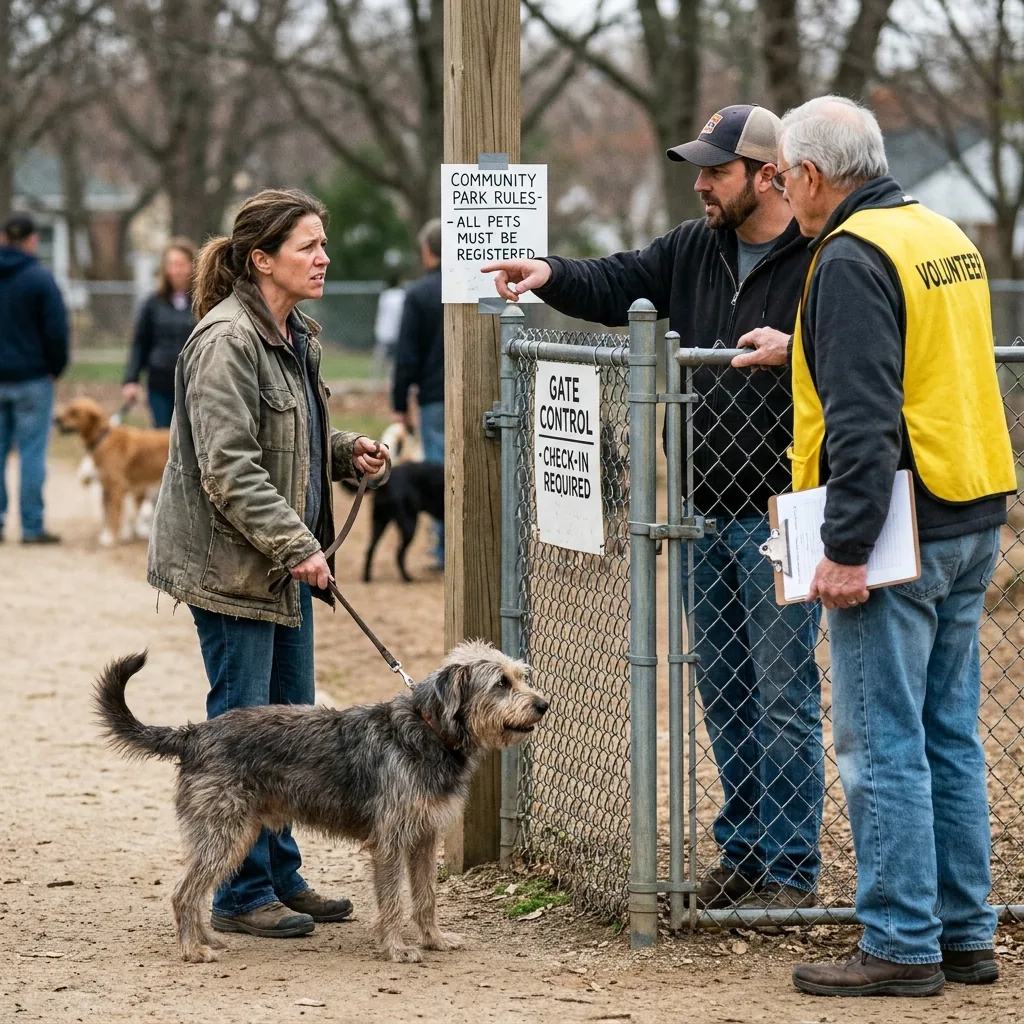
I got there with my dog on leash, phone in one hand, waste bag looped around my wrist, expecting the same routine everybody else expected. The neighborhood park had the usual setup: a posted rules board by the gate, a folding table with the check-in binder, a volunteer chair, water bowls stacked near the fence, and a line of people trying to get through while their dogs strained toward the open space.
Monica Ruiz was at the gate that morning. She had the roster open on the table and a pen tucked behind one ear. Before I even got close enough to give my dog’s name, Derek Lawson stepped half a pace toward her and said, “She can’t bring him in. There’s an active custody restriction on this dog. Park policy says if ownership is disputed, access freezes until the primary record holder clears it.”
He said it fast, like he had said it before.
Monica looked from him to me and put her hand on the gate latch. “If there’s a custody dispute,” she said, “I can’t admit the dog until it’s sorted out.”
“Show me the rule,” I said.
“It’s a policy issue,” Derek cut in.
“No,” I said, keeping my hand on the leash clip. “If you’re blocking entry, show me where it says that.”
The first thing that stood out was how ordinary everything around us kept moving while my check-in stopped dead. A golden retriever got waved through. Somebody inside the fence tossed a tennis ball that hit the mesh and rolled back. A man behind me shifted a shepherd mix from one side to the other and asked, “Are we waiting on paperwork or what?”
Monica didn’t point to the posted board. She didn’t flip to a printed page in the binder. She just repeated, “If there’s a dispute, we pause access.”
“Pause access for who?” I asked.
She hesitated long enough for Derek to answer for her.
“For the dog in question,” he said.
“Based on what record?” I asked.
Derek pointed at me like that settled it. “Based on the dispute.”
That was the part people in line started noticing. Not the breakup history. Not our names. Just the structure of what he was claiming. A rule serious enough to block entry, but loose enough that nobody had to produce it.
Luis Romero, the guy with the shepherd mix behind me, leaned a little to read the posted board. “I’m looking at the signs,” he said. “I see vaccines, leashes at the gate, no food, no aggressive dogs. I don’t see dog custody court.”
Derek said, “It’s not for everyone. It’s for flagged animals.”
Monica nodded, but it looked more like she was nodding at the shape of a sentence than at an actual policy she could cite. She tapped the roster with her pen and said, “Sometimes we have to hold on disputed situations.”
“Then walk me through it,” I said. “Who flags it? Where is it recorded? What number am I supposed to call?”
She turned one page in the binder, then another, without landing on anything she could put her finger on.
That was the first crack.
I didn’t make a speech. I didn’t threaten anybody. I asked the same question three different ways because at a place like that, process either exists or it doesn’t.
“If I leave and come back in an hour, what changes?” I said.
Monica said, “The matter would need to be resolved.”
“By whom?”
She glanced at Derek.
That glance did more than his whole policy speech.
Luis said, “Okay, but if this is really a park rule, how does it work with any other dog? Say my ex shows up five minutes from now and says my shepherd is under dispute. Do I get blocked too?”
Monica opened her mouth, closed it, then said, “That would depend on the circumstances.”
“What circumstances?” he asked.
“The record attached to the dog,” Derek said quickly.
I lifted my dog’s collar enough to show the tag ring and the chip tag hanging from it. “Good,” I said. “Then let’s use the actual record attached to the dog.”
Derek’s jaw tightened, but he kept his voice flat. “That record won’t help you here.”
I looked at Monica. “If this is about a dog’s identity and registration history, then the one neutral place that can verify that is the microchip record through the vet. Are you telling me your park rule overrides that?”
Monica pressed the pen against the binder spine and said, “I’m saying I need something I can verify.”
“Perfect,” Luis said. “Then verify it.”
By then nobody in line was treating it like a personal spat anymore. It had turned into a practical question sitting right at the latch: if this rule was real, why couldn’t the person enforcing it explain how it worked on any dog except the one Derek wanted stopped? And if the answer was supposed to come from the dog’s actual record, why did Derek suddenly want that part skipped?
My ex stood at the dog park gate and told the volunteer not to let me in with my own dog because of a “custody hold” policy, and the volunteer backed him up before anyone could show me a single line of that rule. Dogs were already chasing each other inside the fence, leashes were clipping loose at the entry bench, and somehow my Saturday check-in turned into a public ban that sounded official for exactly one reason: he said it first.
I got there with my dog on leash, phone in one hand, waste bag looped around my wrist, expecting the same routine everybody else expected. The neighborhood park had the usual setup: a posted rules board by the gate, a folding table with the check-in binder, a volunteer chair, water bowls stacked near the fence, and a line of people trying to get through while their dogs strained toward the open space.
Monica Ruiz was at the gate that morning. She had the roster open on the table and a pen tucked behind one ear. Before I even got close enough to give my dog’s name, Derek Lawson stepped half a pace toward her and said, “She can’t bring him in. There’s an active custody restriction on this dog. Park policy says if ownership is disputed, access freezes until the primary record holder clears it.”
He said it fast, like he had said it before.
Monica looked from him to me and put her hand on the gate latch. “If there’s a custody dispute,” she said, “I can’t admit the dog until it’s sorted out.”
“Show me the rule,” I said.
“It’s a policy issue,” Derek cut in.
“No,” I said, keeping my hand on the leash clip. “If you’re blocking entry, show me where it says that.”
The first thing that stood out was how ordinary everything around us kept moving while my check-in stopped dead. A golden retriever got waved through. Somebody inside the fence tossed a tennis ball that hit the mesh and rolled back. A man behind me shifted a shepherd mix from one side to the other and asked, “Are we waiting on paperwork or what?”
Monica didn’t point to the posted board. She didn’t flip to a printed page in the binder. She just repeated, “If there’s a dispute, we pause access.”
“Pause access for who?” I asked.
She hesitated long enough for Derek to answer for her.
“For the dog in question,” he said.
“Based on what record?” I asked.
Derek pointed at me like that settled it. “Based on the dispute.”
That was the part people in line started noticing. Not the breakup history. Not our names. Just the structure of what he was claiming. A rule serious enough to block entry, but loose enough that nobody had to produce it.
Luis Romero, the guy with the shepherd mix behind me, leaned a little to read the posted board. “I’m looking at the signs,” he said. “I see vaccines, leashes at the gate, no food, no aggressive dogs. I don’t see dog custody court.”
Derek said, “It’s not for everyone. It’s for flagged animals.”
Monica nodded, but it looked more like she was nodding at the shape of a sentence than at an actual policy she could cite. She tapped the roster with her pen and said, “Sometimes we have to hold on disputed situations.”
“Then walk me through it,” I said. “Who flags it? Where is it recorded? What number am I supposed to call?”
She turned one page in the binder, then another, without landing on anything she could put her finger on.
That was the first crack.
I didn’t make a speech. I didn’t threaten anybody. I asked the same question three different ways because at a place like that, process either exists or it doesn’t.
“If I leave and come back in an hour, what changes?” I said.
Monica said, “The matter would need to be resolved.”
“By whom?”
She glanced at Derek.
That glance did more than his whole policy speech.
Luis said, “Okay, but if this is really a park rule, how does it work with any other dog? Say my ex shows up five minutes from now and says my shepherd is under dispute. Do I get blocked too?”
Monica opened her mouth, closed it, then said, “That would depend on the circumstances.”
“What circumstances?” he asked.
“The record attached to the dog,” Derek said quickly.
I lifted my dog’s collar enough to show the tag ring and the chip tag hanging from it. “Good,” I said. “Then let’s use the actual record attached to the dog.”
Derek’s jaw tightened, but he kept his voice flat. “That record won’t help you here.”
I looked at Monica. “If this is about a dog’s identity and registration history, then the one neutral place that can verify that is the microchip record through the vet. Are you telling me your park rule overrides that?”
Monica pressed the pen against the binder spine and said, “I’m saying I need something I can verify.”
“Perfect,” Luis said. “Then verify it.”
By then nobody in line was treating it like a personal spat anymore. It had turned into a practical question sitting right at the latch: if this rule was real, why couldn’t the person enforcing it explain how it worked on any dog except the one Derek wanted stopped? And if the answer was supposed to come from the dog’s actual record, why did Derek suddenly want that part skipped?