Story code: ST-000554
Part 1: She Told the Class I Owed Her My Face on Camera
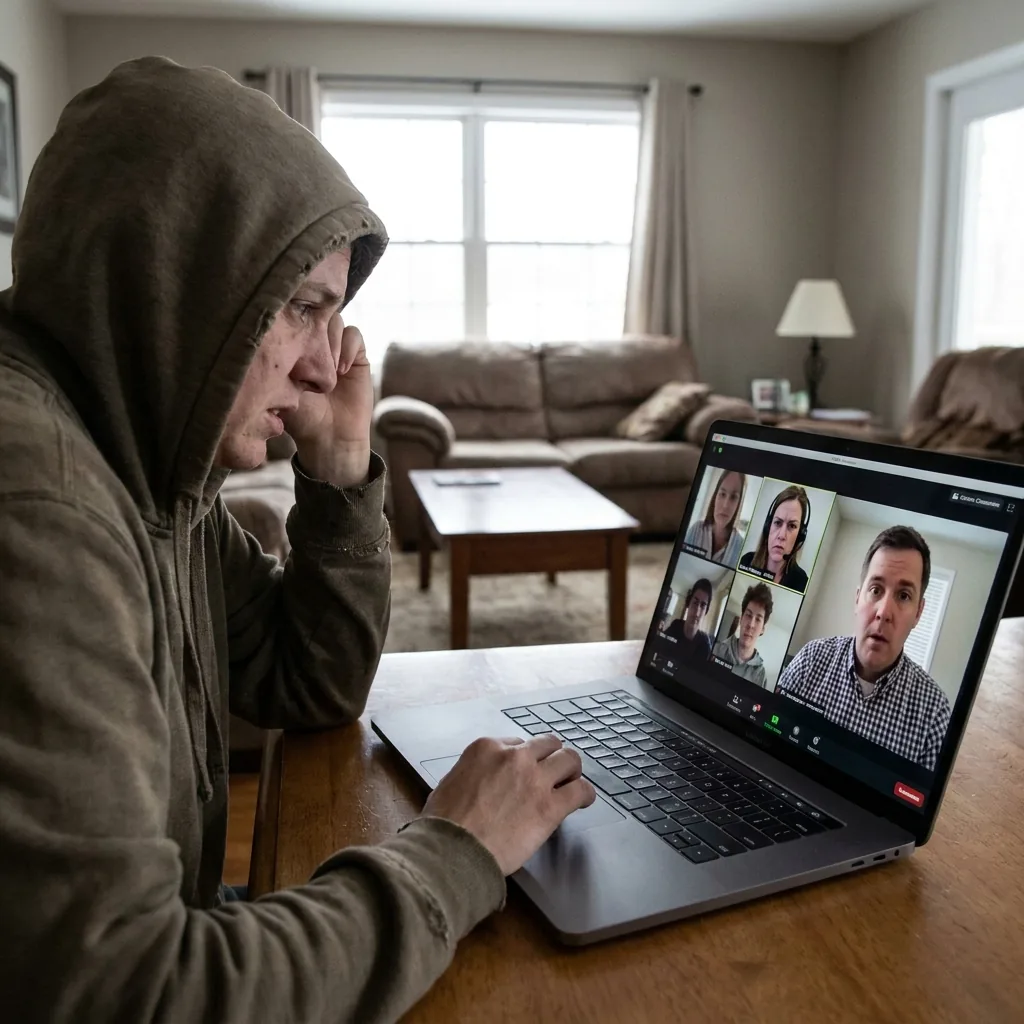
Dana Holloway stopped Mr. Mercer’s math review in the middle of a screen-share, looked straight into her webcam, and told twenty-three people that she had personally fought to keep students like me enrolled. Then she said, with my name still sitting bright in the participant list, that the least I could do was keep my camera on so nobody forgot what her sacrifice had protected. I was already in the online classroom, already taking notes, already visible in that little square on the call, and somehow she still made my own webcam sound like a debt payment.
Mr. Mercer had been circling equations with the annotation tool when Dana unmuted herself. He stopped talking the second her voice cut in. That happened every time she joined our class. The teacher’s face would go still, the screen would pause, and the whole room would shift from school to whatever Dana wanted it to be.
“Before we move on,” she said, smiling in that polished way she used when she wanted something to sound generous, “I just want everyone to remember that access is not automatic. There are students in this program because people in administration made hard choices for them.”
Her eyes flicked to my tile. Mine was one of the few cameras on because our attendance grade took a hit if we stayed dark too often.
“Maya, thank you for showing up properly,” she said. “That matters. When people go the extra mile for you, respect looks like participation.”
Nobody said anything. I could hear somebody’s dog barking through an unmuted mic, then a fast click as they muted again. Janelle’s square froze for a second and came back. Mr. Mercer cleared his throat, but he didn’t take the floor back.
Dana kept going.
“Some families don’t know how close things came,” she said. “I gave up a lot of time to make sure certain students kept their places here. So when I ask for basic cooperation, I expect it.”
She did not say my last name, but she did not need to. My face was sitting there on the screen while she built the speech around me. I stared at the tiny green light beside my webcam and tried to keep my expression flat. There is a special kind of trap in being told to look grateful in public. If you defend yourself, you look ungrateful. If you stay quiet, your silence gets used as agreement.
Mr. Mercer said, “Okay, let’s get back to problem seven,” but Dana laughed softly over him.
“Just one more thing. Maya, can you tilt your camera a little higher? We need to make sure you’re fully present if we’re counting you as engaged.”
That was the first moment I understood she was not talking about attendance. She was talking about control.
I adjusted the laptop because everyone was watching. My notes, my headset cord, half my shoulder, the cheap desk lamp my mom kept moving from room to room so I could work during her shifts-suddenly all of it felt staged for her. Dana nodded like I had confirmed something important.
“There we go,” she said. “See? Cooperation. That’s all I ask after everything I’ve done behind the scenes.”
The rest of class moved, but not normally. Every time I looked down too long to write, I felt the camera there. Every time Mr. Mercer called on someone else, Dana stayed in the participant list like a supervisor nobody had invited but nobody would remove. When the bell window popped up and students started logging off, I reached for leave meeting.
Before I clicked, a private chat notification slid onto my screen.
From Dana Holloway: Stay on for two minutes, please. We need to discuss maintaining standards.
I stayed because leaving right after that speech would have turned into its own story.
When the class grid thinned out, Dana’s face got larger on the screen. Mr. Mercer remained in the call, muted, eyes down like he was answering email. Dana said, “I hope you understand that when someone advocates for your continued placement, there should be no resistance over simple requests. Camera use should never become a struggle.”
I said, carefully, “I always attend class.”
“Attendance is a minimum,” she said. “Gratitude has a look to it.”
That sat there between us for a second. I heard my own mic pick up the scratch of my pen because my hand was still resting on the notebook.
She started talking about consistency, image, trust, and how the program depended on students not making support staff regret extending themselves. None of it was direct enough to report cleanly. All of it was direct enough to land.
That night I replayed the class recording in the portal because our school automatically saved sessions for students who missed them. Her speech was all there. The pause on my tile. The request to lift my camera. The line about hard choices and students keeping their places. I watched it twice, then a third time with headphones on.
The strangest part was not what she said. It was how easily she refused to let me be just another student. She kept acting like my spot in that class belonged to her story first and me second.
The next morning, before first period even started, another message from Dana hit my inbox with a meeting link and one line under it: We need to discuss your attitude about support.
I had never asked her for special handling in the first place, so I did not understand why she sounded so determined to keep me in debt.
Dana Holloway stopped Mr. Mercer’s math review in the middle of a screen-share, looked straight into her webcam, and told twenty-three people that she had personally fought to keep students like me enrolled. Then she said, with my name still sitting bright in the participant list, that the least I could do was keep my camera on so nobody forgot what her sacrifice had protected. I was already in the online classroom, already taking notes, already visible in that little square on the call, and somehow she still made my own webcam sound like a debt payment.
Mr. Mercer had been circling equations with the annotation tool when Dana unmuted herself. He stopped talking the second her voice cut in. That happened every time she joined our class. The teacher’s face would go still, the screen would pause, and the whole room would shift from school to whatever Dana wanted it to be.
“Before we move on,” she said, smiling in that polished way she used when she wanted something to sound generous, “I just want everyone to remember that access is not automatic. There are students in this program because people in administration made hard choices for them.”
Her eyes flicked to my tile. Mine was one of the few cameras on because our attendance grade took a hit if we stayed dark too often.
“Maya, thank you for showing up properly,” she said. “That matters. When people go the extra mile for you, respect looks like participation.”
Nobody said anything. I could hear somebody’s dog barking through an unmuted mic, then a fast click as they muted again. Janelle’s square froze for a second and came back. Mr. Mercer cleared his throat, but he didn’t take the floor back.
Dana kept going.
“Some families don’t know how close things came,” she said. “I gave up a lot of time to make sure certain students kept their places here. So when I ask for basic cooperation, I expect it.”
She did not say my last name, but she did not need to. My face was sitting there on the screen while she built the speech around me. I stared at the tiny green light beside my webcam and tried to keep my expression flat. There is a special kind of trap in being told to look grateful in public. If you defend yourself, you look ungrateful. If you stay quiet, your silence gets used as agreement.
Mr. Mercer said, “Okay, let’s get back to problem seven,” but Dana laughed softly over him.
“Just one more thing. Maya, can you tilt your camera a little higher? We need to make sure you’re fully present if we’re counting you as engaged.”
That was the first moment I understood she was not talking about attendance. She was talking about control.
I adjusted the laptop because everyone was watching. My notes, my headset cord, half my shoulder, the cheap desk lamp my mom kept moving from room to room so I could work during her shifts-suddenly all of it felt staged for her. Dana nodded like I had confirmed something important.
“There we go,” she said. “See? Cooperation. That’s all I ask after everything I’ve done behind the scenes.”
The rest of class moved, but not normally. Every time I looked down too long to write, I felt the camera there. Every time Mr. Mercer called on someone else, Dana stayed in the participant list like a supervisor nobody had invited but nobody would remove. When the bell window popped up and students started logging off, I reached for leave meeting.
Before I clicked, a private chat notification slid onto my screen.
From Dana Holloway: Stay on for two minutes, please. We need to discuss maintaining standards.
I stayed because leaving right after that speech would have turned into its own story.
When the class grid thinned out, Dana’s face got larger on the screen. Mr. Mercer remained in the call, muted, eyes down like he was answering email. Dana said, “I hope you understand that when someone advocates for your continued placement, there should be no resistance over simple requests. Camera use should never become a struggle.”
I said, carefully, “I always attend class.”
“Attendance is a minimum,” she said. “Gratitude has a look to it.”
That sat there between us for a second. I heard my own mic pick up the scratch of my pen because my hand was still resting on the notebook.
She started talking about consistency, image, trust, and how the program depended on students not making support staff regret extending themselves. None of it was direct enough to report cleanly. All of it was direct enough to land.
That night I replayed the class recording in the portal because our school automatically saved sessions for students who missed them. Her speech was all there. The pause on my tile. The request to lift my camera. The line about hard choices and students keeping their places. I watched it twice, then a third time with headphones on.
The strangest part was not what she said. It was how easily she refused to let me be just another student. She kept acting like my spot in that class belonged to her story first and me second.
The next morning, before first period even started, another message from Dana hit my inbox with a meeting link and one line under it: We need to discuss your attitude about support.
I had never asked her for special handling in the first place, so I did not understand why she sounded so determined to keep me in debt.