Story code: ST-000584
Part 2: She Needed the Real Cardholder to Keep the Wrong File Alive
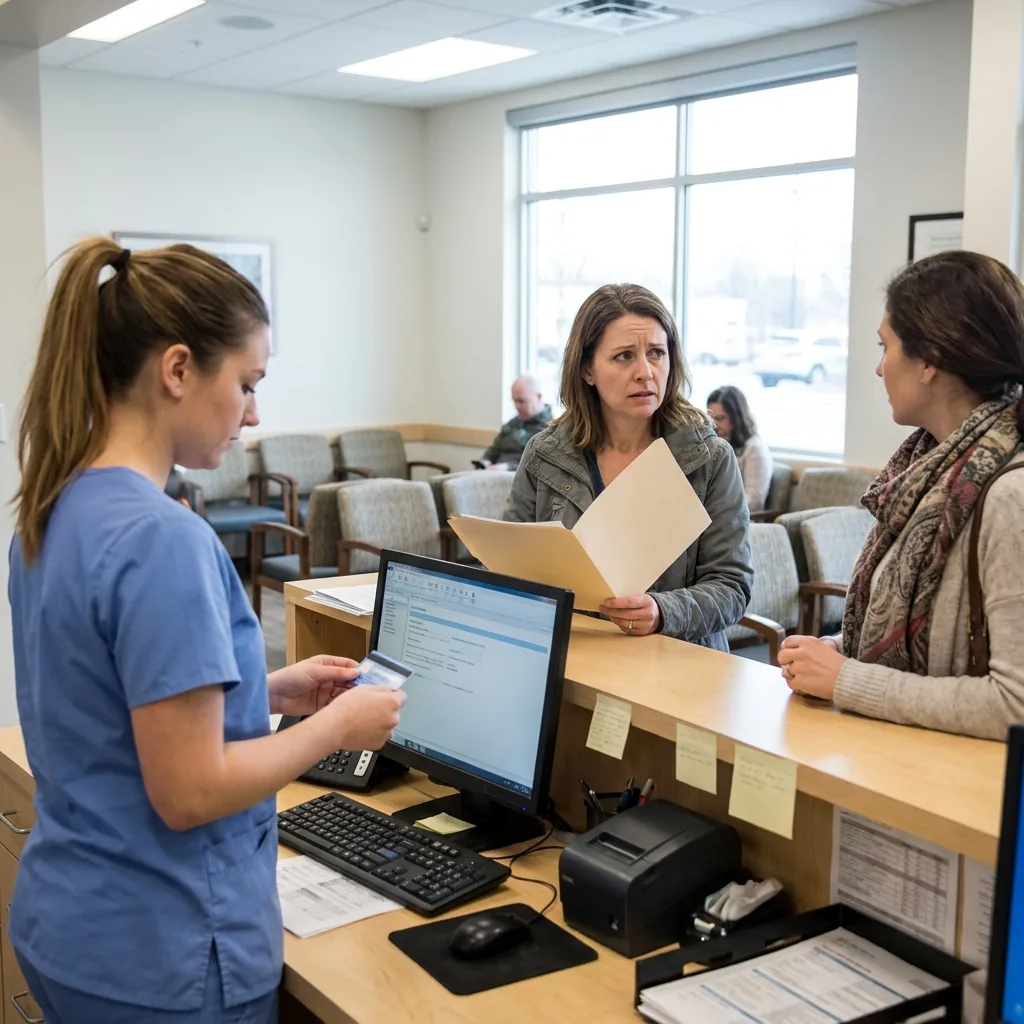
By the time Part 2 starts, the problem was no longer hidden inside a computer screen. Marlene Pike was standing at the urgent care counter with Dana Mercer’s insurance card under her hand, Tasha Reed’s visit moving forward under that coverage, and Dana being treated like the obstacle for noticing it.
The clearest part was this: every time the check-in hit a member-specific question, the process stalled on Tasha and restarted when Dana answered.
Marlene tried to regain control with tone. “Ma’am, if you want to be seen today, I need you to cooperate.”
Dana kept her voice level. “Cooperate with what? You checking her in under my card?”
Marlene turned the monitor slightly away and reached for the clipboard tablet. “If your own eligibility cannot be verified, urgent care requires a self-pay deposit before treatment.”
There it was. The practical damage, said out loud. While another patient was being advanced under Dana’s coverage, Dana herself was being pushed toward self-pay.
Rosa in the waiting area leaned forward far enough that her chair legs scraped. Two other people looked up from their phones. Nobody needed the whole backstory. They could hear enough pieces repeated aloud to track the mismatch.
Dana asked for the card again.
Marlene did not return it. She said, “I’m still in the verification process.”
Then, still addressing Tasha, she asked, “Group number?”
Tasha read the first line she saw and got it wrong.
Dana answered automatically from memory. “That’s not the group number. It’s under the plan code box.”
Marlene typed Dana’s correction without pause.
Dana caught it instantly. “You just did it again.”
Marlene said, “I’m clarifying the record.”
“For whose record?” Dana asked.
That question hung there because the visible facts had become simple. Tasha was the person being processed. Dana was the person supplying the answers. Marlene was bridging the gap between them and pretending the gap did not matter.
The longer it went on, the more work Dana had to do just to stop losing ground. She had to watch the card, watch Marlene’s hands, listen for each question, and decide whether staying silent would let the wrong file move further. That is a specific kind of erasure people do not talk about enough. Your money, your place in line, your coverage status, and even your labor all get pulled from you at once.
Marlene asked Tasha for the employer tied to the plan.
Tasha said, “I’m not sure which one you mean.”
Dana let that one sit too.
Marlene repeated it, slower. “The employer on the insurance plan.”
Tasha folded her arms, unfolded them, and looked at the card, then at Marlene. “Can you just tell me what you need?”
That was the second visible gap, larger than the first. If the coverage genuinely belonged to the active patient file, the desk would not need coaching from the side.
Dana pointed at the card. “Read the name on it.”
Marlene ignored that and shifted tactics. “Dana, if this is your insurance, then help me verify it so we can determine whether you have urgent care benefits today.”
The wording was almost neat enough to miss. Dana’s insurance had become something Marlene needed help with, even while Marlene was using it to support someone else’s intake.
Dana asked, “Why would my benefits for today depend on me answering questions for her visit?”
No answer. Just more typing.
A printer label kicked out again. Tasha’s paperwork got another piece added to it. Dana still had no wristband, no completed check-in, no confirmation that her own visit existed in the same system path.
That was when Dana changed her demand.
“I want a supervisor at this counter before you ask one more question off my card.”
Marlene said, “A supervisor will tell you the same thing.”
But her delivery was different now. Earlier she had the clean rhythm of someone moving a standard intake along. Now she was speaking between pauses, with her hand flattening over the keyboard every time Dana leaned slightly toward the desk.
From the chairs, Rosa said what the room had already started assembling for itself.
“She keeps asking the one woman questions for the other woman’s insurance.”
Marlene shot back, “Please do not interfere with patient privacy.”
Rosa lifted both hands and sat back, but the sentence had already landed with the audience that mattered: everyone within earshot now knew the same details were being asked twice, and only one person could answer them correctly.
Dana stayed right there. “Read the subscriber name on the card and the patient name on the file you’re moving,” she said.
Marlene did not do it.
Instead, she asked Tasha one more member-specific question, the kind that should have closed the issue in seconds if the coverage actually belonged to the person receiving it.
“What’s the subscriber date of birth?”
Tasha opened her mouth and stopped.
Marlene turned toward Dana before the silence was even over.
And that was the moment the room no longer looked like a difficult patient arguing policy. It looked like a clerk who could not keep the intake alive without the real cardholder standing there to feed her the answers.
A man in navy scrubs stepped out from the hall at the sound of three voices crossing at once, glanced from the card to the counter monitor to the waiting chairs, and said, “Stop. Whose insurance is this actually attached to right now?”