Story code: ST-000584
Part 1: She Checked In Under My Card While I Was Standing There
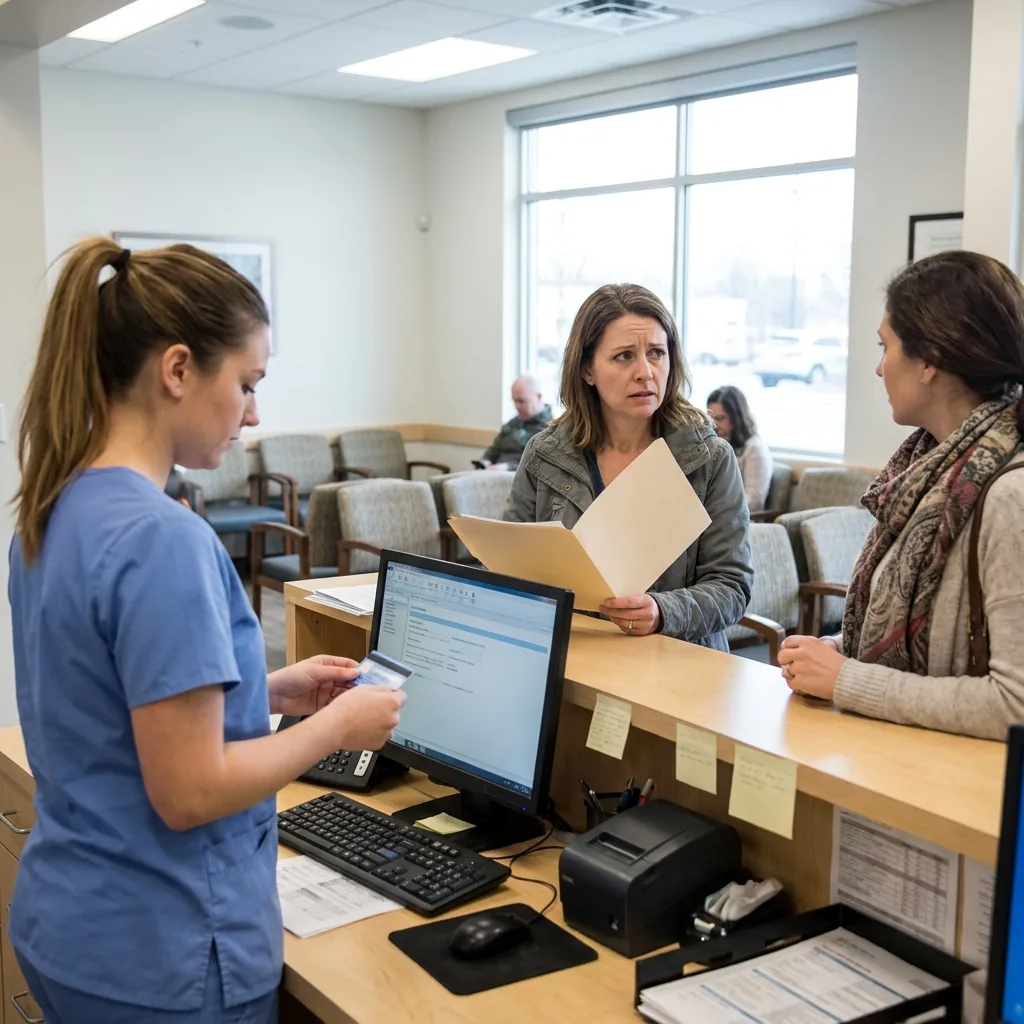
The benefits clerk at the urgent care counter took Dana Mercer’s insurance card, scanned it, and started checking in another woman under that coverage while Dana was still standing there with her folder open. In less than a minute, Dana’s own visit was sliding toward self-pay, another patient was getting the movement tied to Dana’s card, and the only thing keeping the lie alive was a set of member questions the wrong woman could not answer.
This happened in one of those neighborhood urgent care lobbies where the front desk sits close enough to the waiting chairs that everybody hears the same names twice. A toddler was thumping a plastic truck against a chair leg. The label printer kept spitting short white strips. Marlene Pike, the benefits clerk, had one hand on the keyboard and one on Dana’s card.
Dana had arrived prepared. She set down a check-in folder, her ID, and the insurance card. Plain motion. Routine visit. Marlene gave the usual brisk lines about verifying active coverage. While Dana was still gathering the clipboard and stylus from the counter edge, another patient stepped up beside the scanner station.
That patient was Tasha Reed.
The sequence mattered, because Dana watched it happen in order. Marlene scanned Dana’s card. Marlene looked at the monitor. Marlene asked Tasha for a birth date without handing Dana anything back. Tasha answered. Marlene typed. A printed label came out. Marlene set it with Tasha’s intake sheet.
Dana did not make a scene at first. She asked the kind of question people ask when they think something small got crossed.
“Sorry,” she said, pointing at the card still on the desk. “That’s my insurance card.”
Marlene did not look up right away. “I’m verifying coverage,” she said.
“For her?” Dana asked.
Marlene finally looked up and gave Dana a flat, professional stare. “Ma’am, if you interrupt intake, you will delay your own check-in.”
That was the first public shift. Not because of volume. Because the answer was not a correction. It was a warning.
Tasha stayed at the counter, one shoulder angled toward Marlene, one toward the lobby. She answered the basic things fine: address, phone number, emergency contact. But the card on the desk stayed in Marlene’s hand, and Dana stayed standing there without being checked in under it.
Dana asked again, more directly. “Why is my card attached to her visit?”
Marlene said, “Coverage is being reviewed. If yours is active, we’ll determine next steps.”
That line landed strangely, because the card was already in play. Dana could see the monitor reflected faintly in the plastic sneeze guard. Not enough to read every line, but enough to see Marlene moving through screens while Tasha answered as if the file belonged to her.
Then came the first visible gap.
Marlene asked Tasha for the member ID suffix.
Tasha paused. She looked at the card. She looked at Marlene. “Is that the long number?”
“The member suffix,” Marlene repeated.
Tasha said nothing for a beat too long.
Dana answered before she could stop herself. “It’s 02. I’m the subscriber plus child rider on the old plan conversion.”
Marlene’s fingers moved immediately. She typed Dana’s answer into the active screen without separating the files, without stopping, without handing the card back.
That was when Dana’s posture changed from confused patient to witness. She did not raise her voice. She planted both palms on the counter edge and watched every question.
“Why are you using my answer?” she asked.
Marlene went back to policy language. “I’m trying to keep the line moving.”
That sentence turned heads in the waiting chairs, because now the line itself was the excuse.
Rosa Alvarez, sitting three chairs from the counter, lowered a magazine and started listening openly. The toddler’s mother stopped bouncing her leg. The printer ran again. Another label slid out near Tasha’s paperwork.
Dana asked for her card back.
Marlene kept it on the desk and said, “If we stop now, your eligibility may not process correctly.”
Again, the warning was aimed at Dana, even though Tasha was the one receiving the progress. Tasha got a wristband strip placed near her papers. Dana got told to wait.
Then Marlene asked the next question, still facing Tasha.
“Subscriber address?”
Tasha gave a street number, then stopped.
Marlene’s eyes cut sideways toward Dana.
Dana did not fill it in that time. She let the silence sit there in full earshot of the waiting room chairs and the scanner light and the white labels curling on the counter. Tasha shifted, looked at Marlene, and tried again with the wrong ZIP code.
Marlene corrected nothing out loud. She only repeated, sharper, “Subscriber address.”
Dana looked at her own card still under Marlene’s hand and asked the question nobody at that counter should have had to ask.
“If she’s the patient under that coverage, why do you need me standing here to finish her answers?”
The benefits clerk at the urgent care counter took Dana Mercer’s insurance card, scanned it, and started checking in another woman under that coverage while Dana was still standing there with her folder open. In less than a minute, Dana’s own visit was sliding toward self-pay, another patient was getting the movement tied to Dana’s card, and the only thing keeping the lie alive was a set of member questions the wrong woman could not answer.
This happened in one of those neighborhood urgent care lobbies where the front desk sits close enough to the waiting chairs that everybody hears the same names twice. A toddler was thumping a plastic truck against a chair leg. The label printer kept spitting short white strips. Marlene Pike, the benefits clerk, had one hand on the keyboard and one on Dana’s card.
Dana had arrived prepared. She set down a check-in folder, her ID, and the insurance card. Plain motion. Routine visit. Marlene gave the usual brisk lines about verifying active coverage. While Dana was still gathering the clipboard and stylus from the counter edge, another patient stepped up beside the scanner station.
That patient was Tasha Reed.
The sequence mattered, because Dana watched it happen in order. Marlene scanned Dana’s card. Marlene looked at the monitor. Marlene asked Tasha for a birth date without handing Dana anything back. Tasha answered. Marlene typed. A printed label came out. Marlene set it with Tasha’s intake sheet.
Dana did not make a scene at first. She asked the kind of question people ask when they think something small got crossed.
“Sorry,” she said, pointing at the card still on the desk. “That’s my insurance card.”
Marlene did not look up right away. “I’m verifying coverage,” she said.
“For her?” Dana asked.
Marlene finally looked up and gave Dana a flat, professional stare. “Ma’am, if you interrupt intake, you will delay your own check-in.”
That was the first public shift. Not because of volume. Because the answer was not a correction. It was a warning.
Tasha stayed at the counter, one shoulder angled toward Marlene, one toward the lobby. She answered the basic things fine: address, phone number, emergency contact. But the card on the desk stayed in Marlene’s hand, and Dana stayed standing there without being checked in under it.
Dana asked again, more directly. “Why is my card attached to her visit?”
Marlene said, “Coverage is being reviewed. If yours is active, we’ll determine next steps.”
That line landed strangely, because the card was already in play. Dana could see the monitor reflected faintly in the plastic sneeze guard. Not enough to read every line, but enough to see Marlene moving through screens while Tasha answered as if the file belonged to her.
Then came the first visible gap.
Marlene asked Tasha for the member ID suffix.
Tasha paused. She looked at the card. She looked at Marlene. “Is that the long number?”
“The member suffix,” Marlene repeated.
Tasha said nothing for a beat too long.
Dana answered before she could stop herself. “It’s 02. I’m the subscriber plus child rider on the old plan conversion.”
Marlene’s fingers moved immediately. She typed Dana’s answer into the active screen without separating the files, without stopping, without handing the card back.
That was when Dana’s posture changed from confused patient to witness. She did not raise her voice. She planted both palms on the counter edge and watched every question.
“Why are you using my answer?” she asked.
Marlene went back to policy language. “I’m trying to keep the line moving.”
That sentence turned heads in the waiting chairs, because now the line itself was the excuse.
Rosa Alvarez, sitting three chairs from the counter, lowered a magazine and started listening openly. The toddler’s mother stopped bouncing her leg. The printer ran again. Another label slid out near Tasha’s paperwork.
Dana asked for her card back.
Marlene kept it on the desk and said, “If we stop now, your eligibility may not process correctly.”
Again, the warning was aimed at Dana, even though Tasha was the one receiving the progress. Tasha got a wristband strip placed near her papers. Dana got told to wait.
Then Marlene asked the next question, still facing Tasha.
“Subscriber address?”
Tasha gave a street number, then stopped.
Marlene’s eyes cut sideways toward Dana.
Dana did not fill it in that time. She let the silence sit there in full earshot of the waiting room chairs and the scanner light and the white labels curling on the counter. Tasha shifted, looked at Marlene, and tried again with the wrong ZIP code.
Marlene corrected nothing out loud. She only repeated, sharper, “Subscriber address.”
Dana looked at her own card still under Marlene’s hand and asked the question nobody at that counter should have had to ask.
“If she’s the patient under that coverage, why do you need me standing here to finish her answers?”