Story code: ST-000587
Part 1: She Said I Was Disrespecting the Wedding
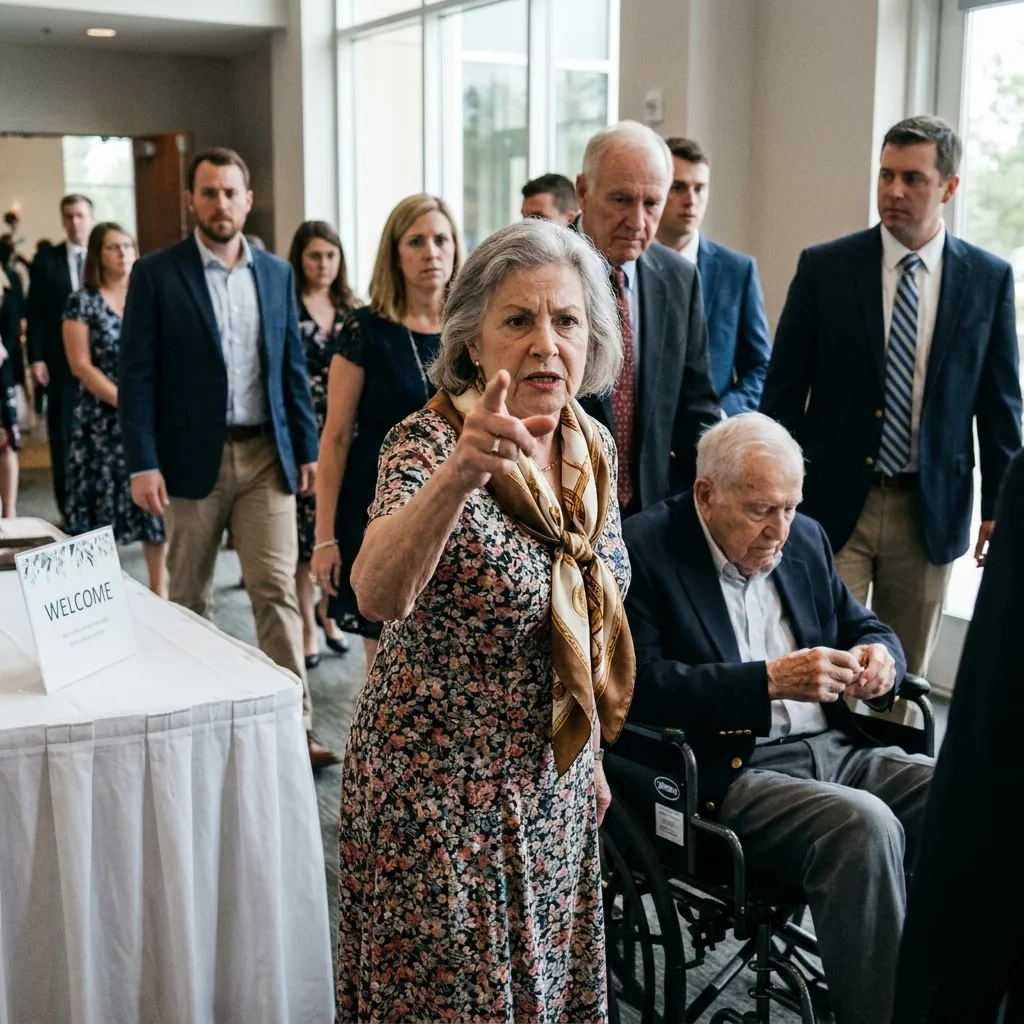
Dahlia Hart pointed at me in the aisle entrance staging area, with guests already filing past the welcome table, and said loud enough for three rows to hear, “She is ruining this wedding over a scarf.” I was holding her aunt Leila steady with one hand, the ceremony scarf sliding off Leila’s shoulder with the other, and a folding chair I had dragged closer to the front was still scraping the floor. Ten seconds earlier Leila had asked me for water and a seat, but suddenly I was the selfish one in the room.
That was the kind of afternoon it was in the main wedding hall.
I had my apron notepad in one pocket, the seating list folded behind it, and I was moving between chairs, garment bags, and family questions while the first guests came through the side doors. The bride, Nina Hart, kept appearing at the edge of the prep hallway, checking the time on her phone and asking some version of, “Are we ready to line up yet?” Every answer she got pulled her in a different direction.
Leila was near the family seating row at the front when I first saw her press one hand against her collarbone and look toward the aisle entrance instead of the chairs set for her. The ceremony scarf, a long pale wrap with stitched trim, had slipped low enough that one end was almost brushing the carpet. She said, very quietly, “Can I have that chair a little closer?” Then, after I brought it over, “And some water, please.”
So I did what I always do. I set the chair where she could reach it without crossing the whole front row, steadied her elbow while she turned, and caught the scarf before it dragged. Tessa Cole was coming from the linen and water station with a silver tray when I asked her for a glass. She nodded once and kept moving.
I had just lifted the scarf back over Leila’s shoulder when Dahlia came in from the hallway outside the prep room, carrying her voice ahead of her.
“No, no, no,” she said. “That scarf is not supposed to be handled like that. Who told you to touch it?”
I said, “Ms. Hart asked me to keep it from hitting the floor.”
Leila was still sitting down, her hand gripping the chair seat, and she said something soft that made me lean in. Before I could catch it, Dahlia stepped closer and took hold of the scarf for emphasis, not to fix it. She looked past me toward two cousins standing near the program basket.
“This is what I mean,” she said. “People come in here and make themselves important. If she cared about respect, she would leave family things alone.”
The room did that awful thing busy rooms do when noise doesn’t stop but attention shifts anyway. Silverware still clinked from the catering setup in back. Someone laughed near the gift table. But the people nearest us went quiet enough that I could hear the radio on Ruben Alvarez’s belt crackle from across the hall.
I said, “I was asked to help with the chair and water. The scarf was slipping.”
Dahlia gave me a thin smile that didn’t lower her voice. “You were asked to work, not insert yourself into a ceremony.”
At that point Tessa arrived with the water glass on the tray. She held it toward Leila first, exactly like anyone with eyes would have done. Leila took it with both hands. Some water jumped the rim onto her fingers. I grabbed a linen napkin from the tray and passed it over.
Dahlia looked at that too, as if even the napkin proved her point. “See? Now everything is a production.”
Nina appeared from the prep hallway in half her dress and a zip hoodie, one earring still missing. “What happened?” she asked.
Dahlia answered before anyone else could. “Your worker is making Aunt Leila into a spectacle and mishandling the scarf right before lineup.”
Nina looked from the chair I had moved, to the water in Leila’s hands, to the scarf bunched near Leila’s shoulder. “Can we please just keep things moving?” she said.
That should have ended it. It didn’t.
Dahlia used “keep things moving” like it was agreement. She told me not to touch the scarf again. Then she told one cousin to bring Leila forward in five minutes, told another to check the family row, and pointed at me like I was the delay instead of the person already doing the tasks. She never picked up the chair. She never took the water glass. She never even settled the scarf after grabbing it.
I stepped back because guests were staring now, and because Ruben does not like family spillover blocking the front aisle when doors are open. I wrote a quick line in my notepad out of habit: 3:42 chair moved to front row for Leila. 3:43 water requested. 3:44 scarf caught before floor.
Not for a complaint. Just because timing matters in a hall when everybody starts talking over the top of what just happened.
Then Dahlia said, with Leila still seated and the scarf sliding again, “If she had left well enough alone, my aunt would already be where she belongs.”
That was the part that made people look at me like I had created the problem. The only issue was, half the room had just watched who brought the chair, who fetched the water, who steadied Leila, and who only talked after the work was already done.
Dahlia Hart pointed at me in the aisle entrance staging area, with guests already filing past the welcome table, and said loud enough for three rows to hear, “She is ruining this wedding over a scarf.” I was holding her aunt Leila steady with one hand, the ceremony scarf sliding off Leila’s shoulder with the other, and a folding chair I had dragged closer to the front was still scraping the floor. Ten seconds earlier Leila had asked me for water and a seat, but suddenly I was the selfish one in the room.
That was the kind of afternoon it was in the main wedding hall.
I had my apron notepad in one pocket, the seating list folded behind it, and I was moving between chairs, garment bags, and family questions while the first guests came through the side doors. The bride, Nina Hart, kept appearing at the edge of the prep hallway, checking the time on her phone and asking some version of, “Are we ready to line up yet?” Every answer she got pulled her in a different direction.
Leila was near the family seating row at the front when I first saw her press one hand against her collarbone and look toward the aisle entrance instead of the chairs set for her. The ceremony scarf, a long pale wrap with stitched trim, had slipped low enough that one end was almost brushing the carpet. She said, very quietly, “Can I have that chair a little closer?” Then, after I brought it over, “And some water, please.”
So I did what I always do. I set the chair where she could reach it without crossing the whole front row, steadied her elbow while she turned, and caught the scarf before it dragged. Tessa Cole was coming from the linen and water station with a silver tray when I asked her for a glass. She nodded once and kept moving.
I had just lifted the scarf back over Leila’s shoulder when Dahlia came in from the hallway outside the prep room, carrying her voice ahead of her.
“No, no, no,” she said. “That scarf is not supposed to be handled like that. Who told you to touch it?”
I said, “Ms. Hart asked me to keep it from hitting the floor.”
Leila was still sitting down, her hand gripping the chair seat, and she said something soft that made me lean in. Before I could catch it, Dahlia stepped closer and took hold of the scarf for emphasis, not to fix it. She looked past me toward two cousins standing near the program basket.
“This is what I mean,” she said. “People come in here and make themselves important. If she cared about respect, she would leave family things alone.”
The room did that awful thing busy rooms do when noise doesn’t stop but attention shifts anyway. Silverware still clinked from the catering setup in back. Someone laughed near the gift table. But the people nearest us went quiet enough that I could hear the radio on Ruben Alvarez’s belt crackle from across the hall.
I said, “I was asked to help with the chair and water. The scarf was slipping.”
Dahlia gave me a thin smile that didn’t lower her voice. “You were asked to work, not insert yourself into a ceremony.”
At that point Tessa arrived with the water glass on the tray. She held it toward Leila first, exactly like anyone with eyes would have done. Leila took it with both hands. Some water jumped the rim onto her fingers. I grabbed a linen napkin from the tray and passed it over.
Dahlia looked at that too, as if even the napkin proved her point. “See? Now everything is a production.”
Nina appeared from the prep hallway in half her dress and a zip hoodie, one earring still missing. “What happened?” she asked.
Dahlia answered before anyone else could. “Your worker is making Aunt Leila into a spectacle and mishandling the scarf right before lineup.”
Nina looked from the chair I had moved, to the water in Leila’s hands, to the scarf bunched near Leila’s shoulder. “Can we please just keep things moving?” she said.
That should have ended it. It didn’t.
Dahlia used “keep things moving” like it was agreement. She told me not to touch the scarf again. Then she told one cousin to bring Leila forward in five minutes, told another to check the family row, and pointed at me like I was the delay instead of the person already doing the tasks. She never picked up the chair. She never took the water glass. She never even settled the scarf after grabbing it.
I stepped back because guests were staring now, and because Ruben does not like family spillover blocking the front aisle when doors are open. I wrote a quick line in my notepad out of habit: 3:42 chair moved to front row for Leila. 3:43 water requested. 3:44 scarf caught before floor.
Not for a complaint. Just because timing matters in a hall when everybody starts talking over the top of what just happened.
Then Dahlia said, with Leila still seated and the scarf sliding again, “If she had left well enough alone, my aunt would already be where she belongs.”
That was the part that made people look at me like I had created the problem. The only issue was, half the room had just watched who brought the chair, who fetched the water, who steadied Leila, and who only talked after the work was already done.