Story code: ST-000650
Part 1: He Put It On The Lab Chat
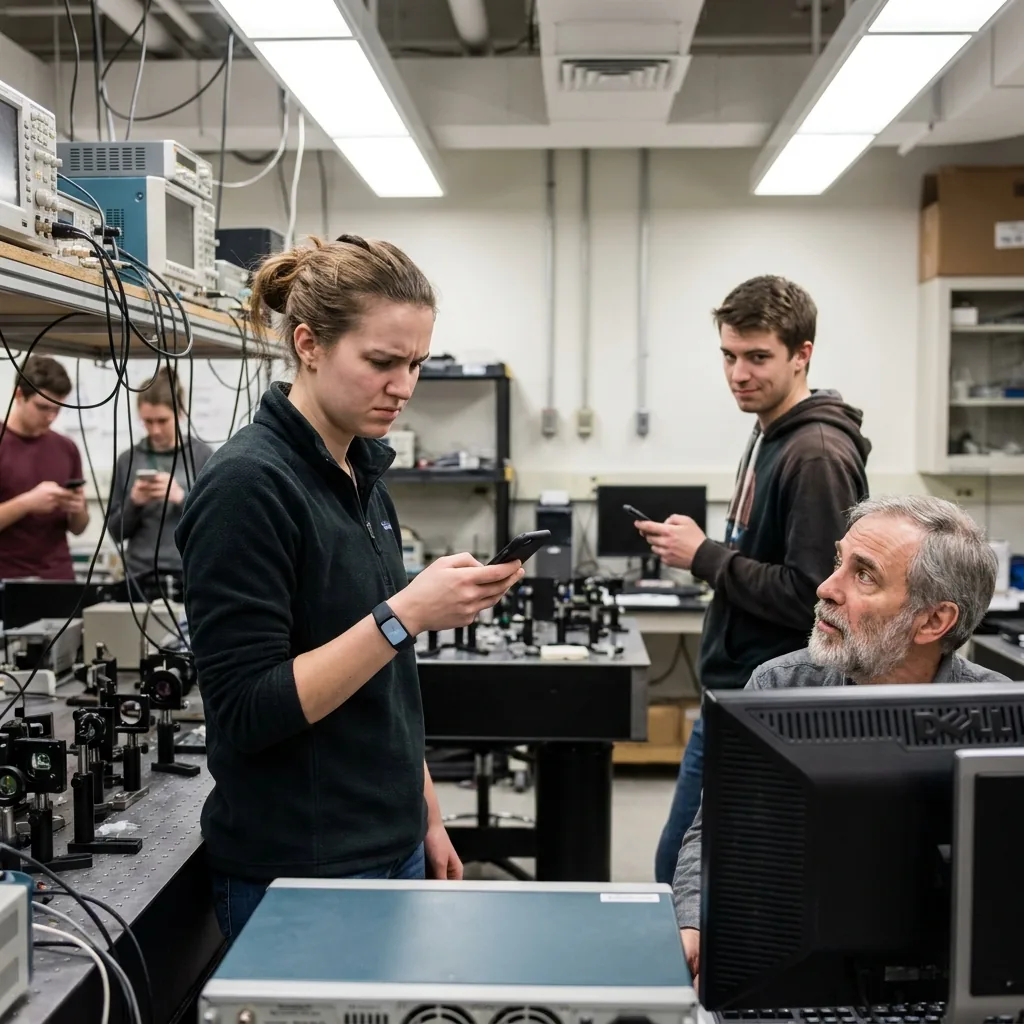
My brother put my sensor-bracelet data on the lab group chat while I was still standing at the optics bench, and within thirty seconds people in the Quantum Devices Lab at Halbrook University were looking from their calibration screens to me like the case was already closed. He posted a clipped phone recording of the wall display near the live data monitor and wrote that it proved I was lying about where I had been during a locked lab session, except the clip started too late and ended too clean for anyone to know what it actually showed.
That was the part that changed the room.
One minute the bench row sounded normal: cooling fans, drawer slides, someone tapping a wrench against a cart because a fastener had rolled underneath it. The next minute three phones lit up at once, a laugh broke loose near the spectroscopy cart, and Noah Patel looked at his screen, then at the wall display station, then back at me so fast it was obvious the same post had hit everyone at once.
Ethan was already halfway into the aisle, phone still in his hand, talking over the noise before anyone asked him a question.
“I’m not saying anything complicated,” he said. “I’m saying the bracelet log is right there. Time stamp, station location, spike pattern. She said she wasn’t at the display. The data says otherwise.”
Nobody needed a full explanation to understand the accusation he wanted. That was what made it cruel. The bracelet was assigned to me for lab sessions. It tracked physiological response and station-linked check-ins for equipment calibration studies. Most days it was just another irritating piece of gear under a nitrile glove cuff. On his phone screen, though, and then on everyone else’s, it looked like something sharper: a private stretch of bracelet-linked readings, a wall display angle, and his caption telling the room what conclusion to draw.
Noah took one step toward me, stopped, and said, “The chat says you cut out of the session and came back after the display changed.”
He said it like he was repeating weather, then looked down immediately, as if he had heard himself join the spread.
I walked to the wall station without hurrying. The display was still open from an earlier review sequence, bracelet tiles stacked on one side, session markers on the other. Ethan’s clipped recording showed my name, my bracelet ID, a time stamp, and a short surge in the graph. In the clip, his thumb had paused long enough to let that frame settle before the video cut.
“Play the whole thing,” I said.
“That is the thing,” he said.
“No,” I said, looking at the monitor instead of at him. “That is a section.”
A couple of people moved closer. One person near the centrifuge muttered, “If there’s more, just show it.” Another said, “Why would he crop it if it helps him?” Ethan answered that one before I could.
“Because no one needs ten minutes of dead screen to understand a lie.”
That sentence did more damage than the clip. It gave the room permission to treat the rest like cleanup.
The post started jumping beyond the people physically in the lab. A reaction bubble popped up on Noah’s phone from someone upstairs. Another researcher at the far bench held her phone chest-high and angled it toward a friend, replaying the same six or seven seconds. A private moment had been turned into lab entertainment so fast it barely looked like a decision.
I checked the corner of the wall display, then the session bar beneath the bracelet panel. The visible layout did not match the beginning of Ethan’s video. In his clip, the graph was already enlarged and the station tag was already pinned open. On the live screen in front of us, those settings took deliberate taps to reach. The sequence mattered. If the graph had been expanded after another panel was opened, then the clip was not showing what he claimed it was showing when he claimed it showed it.
“You recorded the review screen, not the original event,” I said.
Ethan gave a short shrug. “It’s still your bracelet.”
“That wasn’t my question.”
That was when Dr. Lena Alvarez stepped out of the side office. She did not raise her voice. She just looked at the cluster around the wall monitor, then at the phones, then at Ethan.
“If a claim is being made from device output,” she said, “I need the full capture, not a summary.”
For the first time since the post landed, Ethan stopped filling every pause.
He held up his phone and said, “It’s all there.”
“Then send the original file,” Dr. Alvarez said. “And leave the display as it was. No one touches the station until I see the session order.”
The room lost some of its easy noise right there, but not its appetite. People still had the clip. They still had his caption. They still had the version that made me look finished.
I reached for my own phone and opened the chat. Ethan’s upload sat at the top with laughing reactions under it and a line from someone outside our room saying, so she lied on camera too?
Under the posted clip was a small attachment icon that had not been there the first time I looked.
Same file name root. Longer duration. Unopened.
Ethan had told the room nobody needed ten minutes of dead screen, but the lab system did not auto-name separate recordings that way unless one had been cut down from the other. And if the longer file started where I thought it did, his clip was not just shortened. It changed the order of what people were seeing.
I looked up at the wall display, then at Ethan’s phone still in his hand, and said the only thing that mattered.
“Open the uncropped version, and let everybody see what your clip left out.”
My brother put my sensor-bracelet data on the lab group chat while I was still standing at the optics bench, and within thirty seconds people in the Quantum Devices Lab at Halbrook University were looking from their calibration screens to me like the case was already closed. He posted a clipped phone recording of the wall display near the live data monitor and wrote that it proved I was lying about where I had been during a locked lab session, except the clip started too late and ended too clean for anyone to know what it actually showed.
That was the part that changed the room.
One minute the bench row sounded normal: cooling fans, drawer slides, someone tapping a wrench against a cart because a fastener had rolled underneath it. The next minute three phones lit up at once, a laugh broke loose near the spectroscopy cart, and Noah Patel looked at his screen, then at the wall display station, then back at me so fast it was obvious the same post had hit everyone at once.
Ethan was already halfway into the aisle, phone still in his hand, talking over the noise before anyone asked him a question.
“I’m not saying anything complicated,” he said. “I’m saying the bracelet log is right there. Time stamp, station location, spike pattern. She said she wasn’t at the display. The data says otherwise.”
Nobody needed a full explanation to understand the accusation he wanted. That was what made it cruel. The bracelet was assigned to me for lab sessions. It tracked physiological response and station-linked check-ins for equipment calibration studies. Most days it was just another irritating piece of gear under a nitrile glove cuff. On his phone screen, though, and then on everyone else’s, it looked like something sharper: a private stretch of bracelet-linked readings, a wall display angle, and his caption telling the room what conclusion to draw.
Noah took one step toward me, stopped, and said, “The chat says you cut out of the session and came back after the display changed.”
He said it like he was repeating weather, then looked down immediately, as if he had heard himself join the spread.
I walked to the wall station without hurrying. The display was still open from an earlier review sequence, bracelet tiles stacked on one side, session markers on the other. Ethan’s clipped recording showed my name, my bracelet ID, a time stamp, and a short surge in the graph. In the clip, his thumb had paused long enough to let that frame settle before the video cut.
“Play the whole thing,” I said.
“That is the thing,” he said.
“No,” I said, looking at the monitor instead of at him. “That is a section.”
A couple of people moved closer. One person near the centrifuge muttered, “If there’s more, just show it.” Another said, “Why would he crop it if it helps him?” Ethan answered that one before I could.
“Because no one needs ten minutes of dead screen to understand a lie.”
That sentence did more damage than the clip. It gave the room permission to treat the rest like cleanup.
The post started jumping beyond the people physically in the lab. A reaction bubble popped up on Noah’s phone from someone upstairs. Another researcher at the far bench held her phone chest-high and angled it toward a friend, replaying the same six or seven seconds. A private moment had been turned into lab entertainment so fast it barely looked like a decision.
I checked the corner of the wall display, then the session bar beneath the bracelet panel. The visible layout did not match the beginning of Ethan’s video. In his clip, the graph was already enlarged and the station tag was already pinned open. On the live screen in front of us, those settings took deliberate taps to reach. The sequence mattered. If the graph had been expanded after another panel was opened, then the clip was not showing what he claimed it was showing when he claimed it showed it.
“You recorded the review screen, not the original event,” I said.
Ethan gave a short shrug. “It’s still your bracelet.”
“That wasn’t my question.”
That was when Dr. Lena Alvarez stepped out of the side office. She did not raise her voice. She just looked at the cluster around the wall monitor, then at the phones, then at Ethan.
“If a claim is being made from device output,” she said, “I need the full capture, not a summary.”
For the first time since the post landed, Ethan stopped filling every pause.
He held up his phone and said, “It’s all there.”
“Then send the original file,” Dr. Alvarez said. “And leave the display as it was. No one touches the station until I see the session order.”
The room lost some of its easy noise right there, but not its appetite. People still had the clip. They still had his caption. They still had the version that made me look finished.
I reached for my own phone and opened the chat. Ethan’s upload sat at the top with laughing reactions under it and a line from someone outside our room saying, so she lied on camera too?
Under the posted clip was a small attachment icon that had not been there the first time I looked.
Same file name root. Longer duration. Unopened.
Ethan had told the room nobody needed ten minutes of dead screen, but the lab system did not auto-name separate recordings that way unless one had been cut down from the other. And if the longer file started where I thought it did, his clip was not just shortened. It changed the order of what people were seeing.
I looked up at the wall display, then at Ethan’s phone still in his hand, and said the only thing that mattered.
“Open the uncropped version, and let everybody see what your clip left out.”