Story code: ST-000067
Part 4: The Sleeve Stayed With The Person Doing The Work
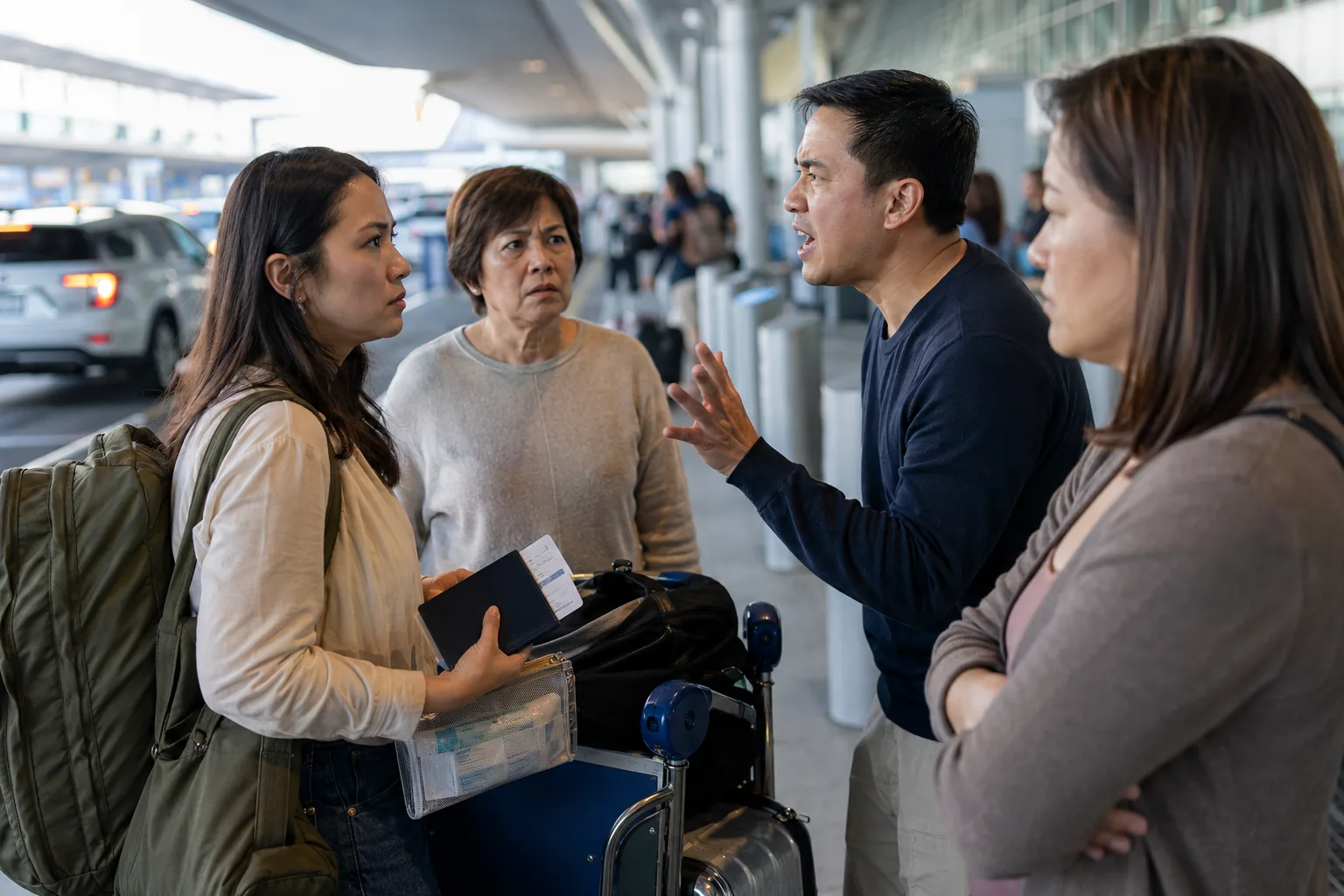
By then the curb had started moving again. The shuttle behind us pulled off. A porter rolled two stacked carts past my shoulder. Automatic doors kept opening and closing on bursts of cold air. It felt like the airport had decided it was done waiting on the Morgan family, and the only question left was whether Ryan would move with them or keep trying to pin himself in front of the wheels.
Tessa answered that without giving him a stage.
She leaned toward Elaine and spoke in the same practical tone she’d used for meds and boarding times. “I’m taking you inside now. At the first bench, I’m calling Carol and forwarding the trip list. Then I’m changing the airline alerts and medical ride number to mine only until we get back.”
Elaine said, “Do that.”
Ryan took one quick step forward. “You can’t just shut me out.”
Tessa looked at him, then held the passport sleeve against the wheelchair handle where he could see it and where Elaine could see it too. “I’m not doing this in front of strangers,” she said. “You will get one update tonight when we’re settled. After that, if Mom wants you included, it goes through her and me together. Not through grabbing papers, not through yelling at curbs, and not through changing plans mid-trip.”
There it was. Not a threat. Not a speech for the crowd. A clean lock on access.
Ryan reached one hand toward the sleeve without touching it. “You’re acting like I’m dangerous.”
Tessa shifted the sleeve to the far side of the chair. “No. I’m acting like you already showed me you can’t manage this process without blowing it up.”
I had heard a lot of family arguments at those doors, and most of them circle until someone storms off or some outside authority drags them to a stop. This one narrowed instead. Every sentence from Tessa got shorter. Every sentence from Ryan got less useful.
Elaine adjusted the jacket over her lap and said, “Ryan, if you want to help, water my fern on Friday and pick up the mail.” Then she looked at Tessa. “Let’s go.”
That was as plain a reassignment as I’ve ever heard.
Ryan gave a short laugh and looked around like maybe someone else would object for him. Nobody did. The traffic officer had already turned to the next lane problem. The skycap was loading golf clubs again. The family by the doors had moved on. The audience he had built for himself was gone before he noticed it.
Tessa nodded at me. “Can you walk us to the first bench inside? I need thirty seconds with my phone once we’re clear of the lane.”
“I can do that,” I said.
We started toward the sliding doors with me on one side of the wheelchair and Tessa on the handles. Ryan walked beside us for a few yards, still talking. He said he was only trying to protect his mother. He said Tessa always had to control the story. He said the trip would fall apart without someone local keeping track.
Tessa did not answer him until we reached the first bench just inside the terminal entrance. Then she parked the chair, set the brake, and crouched beside Elaine so they were eye level. She opened the passport sleeve on the bench between them. I saw the printout, the IDs, the emergency sheet, and the phone. She tapped out a call and put it on speaker only long enough for Elaine to hear the name.
“Carol,” Tessa said when the line picked up, “I’m with Mom at Terminal C. I’m forwarding you the travel contact sheet now. For this trip, please call me if anything comes up with the house. Ryan is not handling the travel updates.”
Elaine, sitting right there, said, “That’s correct.”
Tessa ended the call, sent the sheet, and then, with Ryan standing six feet away and saying nothing now, opened the airline app. I couldn’t read every screen from where I was, but I saw her remove one contact number and leave her own. Then she tucked the phone back into the sleeve and zipped it closed again.
That zipper sound was small, but it finished the scene.
Ryan’s shoulders had dropped. He looked at Elaine, then at the sleeve, then toward the doors behind us like he had just realized the curb fight was over and the next part of the trip was already moving without him.
Tessa stood. “We’ll call tonight,” she said. “Not before boarding. Not during check-in. Tonight.”
He nodded once, stiff and late, the way people do when they understand the rule arrived a minute ago and isn’t changing back.
Then Tessa thanked me, took the wheelchair handles again, and rolled Elaine toward the check-in line. Elaine kept one hand resting on the tan passport sleeve in her lap while Tessa steered around a suitcase jam by the ropes.
I watched them go until another car pulled up outside and I had to head back to the curb. The lane was noisy again, normal noisy, horns and rolling wheels and people asking where departures were. But the Morgan stop had changed shape before it left my sight. The brother who came to the curb acting like authority had been reduced to a house plant and the mail. The daughter everybody had just watched get accused walked inside with the meds, the timing, the route, and the sleeve.
That kind of control never looks dramatic from a distance. Up close, it looks like a zipper closing, a contact list changing hands, and the right person finally getting to keep moving. That was enough to leave the whole thing with a clean kind of relief.