Story code: ST-000067
Part 3: She Could Have Read The Whole Log
Ryan finally moved because the traffic officer stepped toward the driver’s side door and pointed down the lane. He took the keys from Tessa, muttered something too low for me to catch, and got into the SUV. Even then he sat there a second with the brake lights glowing while the officer motioned him forward. Tessa used that pause the way people use a green light. She adjusted the passport sleeve under her arm, settled Elaine’s tote onto the cart, and asked me, “How far out is the wheelchair assist?”
“Two minutes, maybe less,” I said.
Elaine was standing close to the wall now, one hand on the cart handle. “Did he move the car?”
“He’s moving it now,” Tessa said.
Not “Ryan,” not “your son,” just a clean answer. She crouched long enough to retie one loose lace on Elaine’s shoe, then stood back up and checked the boarding printout in the sleeve. That was when I saw the system for what it was. The tan sleeve had everything layered in a working order: printout in front, IDs in the side slots, phone tucked behind, pen clipped inside, emergency card visible through a clear pocket. It looked less like a wallet and more like a whole trip reduced to one object that could not afford to get lost.
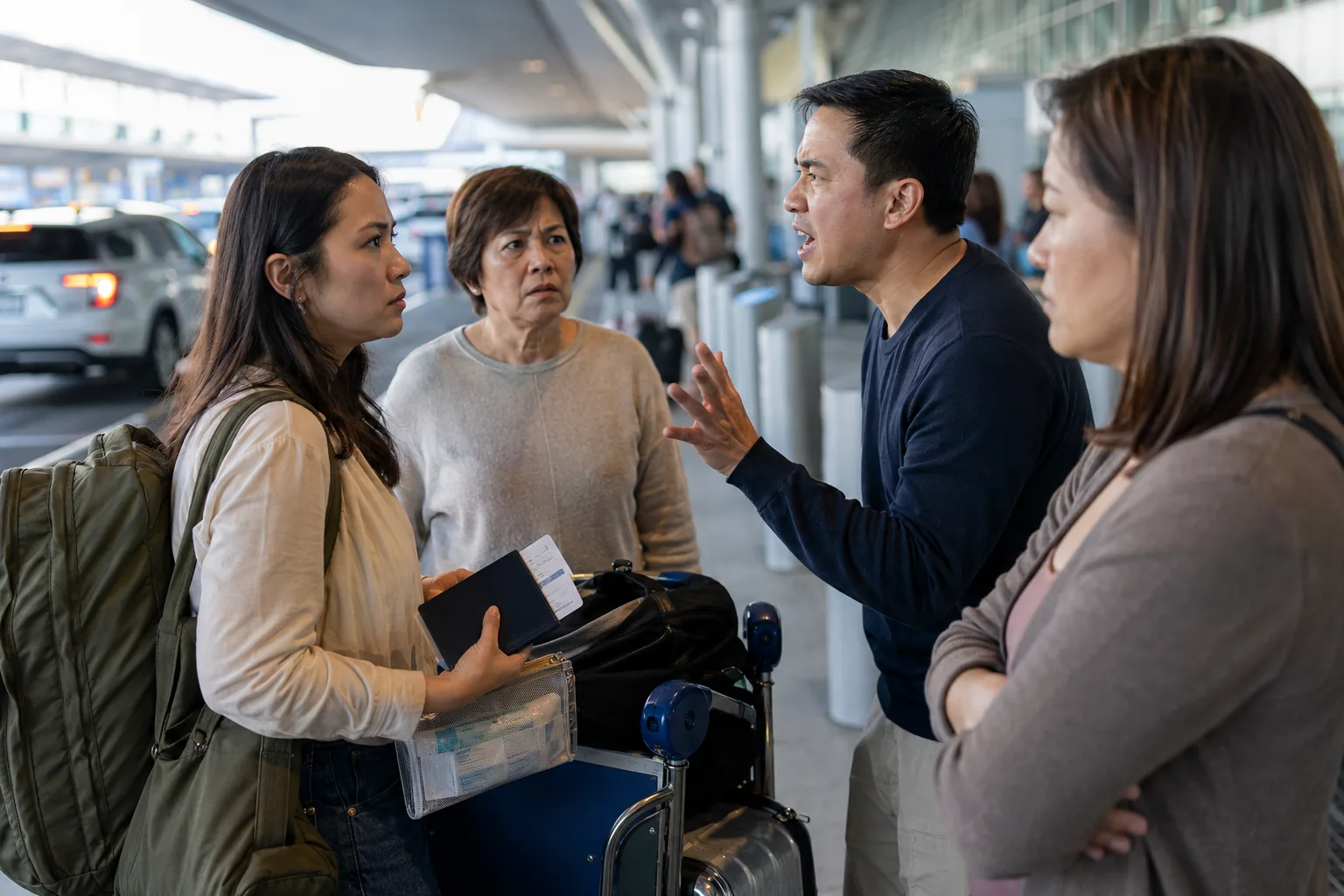
Ryan looped back ten minutes later on foot from the short-term lot, walking fast and empty-handed again. The wheelchair had just arrived. I was helping lock it open when he came up on Tessa’s left and started in before he was fully stopped.
“So that’s it? You get to wave a phone around and act like you’re in charge of our mother?”
Elaine was lowering herself into the chair. Tessa waited until both of Elaine’s feet were on the rests before answering.
“We’re not doing this out here,” she said.
He pointed at the passport sleeve. “Because that’s where you keep your case file?”
Tessa didn’t flinch at the word. She opened the sleeve, pulled out the phone, and held it low between them, not out toward the crowd. I was close enough to see lines of dated entries but not every word. I heard what she chose to read.
“August third,” she said. “Confirmed wheelchair request. August fourth, picked up refill and packed seven-day pill case. August fifth, printed boarding pass, added gate assistance note, moved charger to outside zipper. Yesterday, 8:14 p.m., Ryan dropped off jacket and said, ‘Text me if you still need me to do parking.'”
Ryan’s mouth tightened. “You can write anything in a notes app.”
Tessa tapped the screen once. “Texts are attached under each date. Pharmacy pickup receipt is there. Airline confirmation is there.”
She could have kept going. You could see it in the way the phone stayed steady in her hand and in the way Ryan stopped interrupting for one full beat. A couple with garment bags slowed near us. The skycap from earlier glanced over again. It had all the shape of a public finish if she wanted one.
She didn’t raise the phone. She lowered it, slid it back into the passport sleeve, and zipped the sleeve closed.
Then she turned to Elaine, not to Ryan. “Mom, once we get inside, I’m changing the airline contact and the medical ride contact back to just me until after the trip. If you want him updated, I will call him myself.”
Elaine looked up at her from the wheelchair. “Good.”
Ryan stepped in front of the chair. “You don’t get to cut me out because you made a spreadsheet.”
“Move aside, sir,” I said, because now he was blocking the push path.
He didn’t move until Elaine spoke. Her voice wasn’t loud, but it carried because everybody else had finally gone quiet.
“I asked you to bring the jacket and the insurance folder last night,” she said. “Tessa brought the folder two weeks ago. You brought the jacket. Move.”
That landed harder than a yell would have. Ryan stepped back, but not far. “Mom, come on. She’s leaving. I’m the one here.”
Tessa rested one hand on the wheelchair handle and the other on the passport sleeve. “That’s exactly why this gets simpler, not messier,” she said. “You can visit the house. You are not handling travel documents, meds, or updates for this trip.”
He started talking over her, faster now, saying family, saying rights, saying she couldn’t make him sound unsafe over one airport argument. Tessa didn’t answer any of it. She took a folded sheet from the passport sleeve, showed it to Elaine first, then angled it toward me just enough that I could see names and numbers at the top. Emergency contacts. Ride service. Hotel. Return date. The practical map of the next week.
“Mom,” she said, “do you want this same list sent to Carol instead of Ryan while we’re gone?”
Elaine nodded once. “Send it to Carol.”
Ryan stopped talking mid-sentence.
Tessa put the paper back into the sleeve and said, still calm, “I’ll do that inside.”
That was the moment the pressure changed for real. Not because she embarrassed him. Because right there at the curb, in front of the chair, the list, and the passport sleeve, his lane out of the scene got narrower and hers got locked in.