Story code: ST-000576
Part 2: What Everybody Started Seeing
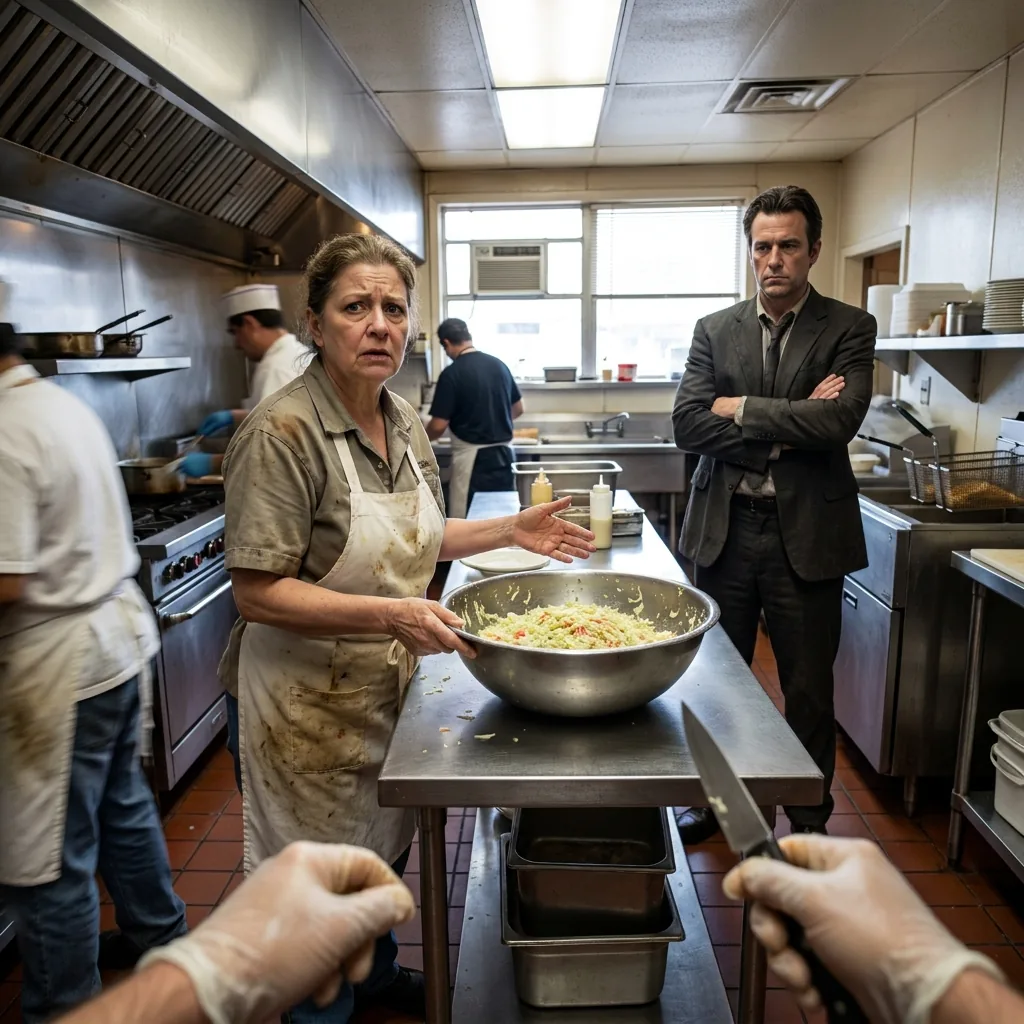
After that ticket-rail slip, I started noticing how often Eli’s confusion showed up only when the cleanup or the blame had somewhere else to land. He still kept his voice mild and his hands loose, but the gaps around him got harder to miss once you saw one clean move in the middle of all that fumbling. By the lunch rush, the prep list clipped near the line had turned into a scoreboard nobody was calling a scoreboard yet. Rosa worked expo with the clipboard tucked against her hip. Every few minutes she checked the dry-erase list against the actual pans and backups. If something was missing, she did not ask the room anymore. She asked the station. “Soup backup?” Eli opened the lowboy and stared into it for half a beat too long. “I thought we still had one.” “We don’t,” Rosa said. He gave that little shrug again. “Okay, show me where you want it next time.” There was already an empty square beside “soup backup” on the list, with his initials next to it from an hour earlier. Tina came to the pass with three ticket chits pinched together. “Table seven is at twenty-two minutes. Twelve keeps asking why sides are changing. I told them potato salad instead of slaw on one plate because slaw went late.” Rosa nodded once, but her eyes were on Eli. “Get me soup, labeled and dated, now.” He took two steps toward dry storage, then stopped by the prep sink and called back, “Which labels are we using for hot hold again?” No one answered immediately. The fryer hissed. Tina went still at the pass. I was refilling sliced onions and could see Rosa watching him over the top of the clipboard. “The same labels we use every day,” she said. He opened the label bin and shuffled it around as if the answer might be under the first stack. I turned back to my board because if I kept staring, I was going to stop moving, and if I stopped moving, the line would fall behind. The pattern kept building anyway. He asked where the quart lids were while standing in front of them. He carried a hotel pan of tomatoes to the sandwich station and left it unwrapped under the fan. He asked Tina whether table nine had asked for rye or wheat when the ticket was clipped right in front of him in black marker. Tina finally said, “He can read a table mod when it helps him, but not a prep line?” She said it to the room, not to Rosa, and not loud. That made it hit harder. Rosa did not snap back at her. She just walked to the list, uncapped the marker, and drew a line through the completed items herself. Then she added three more in tighter handwriting: tomato backup, pickle backup, soup quart. She clipped the marker back on and looked straight at Eli. “You’re on these,” she said. He pointed to his chest like he was not sure she meant him. “Right now?” “Right now.” He gave a small laugh. “I’m better helping where I can.” “This is where you can help,” she said. He picked up the marker and squinted at the list, mouth set like he was trying to sound out a menu in a language he had never seen before. Then he reached for the tomato pan first, even though soup was the most urgent item and Rosa had just said it out loud. I was at the walk-in cooler door grabbing mayo when I saw him through the narrow gap as it swung back. He had one hand on the empty quart container and the other on the ladle. For a second there was no act at all. He filled the container to the line without checking, wiped the rim with one clean twist of a towel, snapped the lid on tight, and wrote the label in fast block letters that all fit on the first try. Then the cooler door finished closing. By the time I came back out, he was holding the same container at arm’s length and saying, “Do we date soup from open or from when it cools? I always forget.” Rosa took the quart from his hand, looked at the label, and set it on the prep table without answering. Lunch kept hammering us. Tina called for refires. Bacon needed dropping. A bus tub hit the dish pit. The room stayed busy enough that nobody could stop and turn it into a speech, but nobody was missing it now either. A little later Rosa changed the board again. She erased two old notes and rewrote the center of the prep list in larger letters than before. She did not look at me when she said, “Maya, finish your station and don’t cover anything that has his initials next to it unless I tell you.” That was new. Usually the whole kitchen lived on whoever could patch the hole fastest. Now she was marking the holes and leaving them attached to the person who made them. Eli read that change right away. I know he read it because his eyes went straight to the initials beside tomato backup, pickle backup, soup quart, and then to the line Rosa had added under them: complete before handoff. He tapped the marker against the clipboard. “You want me to do all of that in the middle of service?” Rosa said, “I want the person assigned to it to do it.” Tina stopped at the pass with a coffee pot in one hand and looked from Rosa to Eli to the list. Eli gave a short, careful smile and said, “Then you need to be specific, because if I do it wrong, apparently that becomes a whole thing.” Rosa set the clipboard down on the stainless table between them. “Tomorrow,” she said, “I’ll be specific.” She said it in the same voice she used for side work.