Story code: ST-000576
Part 1: The List By The Line
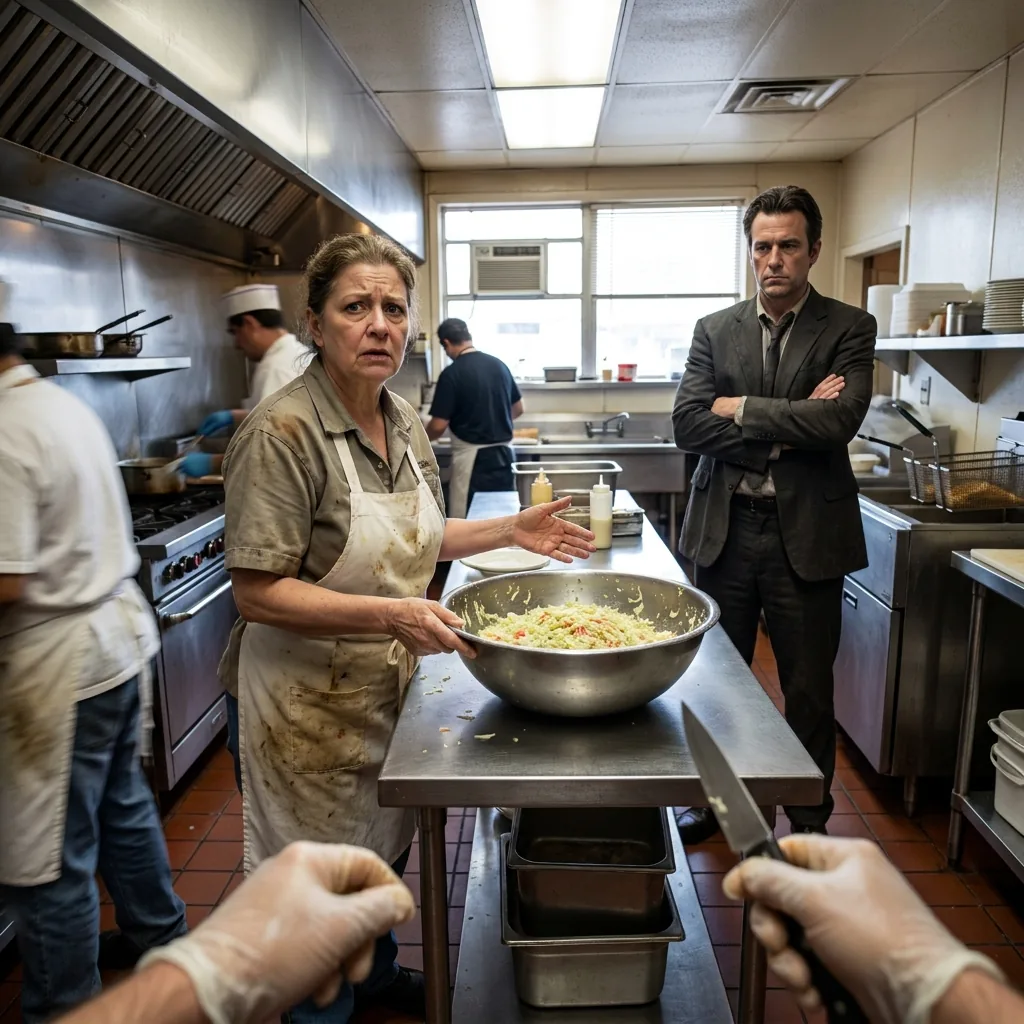
Eli Mercer ruined six quarts of house slaw before breakfast and somehow I was the one Rosa called to the stainless prep table to answer for it. The dry-erase prep list was clipped by the line in plain sight, the cabbage was already sweating in hotel pans, and Eli was standing at the prep sink with that same blank shrug he used every time he touched something simple and left a mess behind. He said he still got confused by the list, like he did not know what “slaw, six quarts, label and date” meant after months in the same kitchen.
I was halfway through onions for burger mix when Tina stuck her head through the expo pass and said, “We’re already low on slaw cups up front.”
Rosa looked at the pan, then at the prep list, then at me because I was the closest person in reach who could fix it fast.
“What happened here?” she said.
I wiped my hands on my apron and stepped over. The dressing had been dumped straight over warm shredded cabbage without draining it first. It was thin and gray at the bottom of the pan. No labels. No backup quart containers in the reach-in. Eli had also used the wrong salt, the coarse one we kept for the fryer station, and I could see it sitting on top like gravel.
Eli lifted one shoulder. “I followed the list. I thought that was the mix.”
“The list doesn’t tell you to drown it,” Rosa said.
“I’m trying,” he said, quiet and flat. “You know I’m not kitchen-fast.”
That was how he always said it. Not loud, not dramatic. Just soft enough that everyone else had to either argue with him or work around him.
Rosa pinched the bridge of her nose once and shoved the clipboard against the cutting board. “Maya, remake it. We open in twenty.”
There it was. Not because I had touched the pan. Not because I had been on slaw. Because if I didn’t do it, the dining room would feel it first and then all of us would.
I dumped the ruined batch, hauled fresh cabbage from the walk-in cooler door, and started over. Eli stayed close enough to look involved. He picked up a marker, uncapped it, and turned one of the labels around in his fingers like it was new to him.
“Date goes here?” he asked.
I kept shredding. “Same place it went yesterday.”
He gave a short laugh through his nose, like I was making it harder than it had to be. Then he set the label down crooked and drifted toward the line.
Tina came back to the pass ten minutes later with ticket chits in her hand. “Two club sandwiches, one patty melt, and table twelve wants to know why we never have slaw ready right at open anymore.”
Rosa didn’t answer her. She was checking the clipped prep list against the pans in the cold rail, tapping each item with one finger. Chili backup, there. Pickles, low. Potato salad, full. Slaw had my handwriting on it now because I had just saved it.
By eleven-thirty the kitchen was in motion for real. Bacon snapping on the flat top, egg pans moving, toast going up, Tina calling times at the pass. I kept watching small gaps appear behind Eli like holes in a screen. He set out quart containers with no lids. He stacked sliced tomatoes at the sandwich station but left no label. He brought backup cheese to the line and forgot to unwrap half of it. Every miss was small enough to sound accidental if you said it fast, and every miss landed on whoever saw it first.
That meant me.
When the pickle pan came up short, Rosa looked toward the prep sink. “Eli, did you cut the second backup?”
He was wiping a clean cutting board with a sanitizer rag. “I thought Maya was doing pickles.”
I said, “I was on onions, then slaw, then line setup.”
He spread his hands a little. “See? This is why I get mixed up. Everybody does everything.”
Tina, passing behind him with coffees, stopped just enough to say, “We only get mixed up when your station’s involved.” Then she kept moving before anyone could turn it into a scene.
Rosa told me to cut the pickles. Again, the room did what the room always did. It bent around him because tickets would not wait for an argument.
I took the bucket to the board and started slicing fast. Eli came beside me, close enough that his sleeve brushed the prep list hanging from the clip. He glanced at it once. Not a lost stare. Not confusion. His eyes moved top to bottom quick, stopped on “pickle backup x2,” then shifted away when Rosa turned.
A few minutes later the mayo bottle slipped from Tina’s tray at the pass and hit the floor. The sound cracked through the kitchen. Everyone looked for one second. Eli moved before anyone said a word.
He stepped around the spill, reached up to the ticket rail, plucked the oldest chit free without checking twice, and called to Rosa, “Turkey club no onion, patty melt next, fries dragging ninety seconds.” Then he caught himself, set the ticket back too carefully, and picked up a towel.
No one said anything right then. Not me, not Rosa, not Tina.
Because a man who could not read a three-line prep list had just read the rail in one glance and timed the line like he had been doing it for years.
Eli Mercer ruined six quarts of house slaw before breakfast and somehow I was the one Rosa called to the stainless prep table to answer for it. The dry-erase prep list was clipped by the line in plain sight, the cabbage was already sweating in hotel pans, and Eli was standing at the prep sink with that same blank shrug he used every time he touched something simple and left a mess behind. He said he still got confused by the list, like he did not know what “slaw, six quarts, label and date” meant after months in the same kitchen.
I was halfway through onions for burger mix when Tina stuck her head through the expo pass and said, “We’re already low on slaw cups up front.”
Rosa looked at the pan, then at the prep list, then at me because I was the closest person in reach who could fix it fast.
“What happened here?” she said.
I wiped my hands on my apron and stepped over. The dressing had been dumped straight over warm shredded cabbage without draining it first. It was thin and gray at the bottom of the pan. No labels. No backup quart containers in the reach-in. Eli had also used the wrong salt, the coarse one we kept for the fryer station, and I could see it sitting on top like gravel.
Eli lifted one shoulder. “I followed the list. I thought that was the mix.”
“The list doesn’t tell you to drown it,” Rosa said.
“I’m trying,” he said, quiet and flat. “You know I’m not kitchen-fast.”
That was how he always said it. Not loud, not dramatic. Just soft enough that everyone else had to either argue with him or work around him.
Rosa pinched the bridge of her nose once and shoved the clipboard against the cutting board. “Maya, remake it. We open in twenty.”
There it was. Not because I had touched the pan. Not because I had been on slaw. Because if I didn’t do it, the dining room would feel it first and then all of us would.
I dumped the ruined batch, hauled fresh cabbage from the walk-in cooler door, and started over. Eli stayed close enough to look involved. He picked up a marker, uncapped it, and turned one of the labels around in his fingers like it was new to him.
“Date goes here?” he asked.
I kept shredding. “Same place it went yesterday.”
He gave a short laugh through his nose, like I was making it harder than it had to be. Then he set the label down crooked and drifted toward the line.
Tina came back to the pass ten minutes later with ticket chits in her hand. “Two club sandwiches, one patty melt, and table twelve wants to know why we never have slaw ready right at open anymore.”
Rosa didn’t answer her. She was checking the clipped prep list against the pans in the cold rail, tapping each item with one finger. Chili backup, there. Pickles, low. Potato salad, full. Slaw had my handwriting on it now because I had just saved it.
By eleven-thirty the kitchen was in motion for real. Bacon snapping on the flat top, egg pans moving, toast going up, Tina calling times at the pass. I kept watching small gaps appear behind Eli like holes in a screen. He set out quart containers with no lids. He stacked sliced tomatoes at the sandwich station but left no label. He brought backup cheese to the line and forgot to unwrap half of it. Every miss was small enough to sound accidental if you said it fast, and every miss landed on whoever saw it first.
That meant me.
When the pickle pan came up short, Rosa looked toward the prep sink. “Eli, did you cut the second backup?”
He was wiping a clean cutting board with a sanitizer rag. “I thought Maya was doing pickles.”
I said, “I was on onions, then slaw, then line setup.”
He spread his hands a little. “See? This is why I get mixed up. Everybody does everything.”
Tina, passing behind him with coffees, stopped just enough to say, “We only get mixed up when your station’s involved.” Then she kept moving before anyone could turn it into a scene.
Rosa told me to cut the pickles. Again, the room did what the room always did. It bent around him because tickets would not wait for an argument.
I took the bucket to the board and started slicing fast. Eli came beside me, close enough that his sleeve brushed the prep list hanging from the clip. He glanced at it once. Not a lost stare. Not confusion. His eyes moved top to bottom quick, stopped on “pickle backup x2,” then shifted away when Rosa turned.
A few minutes later the mayo bottle slipped from Tina’s tray at the pass and hit the floor. The sound cracked through the kitchen. Everyone looked for one second. Eli moved before anyone said a word.
He stepped around the spill, reached up to the ticket rail, plucked the oldest chit free without checking twice, and called to Rosa, “Turkey club no onion, patty melt next, fries dragging ninety seconds.” Then he caught himself, set the ticket back too carefully, and picked up a towel.
No one said anything right then. Not me, not Rosa, not Tina.
Because a man who could not read a three-line prep list had just read the rail in one glance and timed the line like he had been doing it for years.