Story code: ST-000071
Part 3: The Backup Was Already Moving
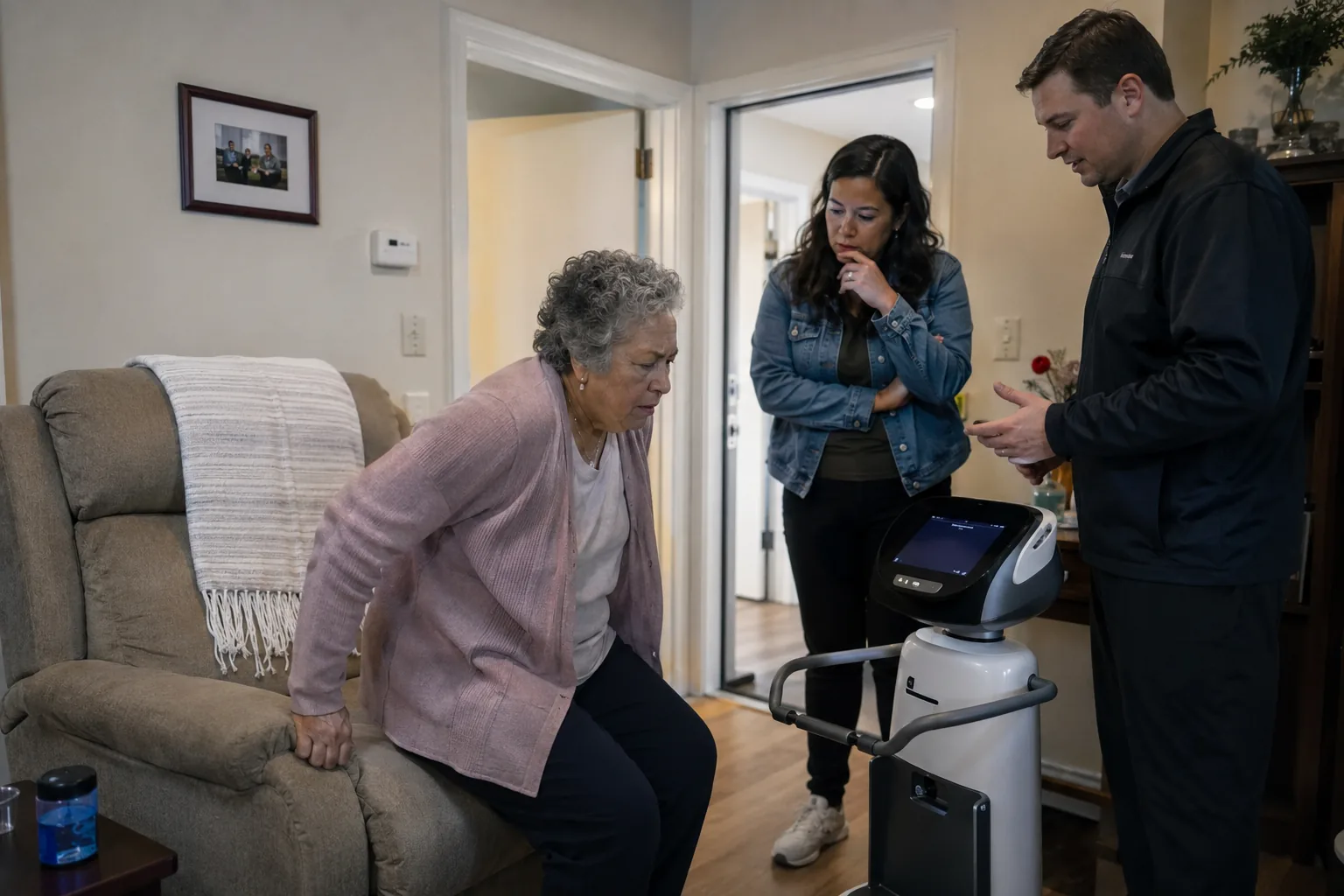
The manual override message stayed on Rook’s screen long enough for Diane Vega to read it twice. She did not touch the robot after that. She picked up the phone, put it on speaker again, and checked the backup sheet Marisol had already unfolded on the table. The sheet listed the van contact, the apartment gate code, and the waiting window in blue ink. Nothing on it asked the robot for permission.
At 2:27, the second phone rang. Diane answered with the van company name already on her lips. A dispatcher confirmed the pickup had been held but not canceled. Marisol stayed where she could see the doorway, the robot, and the paper trail at once. Rook announced, “Transport schedule updated.” The words came out flat, followed by a new line on the screen: account synchronization required. Diane did not respond to that. She read the pickup time back to the dispatcher and asked how much longer the driver would wait at the curb.
That was the first clear reversal. The vendor had paused the robot’s ride, but the ride itself was still real. The backup van was on route. The family had not been improvising in panic; they had been building around the robot all along. The support hold had only cut the easiest lane.
Evan Pryce came back on the line after a long silence. His voice had lost the smooth edge from earlier. He asked whether someone had entered the transport change outside the approved app. Diane said, “We used the number in the folder.” Evan asked for the account holder’s confirmation. Marisol lifted the paper with the code word and read it once, exactly as written. There was no raised voice in the room. The only sound was the dispatcher asking the driver to hold another two minutes.
Evan said the account could be flagged for unauthorized service use. Diane asked, “Flagged by who?” He did not answer that directly. Instead he repeated the service continuity warning. Marisol wrote the word continuity under ACCESS PAUSED and circled it hard enough to dent the page. Then the robot spoke again: help request unavailable. The same machine that had been used as leverage was now broadcasting its own limits in real time.
A knock came at the door a second time. This time the driver was there in person, a route card in hand, looking at the clock and then at Marisol’s apartment number. Diane opened the door wider, signed the paper, and accepted the clipboard without asking the robot to confirm anything. Marisol watched the exchange and then checked the phone. No app prompt. No vendor approval. The pickup existed because the paper trail existed.
Evan heard enough to know the day had moved without him. He asked to escalate the account review. Diane said, “You can review it after the ride leaves.” That was the second reversal. The vendor was no longer setting the pace. The family was. The robot’s screen refreshed and showed a new restriction notice: manual transport coordination detected. Assistance may be limited. It was the closest thing to confession the machine had offered all day. The system was not neutral. It was reacting to being worked around.
Marisol gathered the backup notes, the appointment card, and the paper folder. She did not unplug the robot. She left it on, lit up and reporting its own reduced usefulness while the driver waited in the hall. Diane slid the tote over her shoulder, charger cords spilling against the side pocket. The room now had a path that did not run through the vendor, and the vendor could see it happening. That was the pressure point: the hold had not kept them in place. It had shown them exactly how to move without asking again.