Story code: ST-000071
Part 2: The Room Told on the System
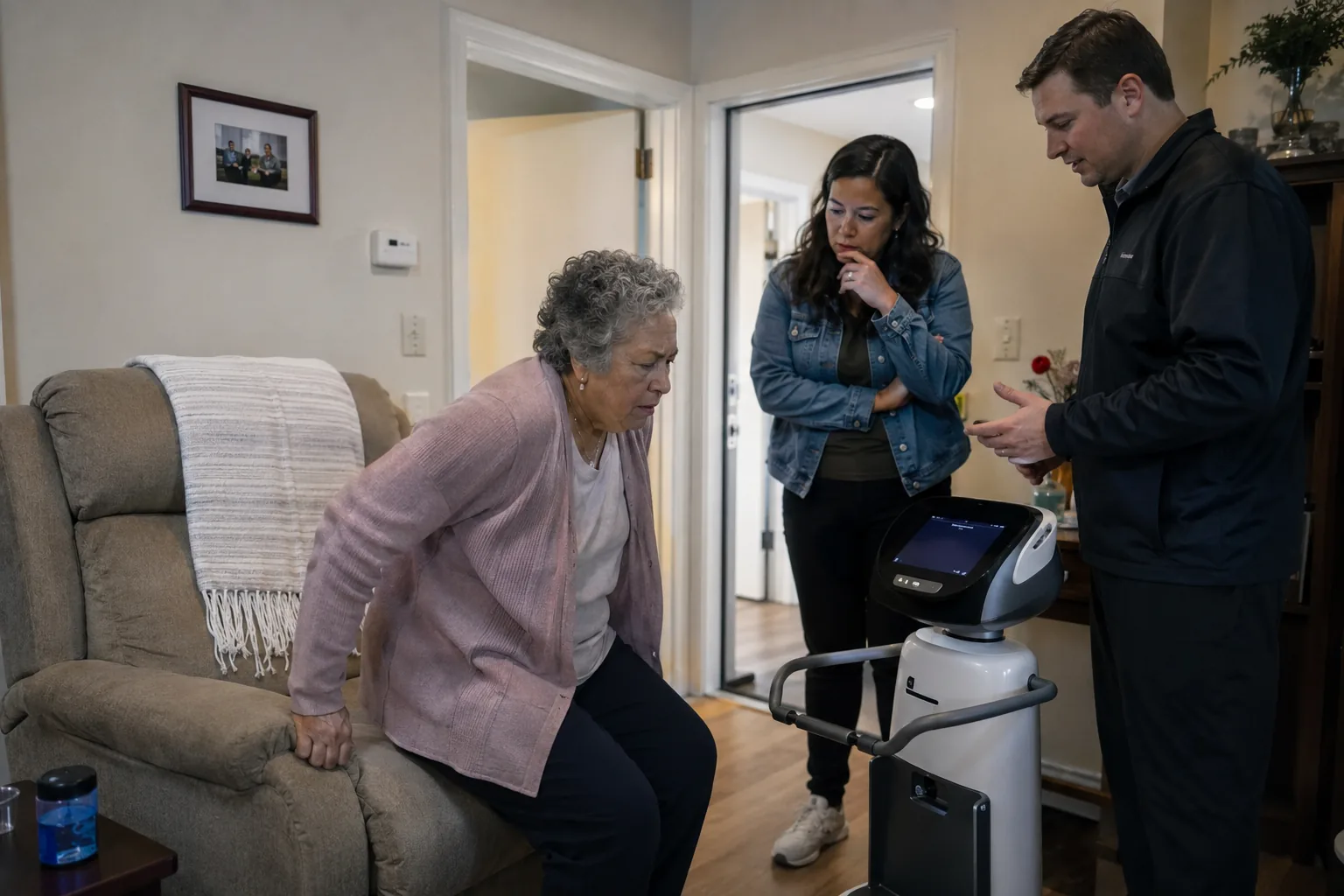
By the time the hold music stopped and Evan Pryce came back on the line, Diane had already checked the paper folder twice, pulled a second phone from the tote, and tried the app from both devices. Every screen gave the same result: transport paused, help unavailable, account review pending. Marisol stayed in the chair by the wall and kept the notes in view, one page under her hand and one page on the table where the robot could not miss them. The room did not change, but the process did. That was the first sign the vendor’s story was not holding up.
Evan sounded calm in the way scripted people do when the script is doing the work. He said the account holder had been informed. He said restored access depended on compliance confirmation. He said the hold would remain until the issue was resolved through the proper channel. Diane asked which issue. Evan gave the same answer with different words. Marisol wrote those down too. Proper channel. Compliance confirmation. Issue.
Then Diane did something that changed the shape of the afternoon. She did not argue about the policy. She opened the paper folder, took out a printed service calendar, and set it beside the phone. The calendar showed the week’s ride windows in neat rows, with pickup times handwritten in blue ink. Under today’s slot was a note in her own handwriting: backup van on call after 2:30. Marisol turned the page and found another list. Battery check. Paper med list. Spare charger. Apartment key copy. The backup notes were not an idea waiting for permission. They were already built into the room.
Rook announced a system reminder: scheduled transport canceled. The robot’s voice stayed level, but the screen flickered on the words canceled and paused as if it could not decide which one to land on. Marisol pointed at the calendar and asked Diane when the backup van was set. Diane answered without looking up. “This morning.” That was enough to show the first gap. The vendor had cut access to force obedience, but the family had already arranged a way around the cutoff before the call even reached support. The hold was not stopping the ride. It was only stopping the easy version of it.
Evan heard that part of the exchange because Diane had not muted the phone. His voice changed. Not louder. Tighter. He asked who else had access to the transport plan. Diane said, “People who actually show up.” Marisol did not smile. She kept her hand on the notes and watched the robot’s help menu gray out and then refresh with the same restriction. The machine could still announce status. It could still display policy. It could not make the family forget how the day got built.
A knock came at the door. Not a dramatic one. A practical one. The kind delivery drivers use when they are on schedule and want the next task to exist. Diane crossed the room, opened the door, and accepted a paper receipt from the driver. Marisol could not see the full page, only the bottom edge and the fact that Diane signed it without asking the robot for a prompt. When she came back in, she set the receipt next to the robot and the appointment card.
That was the second gap. The vendor had been acting like the robot was the only key, the only ride, the only source of help. But the room now had paper records, a backup number, a second phone, and a live person at the door. The dependency was running both ways. The robot needed the family’s routines, the printed schedules, the charger, the alternate ride, and the hands in the room more than the support script admitted.
Marisol looked from the receipt to the frozen screen and asked Diane one short question: “What else is already set?” Diane reached into the tote, found a folded sheet tucked behind the chargers, and handed it over. It was a copy of the apartment gate code, the pickup contact, and a written note that the backup driver would wait fifteen minutes before leaving. No vendor approval line appeared on any of it.
Evan asked to speak with the account holder. Marisol took the phone, read the code word from the paper, and gave it back. The line went silent for a beat. Then Evan said, very carefully, that unauthorized transport changes could affect service continuity. Marisol set the phone down beside the robot and the backup notes and waited for the next sentence. It never came. Instead the screen on Rook flashed a new message Marisol had not seen before: manual override detected. Who, exactly, had needed whom to keep the day moving?