Story code: ST-000071
Part 4: What the System Lost
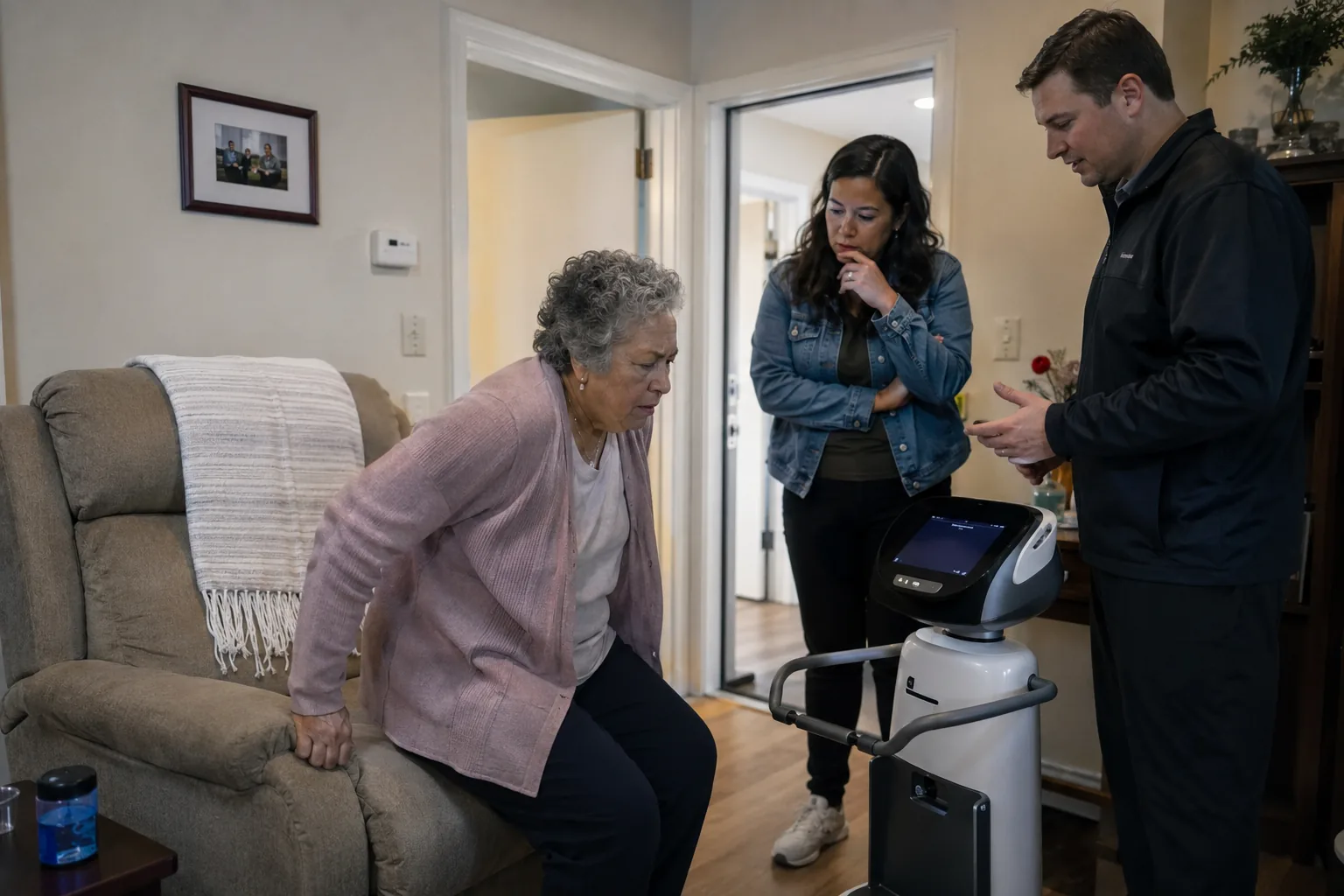
Marisol did not make a speech before leaving. She checked the chair brakes, took the appointment card, and waited while Diane folded the paper folder flat and tucked it into the tote. The driver stayed by the open door with the clipboard and a half-finished route sheet. Rook kept announcing status changes behind them: transport suspended, help unavailable, account review pending. The robot sounded smaller each time it repeated the same locked phrases.
Evan Pryce tried one last time to reassert the account. He said the hold would remain until compliance was confirmed. Marisol answered with the route card in her hand and the backup schedule on top of the tote. “Then hold it,” she said. No one argued after that. The van company had the next move, and it was already outside. That was the walk-away. No plea, no public scene, just a door opening and the system being left to stand on its own rules.
The immediate cost showed up in the visible ways these things always do. The driver confirmed the same-day trip would still run, but the no-show fee for the original robot-ordered ride could not be reversed on the spot. Diane read the amount from the paper receipt when she signed it. Marisol did not ask her to repeat it. The number sat on the page beside the time stamp and the route code. Freedom had a price, and it was not abstract.
Behind them, Rook issued another notice: account authorization revoked for transport coordination. The screen followed with a support note, the kind of formal line that gets filed somewhere and comes back later. Diane looked at it once, then turned the robot away from the doorway with the back of her hand. Not roughly. Just enough to keep the display from facing the hall. The machine could still speak, but it no longer controlled the timing of the room.
At the curb, the driver loaded the chair and checked the route sheet again. Marisol watched Diane hand over the signed paper and the backup note that listed the new contact number. The new number was now the only one that mattered for the appointment. The vendor’s queue had become background noise.
When they reached the van, Diane’s phone buzzed with an email alert she opened without comment. The subject line was plain: service restriction recorded. The body listed account review, coordination limits, and a reminder that changes might affect future transport availability. She held the screen where Marisol could see it, then locked the phone and put it back in the tote. The consequence had arrived in the least dramatic form possible: a documented note, a charge, and a future access problem.
Marisol looked back once at the assisted living room through the open door. Rook was still there, lit up on the table, reporting a system that no longer owned the day. The room was not triumphant. It was expensive. But it was theirs again.
Evan’s leverage had failed because the dependency ran both ways and the backup plan was already in motion. He had used the robot as a gate. They had used the paper, the phone, the driver, and the waiting curb as a way out. The system could log the loss. It could not undo it.