Story code: ST-000772
Part 2: The Cue Gap
The room tried to keep going after the wrong person heard Evan’s instruction, but the gap showed up everywhere at once. Tess missed the next clean cue by a beat, Nina repeated the donor welcome line twice without meaning to, and June’s hologram held the same half-turn toward me for too long, like the tribute was waiting on a prompt nobody had given it.
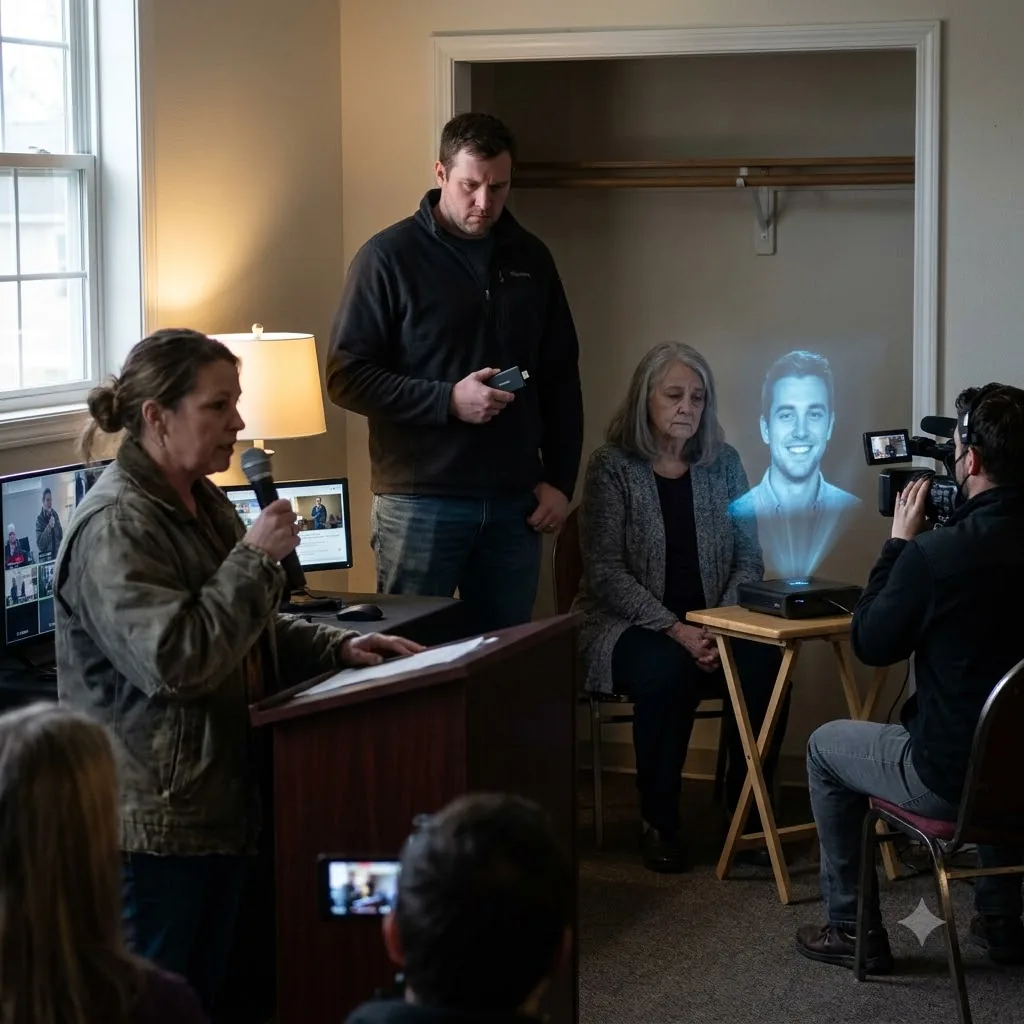
I was still standing where Evan had placed me, beside the projection, with the livestream camera pointed at my shoulder and June’s face. Evan kept one hand on the voice model drive and the other hovering over the control panel, as if he could press the whole moment smooth again. He gave small directions without looking at the room. “Hold,” he said. “Keep your smile. Don’t move until I tell you.”
That was the staged kindness part. It sounded gentle if you only caught the words. In practice it meant silence, stillness, and doing exactly what made the public picture look neat. My name was not being used as a person’s name anymore. It was being used like a marker on a blocking diagram. When I shifted my weight, Evan stepped in front of me. When I tried to take one step back from June’s projected shoulder, he moved with me and guided me back by the elbow. It was small enough that the front row might have missed it. Tess did not miss it. Nina did not either.
The harm became obvious in the way the scene was arranged for everyone else. A donor near the aisle leaned toward another and whispered, then pointed once at me and once at the hologram. The camera on the press tripod stayed trained on the family line. Evan kept positioning me beside the projection, using my body to sell the idea that the memorial was tender, united, and under control. The more polished he tried to make it, the more visible the pressure became.
June’s recorded voice hit a flat spot and then recovered. Tess glanced at the monitor, then at the drive, then at Evan’s hand. The mismatch was small but readable: the audio track and the hologram timing were no longer perfectly aligned. Evan noticed it too. He reached for the drive, paused when he saw the man in the navy sport coat still watching from the press side, and shifted his body between me and the cameras.
Nina stepped down from the lectern and moved toward the side aisle, still smiling for the donors. “We’re keeping things seamless,” she said, in the tone people use when something is already not seamless. She looked at the press line once, then at Evan. The wrong-person problem had spread. It was no longer only about me hearing what was said offstage. It was about the room knowing that something was being managed.
Evan tried to correct the script by making it more perfect. He lifted the drive higher so the room could see it, announced the next tribute segment too loudly, and pointed Tess to restart the playback from the top of June’s last line. But that only made the process gaps more obvious. The monitor lagged behind the stage. The hologram shifted a fraction late. My place beside it looked less like family and more like a prop set where somebody had forgotten the mark.
The man in the navy sport coat finally spoke, but not to the room. He angled toward Evan and said, “I heard you tell her to keep the camera line clean.” Tess went still. Nina stopped smiling. Evan’s hand tightened on the drive, and for one second he looked like he might switch the whole tribute off.
He did not. He raised his voice, told Tess to roll the next segment, and told me to stay in frame again. That was the choice he made in front of everybody: keep the act intact, or stop and let the room see what the show had been hiding. The drive was still in his hand, the hologram was still waiting on the next cue, and the wrong person had already heard enough to make the question impossible to unsay.