Story code: ST-000772
Part 1: The Drive on the Stand
Evan Reed kept the voice model drive in his hand like it mattered more than the person standing beside him, and he had me parked beside the hologram in the rear alcove of the showroom while the fundraiser stream was already rolling. At the back of the memorial showroom, under the clean white glare of the hologram_relative_memorial_showroom_public_performance_mask_crack room and the low hum of ordinary activity inside memorial showroom, he kept saying, “Stay there, Mara, just for the cameras,” like I was part of the tribute package instead of the family he was supposed to be serving.
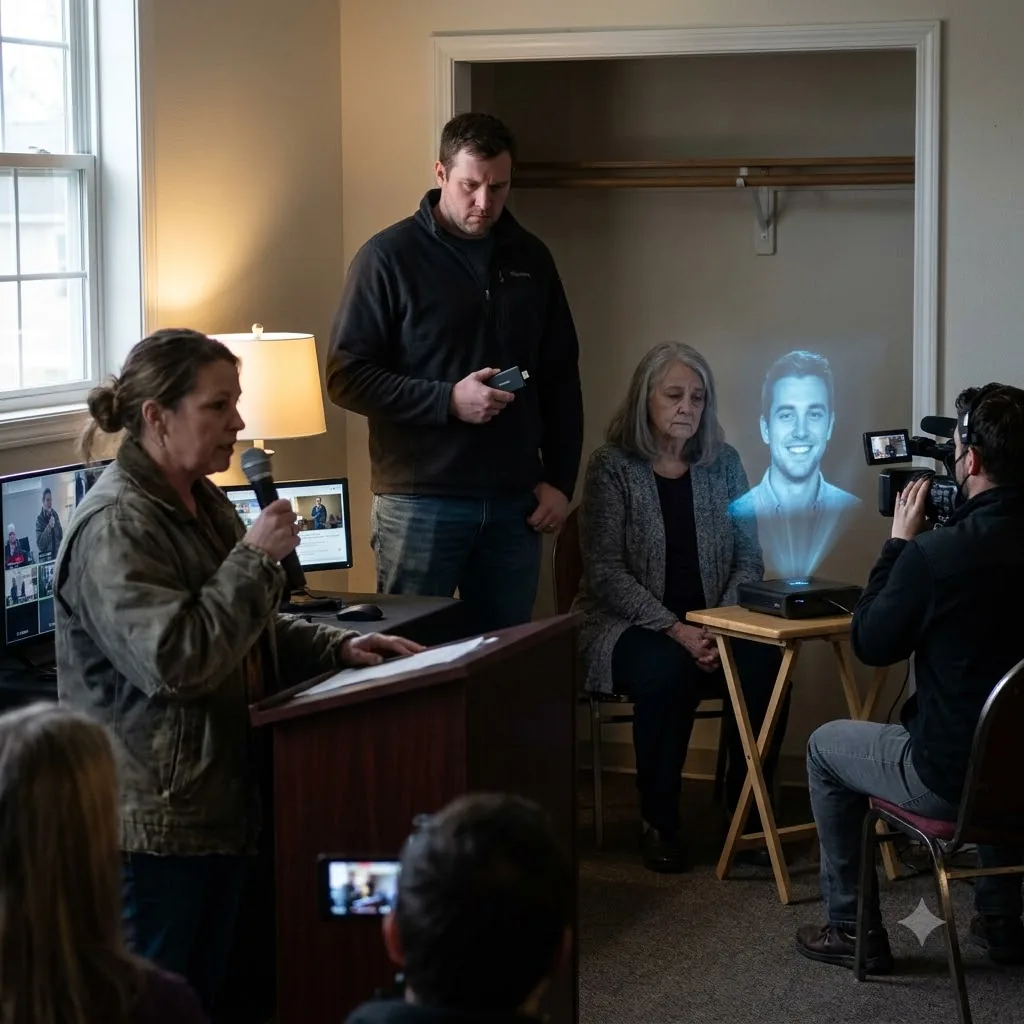
The setup looked polished from the room floor. The hologram of June Reed shimmered above the stage in a soft blue outline, her recorded smile turning toward the donors seated under the folding lights. Nina Alvarez stood at the lectern in a black dress with a fundraiser pin clipped to her lapel, speaking into the house mic in that careful host voice people use when they want everybody to keep clapping. Tess Morgan watched the playback monitor from the side rack, one hand on the audio board, eyes moving from the drive to the stage and back again.
Evan was the one who handled the visible asset. The voice model drive sat in his palm, then on the console, then back in his hand when the next cue needed to land. He checked the time stamp twice, tapped the casing with one finger, and counted down with his chin lifted toward the stage. “When June finishes the second verse, Mara stays right there,” he said, not looking at me when he said it. “We keep the family line clean. Donors can see everyone cooperating.”
That was the first push: perfect public image, one person told to lie by standing still. The lie was simple enough that nobody in the front row would name it. I was told to hold my place beside the projection, smile when cued, and let the tribute read like a united family moment. The harm was not subtle from where I stood. Evan shifted my shoulder two inches closer to the hologram, touched the back of my elbow when I tried to step away, and angled my body toward the cameras so the stream would catch me in the same frame as June’s image.
Nina kept the ceremony moving. “And now we’re joined by family,” she said, bright and steady, as if the word meant the same thing to everybody in the room. Several donors lifted their phones. The stage lights picked up the edge of my sleeve, June’s projected face, and the drive in Evan’s hand every time he reached for it. That drive was the center of everything. Everybody could see when it was lifted, when it was set down, when Tess hesitated before hitting play, when the tribute voice clipped for half a second and then smoothed back out.
June’s recorded voice filled the room, warm and edited and too clean. The hologram turned toward me on cue, and Evan leaned in close enough for the lapel mic to catch only a fragment: “Mara, stay here. Do not step out of frame.” It was not announced. It was not meant for the room. He said it low, toward the side of my face, while a donor in the third row was already filming.
Tess looked up fast. Nina’s eyes flicked from the monitor to the front row. One of the ushers stopped with a tray of programs halfway across the aisle. The wrong person heard the order. I saw it happen in the reactions, not in any confession: a man in a navy sport coat near the press line turned his head, then looked directly at Evan instead of the stage. He was not looking like a guest. He was looking like someone who had caught the edge of something that was supposed to stay hidden.
Evan did not stop talking. He kept the smile in place, kept one hand on the drive, and kept me in front of the hologram as if the position itself could solve the problem. June’s image reached its scripted pause, and the room waited for the next cue. But the man by the press line was still staring at Evan, not at the tribute, and Tess had frozen with her fingers above the controls. Evan said, “We’re fine, keep the show moving,” but the offstage instruction had already landed in the wrong ears, and the next cue was late.
Evan Reed kept the voice model drive in his hand like it mattered more than the person standing beside him, and he had me parked beside the hologram in the rear alcove of the showroom while the fundraiser stream was already rolling. At the back of the memorial showroom, under the clean white glare of the hologram_relative_memorial_showroom_public_performance_mask_crack room and the low hum of ordinary activity inside memorial showroom, he kept saying, “Stay there, Mara, just for the cameras,” like I was part of the tribute package instead of the family he was supposed to be serving.
The setup looked polished from the room floor. The hologram of June Reed shimmered above the stage in a soft blue outline, her recorded smile turning toward the donors seated under the folding lights. Nina Alvarez stood at the lectern in a black dress with a fundraiser pin clipped to her lapel, speaking into the house mic in that careful host voice people use when they want everybody to keep clapping. Tess Morgan watched the playback monitor from the side rack, one hand on the audio board, eyes moving from the drive to the stage and back again.
Evan was the one who handled the visible asset. The voice model drive sat in his palm, then on the console, then back in his hand when the next cue needed to land. He checked the time stamp twice, tapped the casing with one finger, and counted down with his chin lifted toward the stage. “When June finishes the second verse, Mara stays right there,” he said, not looking at me when he said it. “We keep the family line clean. Donors can see everyone cooperating.”
That was the first push: perfect public image, one person told to lie by standing still. The lie was simple enough that nobody in the front row would name it. I was told to hold my place beside the projection, smile when cued, and let the tribute read like a united family moment. The harm was not subtle from where I stood. Evan shifted my shoulder two inches closer to the hologram, touched the back of my elbow when I tried to step away, and angled my body toward the cameras so the stream would catch me in the same frame as June’s image.
Nina kept the ceremony moving. “And now we’re joined by family,” she said, bright and steady, as if the word meant the same thing to everybody in the room. Several donors lifted their phones. The stage lights picked up the edge of my sleeve, June’s projected face, and the drive in Evan’s hand every time he reached for it. That drive was the center of everything. Everybody could see when it was lifted, when it was set down, when Tess hesitated before hitting play, when the tribute voice clipped for half a second and then smoothed back out.
June’s recorded voice filled the room, warm and edited and too clean. The hologram turned toward me on cue, and Evan leaned in close enough for the lapel mic to catch only a fragment: “Mara, stay here. Do not step out of frame.” It was not announced. It was not meant for the room. He said it low, toward the side of my face, while a donor in the third row was already filming.
Tess looked up fast. Nina’s eyes flicked from the monitor to the front row. One of the ushers stopped with a tray of programs halfway across the aisle. The wrong person heard the order. I saw it happen in the reactions, not in any confession: a man in a navy sport coat near the press line turned his head, then looked directly at Evan instead of the stage. He was not looking like a guest. He was looking like someone who had caught the edge of something that was supposed to stay hidden.
Evan did not stop talking. He kept the smile in place, kept one hand on the drive, and kept me in front of the hologram as if the position itself could solve the problem. June’s image reached its scripted pause, and the room waited for the next cue. But the man by the press line was still staring at Evan, not at the tribute, and Tess had frozen with her fingers above the controls. Evan said, “We’re fine, keep the show moving,” but the offstage instruction had already landed in the wrong ears, and the next cue was late.