Story code: ST-000793
Part 1: The Promise He Took Back
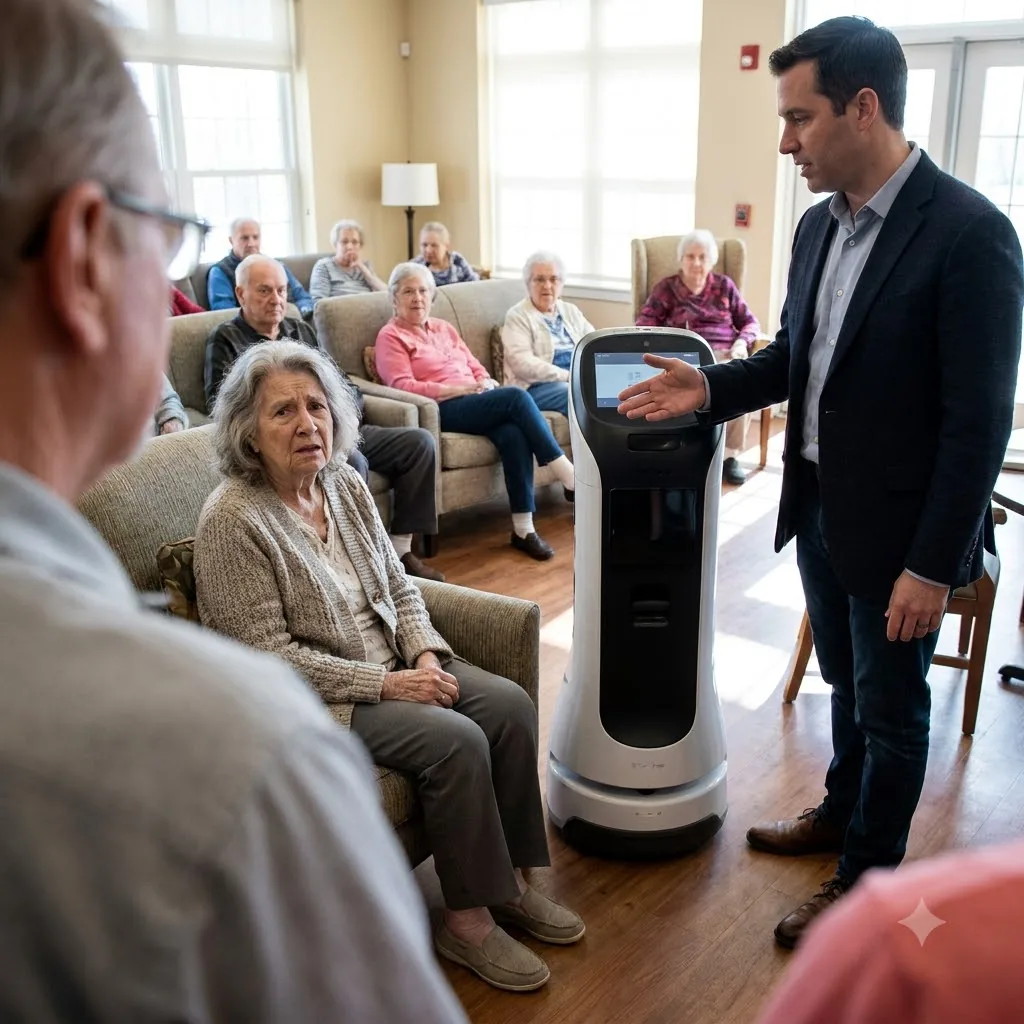
Derek Sloan stood beside Milo in Maple Glen’s common living room and told a room full of residents that the robot had never promised to guide anyone through care decisions, even as Evelyn Price sat three feet away looking at him like he had just taken her words and turned them inside out. The damage landed fast and in public: a care robot the room had already been treating like a steady helper, a vendor in a branded polo calmly denying the promise everyone had been leaning on, and one resident suddenly sounding confused in front of her daughter, a staff aide, and the man by the window with the checkers board.
Marisol Vega had come in with a supply cart and two fresh puzzle books, expecting an ordinary lull before dinner. The television was on low. Walter Reed had his checkers board set out on the window-side table, though no one was playing him. Evelyn’s reading glasses and a folded tissue sat on the side table near her chair. Milo’s status ring glowed bright at knee height while Derek crouched beside it with one hand on his vendor tablet, smiling the careful smile Marisol had already seen him use on three residents that afternoon.
“We position Milo as support,” Derek said. “Not as a decision-maker.”
Evelyn answered before Nina could. “That is not what it did to me.”
Her voice was even, but she held the tissue tighter between two fingers. “Yesterday it told me I needed to take my medication with food. Then when lunch was delayed, it reminded me again that I was late and needed to take it now. I asked which instruction I was supposed to follow, and it told me both mattered. That is not support. That is a trap.”
Derek stayed crouched. “Ms. Price, what you’re describing sounds like a misunderstanding of two separate reminders.”
Marisol stopped with one hand on the cart handle. The room had that small shift she had learned to notice at Maple Glen, when routine paused but nobody admitted it yet. A spoon stopped against a yogurt cup at the far sofa. Walter looked over his glasses. Nina set her tote bag down on the floor without taking off her coat.
Evelyn said, “It was not a misunderstanding. It gave me one instruction and then punished me for following it.”
Derek’s smile thinned but stayed in place. “Milo doesn’t punish anyone. It provides prompts. Residents still make their own choices.”
“That’s a pretty convenient way to put it,” Nina said.
Evelyn lifted one hand a little without looking at her daughter, and Nina closed her mouth. Marisol noticed that too. Evelyn was trying to keep the words coming from herself.
Derek rose to standing, brushing one knee of his slacks. “I think what may be happening here is that Milo’s reminders are being heard as commands. That can happen, especially when routines change.”
There it was. Marisol saw Walter glance at Evelyn and then away. She saw one of the residents near the television fold her lips in the polite way people did when they did not want to stare at something embarrassing. Derek had not called Evelyn forgetful. He had done something sharper. He had made the room supply the word for him.
Evelyn spoke precisely, as if setting each piece in place. “It said, ‘Please wait to take your medication until food is available.’ I repeated that back to it. Later it said, ‘You are overdue. Please take your medication now.’ I repeated that back too. When I asked what changed, it said, ‘Both safety instructions remain active.'”
Walter’s eyebrows lifted. “It does say things like that,” he said quietly. “Active. It says active a lot.”
Derek turned to him with a quick nod, as if grateful for a harmless detail. “Exactly. That’s system language. Not contradiction. It’s simply tracking reminders.”
“Then how was she supposed to answer it?” Nina asked.
“With context,” Derek said. “Residents are encouraged to use common sense and staff support.”
Marisol felt several heads shift toward her because she was the visible staff member in the room. She kept both hands on the cart. “I wasn’t there yesterday,” she said.
“No one said you were,” Derek replied, still polite.
Evelyn let out one short breath through her nose. “So the robot gives an instruction. Then it gives the opposite one. Then if I point it out, I’m the one without common sense.”
“That’s not what I said.”
“It is what your explanation requires.”
The room went quieter. Derek glanced at Milo’s screen, then back at Evelyn. “If there was confusion, we can review best-use guidance. But Milo does not make promises like ‘rely on me to decide.’ That would be inaccurate.”
Marisol looked at the robot’s face screen, then at the brochure half tucked under Derek’s tablet. She had heard him all afternoon telling residents some version of, “You can count on Milo to keep you on track.” Now his wording had narrowed until only Evelyn looked wrong inside it.
Nina stepped closer to her mother’s chair. “You literally told this room he helps people know what to do.”
“He helps organize reminders,” Derek said. “That’s different.”
Evelyn adjusted her reading glasses but did not put them on. “Then let him do it now. Ask him the same kind of question. If I misunderstood something so simple, that should be easy to clear up in front of everyone.”
Derek’s hand settled over the tablet. For the first time, he did not answer immediately. Milo’s status ring kept its calm blue circle. Walter looked from the robot to Derek and back again.
Because if Derek was right, Marisol thought, though she kept her face still, a live demonstration should help Evelyn at once. And if he would not let the robot repeat the harmless guidance he kept describing, the room was left with one plain, unanswered question: what exactly was he afraid Milo would say?
Derek Sloan stood beside Milo in Maple Glen’s common living room and told a room full of residents that the robot had never promised to guide anyone through care decisions, even as Evelyn Price sat three feet away looking at him like he had just taken her words and turned them inside out. The damage landed fast and in public: a care robot the room had already been treating like a steady helper, a vendor in a branded polo calmly denying the promise everyone had been leaning on, and one resident suddenly sounding confused in front of her daughter, a staff aide, and the man by the window with the checkers board.
Marisol Vega had come in with a supply cart and two fresh puzzle books, expecting an ordinary lull before dinner. The television was on low. Walter Reed had his checkers board set out on the window-side table, though no one was playing him. Evelyn’s reading glasses and a folded tissue sat on the side table near her chair. Milo’s status ring glowed bright at knee height while Derek crouched beside it with one hand on his vendor tablet, smiling the careful smile Marisol had already seen him use on three residents that afternoon.
“We position Milo as support,” Derek said. “Not as a decision-maker.”
Evelyn answered before Nina could. “That is not what it did to me.”
Her voice was even, but she held the tissue tighter between two fingers. “Yesterday it told me I needed to take my medication with food. Then when lunch was delayed, it reminded me again that I was late and needed to take it now. I asked which instruction I was supposed to follow, and it told me both mattered. That is not support. That is a trap.”
Derek stayed crouched. “Ms. Price, what you’re describing sounds like a misunderstanding of two separate reminders.”
Marisol stopped with one hand on the cart handle. The room had that small shift she had learned to notice at Maple Glen, when routine paused but nobody admitted it yet. A spoon stopped against a yogurt cup at the far sofa. Walter looked over his glasses. Nina set her tote bag down on the floor without taking off her coat.
Evelyn said, “It was not a misunderstanding. It gave me one instruction and then punished me for following it.”
Derek’s smile thinned but stayed in place. “Milo doesn’t punish anyone. It provides prompts. Residents still make their own choices.”
“That’s a pretty convenient way to put it,” Nina said.
Evelyn lifted one hand a little without looking at her daughter, and Nina closed her mouth. Marisol noticed that too. Evelyn was trying to keep the words coming from herself.
Derek rose to standing, brushing one knee of his slacks. “I think what may be happening here is that Milo’s reminders are being heard as commands. That can happen, especially when routines change.”
There it was. Marisol saw Walter glance at Evelyn and then away. She saw one of the residents near the television fold her lips in the polite way people did when they did not want to stare at something embarrassing. Derek had not called Evelyn forgetful. He had done something sharper. He had made the room supply the word for him.
Evelyn spoke precisely, as if setting each piece in place. “It said, ‘Please wait to take your medication until food is available.’ I repeated that back to it. Later it said, ‘You are overdue. Please take your medication now.’ I repeated that back too. When I asked what changed, it said, ‘Both safety instructions remain active.'”
Walter’s eyebrows lifted. “It does say things like that,” he said quietly. “Active. It says active a lot.”
Derek turned to him with a quick nod, as if grateful for a harmless detail. “Exactly. That’s system language. Not contradiction. It’s simply tracking reminders.”
“Then how was she supposed to answer it?” Nina asked.
“With context,” Derek said. “Residents are encouraged to use common sense and staff support.”
Marisol felt several heads shift toward her because she was the visible staff member in the room. She kept both hands on the cart. “I wasn’t there yesterday,” she said.
“No one said you were,” Derek replied, still polite.
Evelyn let out one short breath through her nose. “So the robot gives an instruction. Then it gives the opposite one. Then if I point it out, I’m the one without common sense.”
“That’s not what I said.”
“It is what your explanation requires.”
The room went quieter. Derek glanced at Milo’s screen, then back at Evelyn. “If there was confusion, we can review best-use guidance. But Milo does not make promises like ‘rely on me to decide.’ That would be inaccurate.”
Marisol looked at the robot’s face screen, then at the brochure half tucked under Derek’s tablet. She had heard him all afternoon telling residents some version of, “You can count on Milo to keep you on track.” Now his wording had narrowed until only Evelyn looked wrong inside it.
Nina stepped closer to her mother’s chair. “You literally told this room he helps people know what to do.”
“He helps organize reminders,” Derek said. “That’s different.”
Evelyn adjusted her reading glasses but did not put them on. “Then let him do it now. Ask him the same kind of question. If I misunderstood something so simple, that should be easy to clear up in front of everyone.”
Derek’s hand settled over the tablet. For the first time, he did not answer immediately. Milo’s status ring kept its calm blue circle. Walter looked from the robot to Derek and back again.
Because if Derek was right, Marisol thought, though she kept her face still, a live demonstration should help Evelyn at once. And if he would not let the robot repeat the harmless guidance he kept describing, the room was left with one plain, unanswered question: what exactly was he afraid Milo would say?