Story code: ST-000807
Part 1: My Name on the Screen
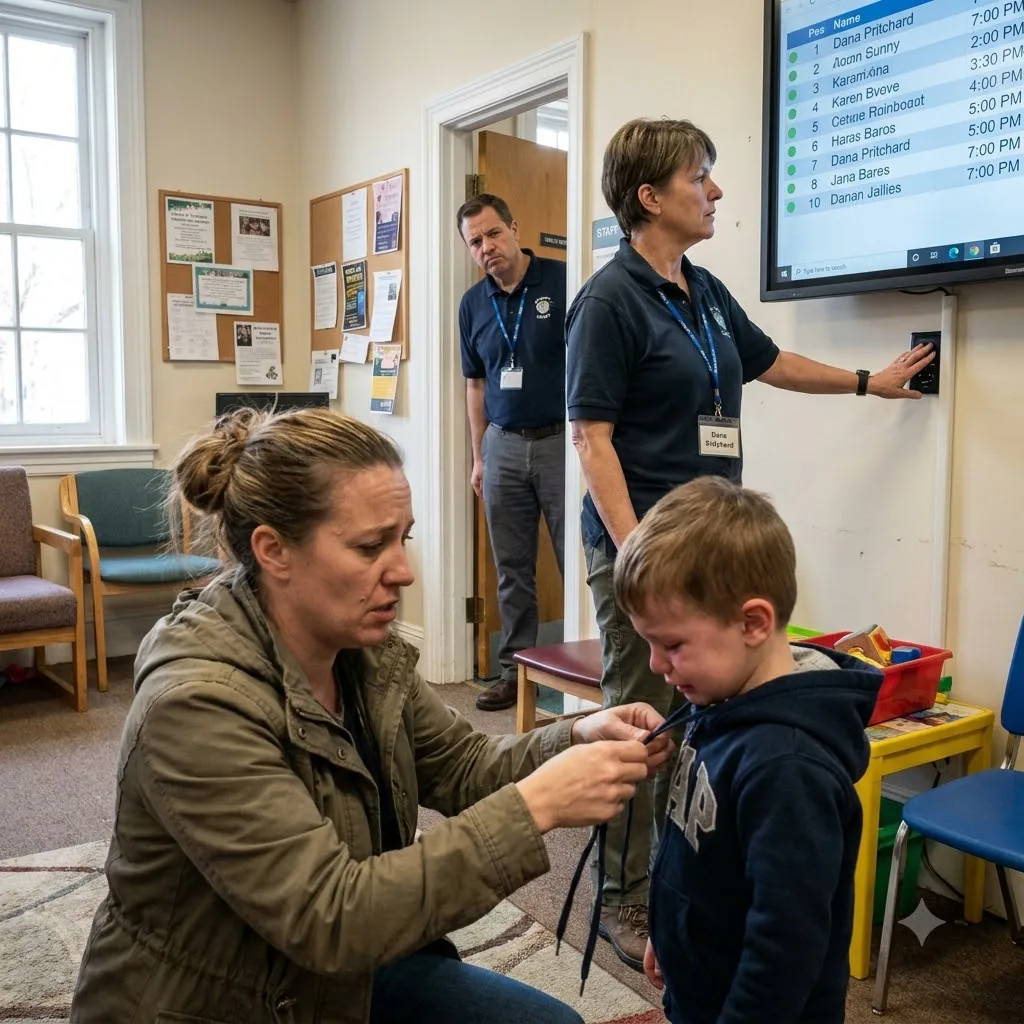
Dana Pritchard put my name on the wall-mounted announcement screen while I was still kneeling beside a crying six-year-old in the family room, tying the drawstring back into his hoodie because it had wrapped around his wrist. The screen over the lobby door switched from snack reminders to: PLEASE DO NOT REMOVE CHILDREN FROM ASSIGNED COVERAGE AREAS – SEE IVY. I had stayed late to cover a care gap Dana had not filled, and in one sentence she made it look like I was the reason support night was falling apart.
I looked up when I heard the little shift the screen makes before a new slide loads. A few parents in the doorway looked from the screen to me. Keisha Warren was standing near the coloring table with her son pressed against her side, and even from across the room I could see her read my name twice just to make sure she had it right.
“Ivy,” Dana called from the main lobby, voice already sharpened through the wireless mic, “we need to keep to the child-watch structure tonight. We can’t have volunteers making personal judgment calls.”
Personal judgment calls.
What I had done was stay with three kids after the assigned child-watch volunteer never came back from the restroom break Dana said would be two minutes. Two of the kids were already asking where their parents were. One had a runny nose and a sticky sleeve from spilled juice. The youngest had wandered halfway into the hall before I caught up and brought him back. I did not move anybody out of coverage. I stepped into coverage because there wasn’t any.
I handed the hoodie string back to the boy and stood up. My lanyard knocked lightly against the check-in tags clipped to it. “Nobody was removed,” I said, not raising my voice. “I stayed because there wasn’t another adult in here.”
Dana was near the snack counter with the event tablet in one hand and the mic in the other. She didn’t come into the family room. She stayed where everyone could see her and where the screen sat over her shoulder like backup. “That is exactly the kind of confusion we can’t create,” she said. “If you had concerns, you should have brought them to me instead of taking over.”
I almost answered right away, but the kids were still there, and one of the dads was trying to get his daughter to put her shoes back on while also listening. That was the worst part of support nights when they went sideways. Nobody ever cleared the room first. The conflict got folded right into pickup time and snack wrappers and tired children leaning against adults’ legs.
So I kept my voice level. “I did bring it to you. At 7:10, by the check-in table. You said to hold the room until you found someone.”
Dana looked down at the tablet, then back at me. “I said to wait for direction. I did not say to start reassigning care.”
A couple people in the lobby went quiet in that way rooms do when they decide something has become official. The screen still had my name on it. That was enough. At Riverside Community Center, whatever hit that wall might as well have been stamped and filed for the next ten minutes, whether it was complete or not.
Ronnie Bailey pushed his cart of folded chairs past the family room and slowed. He glanced at me, then toward the lobby screen. He did not say anything. He just stopped long enough to hear the tone of it.
Keisha raised her hand halfway like she wasn’t sure if parents were allowed to interrupt. “She was in here with them,” she said. “I saw her.”
Dana turned toward her with the mic lowered but still live enough to carry. “And that’s what we’re correcting. We need volunteers to respect process so families aren’t put in awkward situations.”
Awkward situations. I was standing in a room full of families with my name posted over the lobby like a warning label.
I went to the little cabinet under the check-in shelf and pulled out the care log binder. It was the plain black one we always used for child-watch handoffs, incident notes, and who covered what when the schedule broke down. I kept it because if I didn’t write things down, later somebody always swore they remembered it differently.
Dana saw the binder and her mouth tightened for a second before she looked back out at the room. “This is not the time to make this bigger,” she said.
“I’m not making it bigger,” I said. “My name is already on the screen.”
I opened to that night’s sheet. My own handwriting was there in blue ink beside the family room line: 7:12 p.m. Holding child-watch coverage until replacement arrives. Dana notified at check-in. Three children present.
Below that, at 7:26, I had added: No replacement yet. Remaining in room.
The room was quiet enough that I could hear Ronnie’s cart wheel click once as it settled. Dana took two steps toward me, then stopped when one of the boys tugged my sleeve to ask if his mom was coming back now.
I answered him first. “She’s at the parent group table, honey. We wait right here.”
Then I looked at the screen with my name still sitting on it, and back down at the care log that said exactly where I had been when Dana was telling everyone I had broken coverage.
If Part 2 mattered, it was because the binder didn’t just make Dana’s version sound unfair. It put a time on when she knew I was covering that room anyway.
Dana Pritchard put my name on the wall-mounted announcement screen while I was still kneeling beside a crying six-year-old in the family room, tying the drawstring back into his hoodie because it had wrapped around his wrist. The screen over the lobby door switched from snack reminders to: PLEASE DO NOT REMOVE CHILDREN FROM ASSIGNED COVERAGE AREAS – SEE IVY. I had stayed late to cover a care gap Dana had not filled, and in one sentence she made it look like I was the reason support night was falling apart.
I looked up when I heard the little shift the screen makes before a new slide loads. A few parents in the doorway looked from the screen to me. Keisha Warren was standing near the coloring table with her son pressed against her side, and even from across the room I could see her read my name twice just to make sure she had it right.
“Ivy,” Dana called from the main lobby, voice already sharpened through the wireless mic, “we need to keep to the child-watch structure tonight. We can’t have volunteers making personal judgment calls.”
Personal judgment calls.
What I had done was stay with three kids after the assigned child-watch volunteer never came back from the restroom break Dana said would be two minutes. Two of the kids were already asking where their parents were. One had a runny nose and a sticky sleeve from spilled juice. The youngest had wandered halfway into the hall before I caught up and brought him back. I did not move anybody out of coverage. I stepped into coverage because there wasn’t any.
I handed the hoodie string back to the boy and stood up. My lanyard knocked lightly against the check-in tags clipped to it. “Nobody was removed,” I said, not raising my voice. “I stayed because there wasn’t another adult in here.”
Dana was near the snack counter with the event tablet in one hand and the mic in the other. She didn’t come into the family room. She stayed where everyone could see her and where the screen sat over her shoulder like backup. “That is exactly the kind of confusion we can’t create,” she said. “If you had concerns, you should have brought them to me instead of taking over.”
I almost answered right away, but the kids were still there, and one of the dads was trying to get his daughter to put her shoes back on while also listening. That was the worst part of support nights when they went sideways. Nobody ever cleared the room first. The conflict got folded right into pickup time and snack wrappers and tired children leaning against adults’ legs.
So I kept my voice level. “I did bring it to you. At 7:10, by the check-in table. You said to hold the room until you found someone.”
Dana looked down at the tablet, then back at me. “I said to wait for direction. I did not say to start reassigning care.”
A couple people in the lobby went quiet in that way rooms do when they decide something has become official. The screen still had my name on it. That was enough. At Riverside Community Center, whatever hit that wall might as well have been stamped and filed for the next ten minutes, whether it was complete or not.
Ronnie Bailey pushed his cart of folded chairs past the family room and slowed. He glanced at me, then toward the lobby screen. He did not say anything. He just stopped long enough to hear the tone of it.
Keisha raised her hand halfway like she wasn’t sure if parents were allowed to interrupt. “She was in here with them,” she said. “I saw her.”
Dana turned toward her with the mic lowered but still live enough to carry. “And that’s what we’re correcting. We need volunteers to respect process so families aren’t put in awkward situations.”
Awkward situations. I was standing in a room full of families with my name posted over the lobby like a warning label.
I went to the little cabinet under the check-in shelf and pulled out the care log binder. It was the plain black one we always used for child-watch handoffs, incident notes, and who covered what when the schedule broke down. I kept it because if I didn’t write things down, later somebody always swore they remembered it differently.
Dana saw the binder and her mouth tightened for a second before she looked back out at the room. “This is not the time to make this bigger,” she said.
“I’m not making it bigger,” I said. “My name is already on the screen.”
I opened to that night’s sheet. My own handwriting was there in blue ink beside the family room line: 7:12 p.m. Holding child-watch coverage until replacement arrives. Dana notified at check-in. Three children present.
Below that, at 7:26, I had added: No replacement yet. Remaining in room.
The room was quiet enough that I could hear Ronnie’s cart wheel click once as it settled. Dana took two steps toward me, then stopped when one of the boys tugged my sleeve to ask if his mom was coming back now.
I answered him first. “She’s at the parent group table, honey. We wait right here.”
Then I looked at the screen with my name still sitting on it, and back down at the care log that said exactly where I had been when Dana was telling everyone I had broken coverage.
If Part 2 mattered, it was because the binder didn’t just make Dana’s version sound unfair. It put a time on when she knew I was covering that room anyway.