Story code: ST-000808
Part 1: He Said It Was for Our Family
Evan Price asked Lauren to transfer her savings and sign an embryo consent form in the same fertility clinic appointment, then called her cruel when she stopped at the numbers. It happened at Bright Harbor Fertility Center, not in some screaming parking lot, but in that controlled little stretch between the financial counseling desk and the consult room where people fold estimate sheets and pretend they are only talking about logistics. The part that locked me onto it was simple: he said they had an urgent clinic need, and ten minutes later he made a small, casual purchase that did not fit an emergency at all.
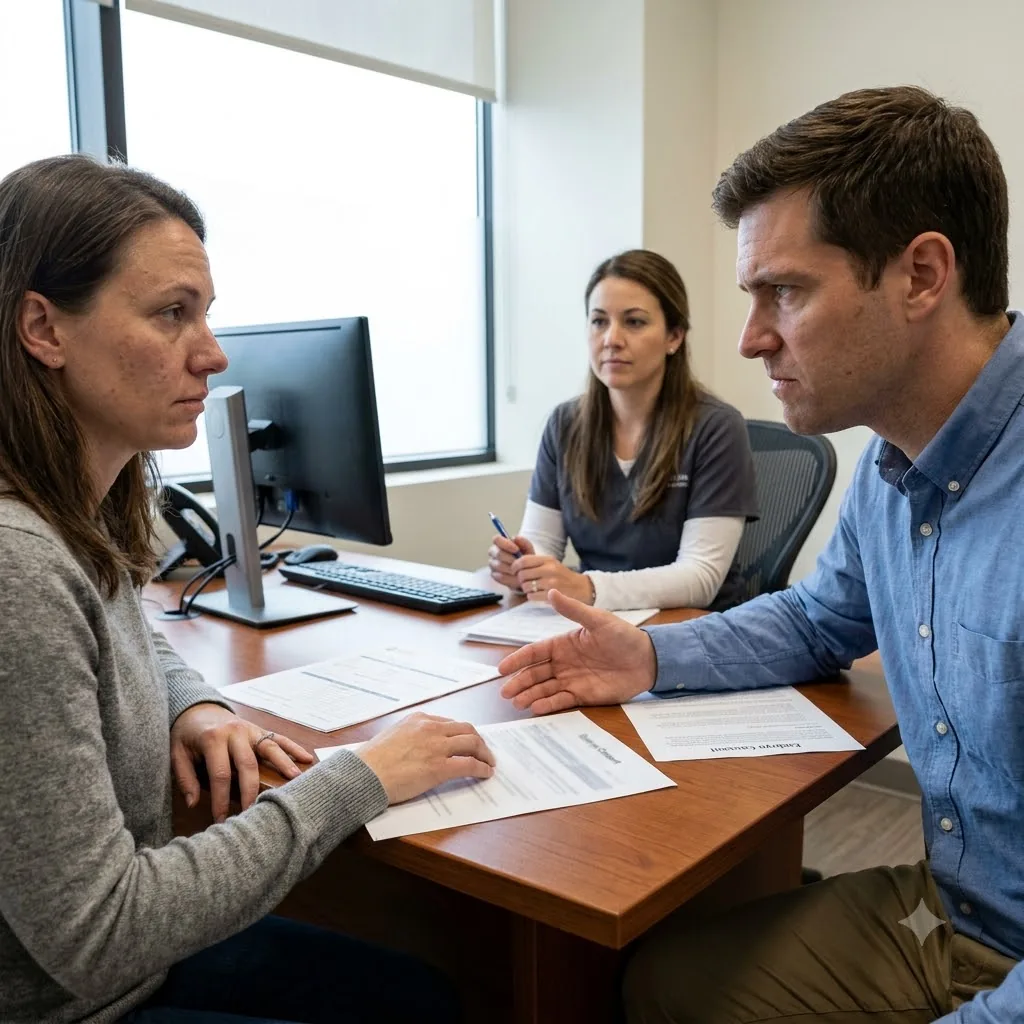
Lauren came in with a manila folder tucked against her side and a printed estimate sheet from an earlier visit. She is one of those people who reads each page before touching a signature line. Nina Alvarez, the financial coordinator, sat across from them with a balance summary, a pen, and the embryo consent form clipped under the estimate packet. Her voice stayed even. She pointed to the due date, the current amount owed, and the section that could be signed later if Lauren wanted more time to review.
That should have slowed the room down.
Evan did the opposite. He answered a question Nina had directed to Lauren, leaned an elbow onto the desk, and said, “We just need to take care of it today so we don’t lose momentum.” When Nina repeated the total, Lauren looked down at her own copy and asked why it was lower than what Evan had told her in the car. She asked it plainly, with her finger on the line item.
Nina did not improvise. She tapped the page and read the clinic number again. Deposit, storage, and the next payment window. She also said, just as clearly, that the embryo consent form was not something anyone needed to sign before all questions were answered.
That is where the pressure became visible.
Evan shifted from practical to wounded so fast it changed the whole desk area. He kept his voice low, but not low enough to hide the words. He said Lauren was acting like this was only her money. He said they had already put too much into treatment to freeze up now. He said, “If we’re building a family, we don’t nickel-and-dime each other at the point that matters.” When Lauren asked again why he had said they needed more than the clinic was actually asking for, he looked at the estimate sheet and then back at her and said, “Because other things come with this, Lauren. You know that. Or you should.”
The sentence sat there for a second.
Then he made it uglier. He looked at the unsigned embryo consent form and said, “If you can’t do this, then just say you’re not in this with me.” Not loud. Not theatrical. Worse than that. Calm enough that anyone passing the hallway would hear a couple under stress and nothing more.
Lauren did not hand over her phone. The transfer screen was already open, but she did not confirm it. She asked Nina whether the clinic required same-day payment in full to keep the medical plan moving. Nina said no. She said the next step had a payment window and that medical discussion with Dr. Meera Shah was separate from the financial choice being discussed at that desk.
Again, that should have ended it.
Instead Evan folded the estimate sheet in half, pushed it back toward Lauren, and told her she was making him beg for help with their future child sitting on paper between them. That was the first visible harm in the whole sequence. He turned her refusal into betrayal while the embryo consent form sat there as if signing it and transferring money were the same kind of proof.
Lauren kept the papers. Nina moved the consent form back a few inches and said they could revisit it after the medical consult if needed. Dr. Shah, once they were in the next room, stayed in her lane and did what a careful physician does: she separated medical timing from payment talk and stopped whenever Lauren paused over a question. No one in that clinic created the pressure. They only made its shape easier to see.
After the consult, Evan stepped out into the hallway vending alcove with his phone. Lauren stayed back long enough to slide the estimate sheet and unsigned consent form into her folder. When she came out, he was at the machine with a fresh coffee in one hand and a receipt in the other, arguing through clenched teeth that she was humiliating him over money they were supposed to be using for treatment.
If the clinic crisis had been as immediate as he claimed, the coffee should have meant nothing. But the timing was wrong, the total at the desk was wrong, and the ease of that purchase was wrong. Lauren took the parking ticket, the clinic papers, and the coffee receipt he dropped into the cup holder on the way to the garage.
By the time they pulled out of Bright Harbor, the question was no longer whether he had pressured her. That part had happened in plain view. The question was why a man insisting they were one missed transfer away from losing their chance had just spent money like the emergency in front of them was not the real emergency at all.
Evan Price asked Lauren to transfer her savings and sign an embryo consent form in the same fertility clinic appointment, then called her cruel when she stopped at the numbers. It happened at Bright Harbor Fertility Center, not in some screaming parking lot, but in that controlled little stretch between the financial counseling desk and the consult room where people fold estimate sheets and pretend they are only talking about logistics. The part that locked me onto it was simple: he said they had an urgent clinic need, and ten minutes later he made a small, casual purchase that did not fit an emergency at all.
Lauren came in with a manila folder tucked against her side and a printed estimate sheet from an earlier visit. She is one of those people who reads each page before touching a signature line. Nina Alvarez, the financial coordinator, sat across from them with a balance summary, a pen, and the embryo consent form clipped under the estimate packet. Her voice stayed even. She pointed to the due date, the current amount owed, and the section that could be signed later if Lauren wanted more time to review.
That should have slowed the room down.
Evan did the opposite. He answered a question Nina had directed to Lauren, leaned an elbow onto the desk, and said, “We just need to take care of it today so we don’t lose momentum.” When Nina repeated the total, Lauren looked down at her own copy and asked why it was lower than what Evan had told her in the car. She asked it plainly, with her finger on the line item.
Nina did not improvise. She tapped the page and read the clinic number again. Deposit, storage, and the next payment window. She also said, just as clearly, that the embryo consent form was not something anyone needed to sign before all questions were answered.
That is where the pressure became visible.
Evan shifted from practical to wounded so fast it changed the whole desk area. He kept his voice low, but not low enough to hide the words. He said Lauren was acting like this was only her money. He said they had already put too much into treatment to freeze up now. He said, “If we’re building a family, we don’t nickel-and-dime each other at the point that matters.” When Lauren asked again why he had said they needed more than the clinic was actually asking for, he looked at the estimate sheet and then back at her and said, “Because other things come with this, Lauren. You know that. Or you should.”
The sentence sat there for a second.
Then he made it uglier. He looked at the unsigned embryo consent form and said, “If you can’t do this, then just say you’re not in this with me.” Not loud. Not theatrical. Worse than that. Calm enough that anyone passing the hallway would hear a couple under stress and nothing more.
Lauren did not hand over her phone. The transfer screen was already open, but she did not confirm it. She asked Nina whether the clinic required same-day payment in full to keep the medical plan moving. Nina said no. She said the next step had a payment window and that medical discussion with Dr. Meera Shah was separate from the financial choice being discussed at that desk.
Again, that should have ended it.
Instead Evan folded the estimate sheet in half, pushed it back toward Lauren, and told her she was making him beg for help with their future child sitting on paper between them. That was the first visible harm in the whole sequence. He turned her refusal into betrayal while the embryo consent form sat there as if signing it and transferring money were the same kind of proof.
Lauren kept the papers. Nina moved the consent form back a few inches and said they could revisit it after the medical consult if needed. Dr. Shah, once they were in the next room, stayed in her lane and did what a careful physician does: she separated medical timing from payment talk and stopped whenever Lauren paused over a question. No one in that clinic created the pressure. They only made its shape easier to see.
After the consult, Evan stepped out into the hallway vending alcove with his phone. Lauren stayed back long enough to slide the estimate sheet and unsigned consent form into her folder. When she came out, he was at the machine with a fresh coffee in one hand and a receipt in the other, arguing through clenched teeth that she was humiliating him over money they were supposed to be using for treatment.
If the clinic crisis had been as immediate as he claimed, the coffee should have meant nothing. But the timing was wrong, the total at the desk was wrong, and the ease of that purchase was wrong. Lauren took the parking ticket, the clinic papers, and the coffee receipt he dropped into the cup holder on the way to the garage.
By the time they pulled out of Bright Harbor, the question was no longer whether he had pressured her. That part had happened in plain view. The question was why a man insisting they were one missed transfer away from losing their chance had just spent money like the emergency in front of them was not the real emergency at all.