Story code: ST-000086
Part 1: The Card They Wanted Me To Own
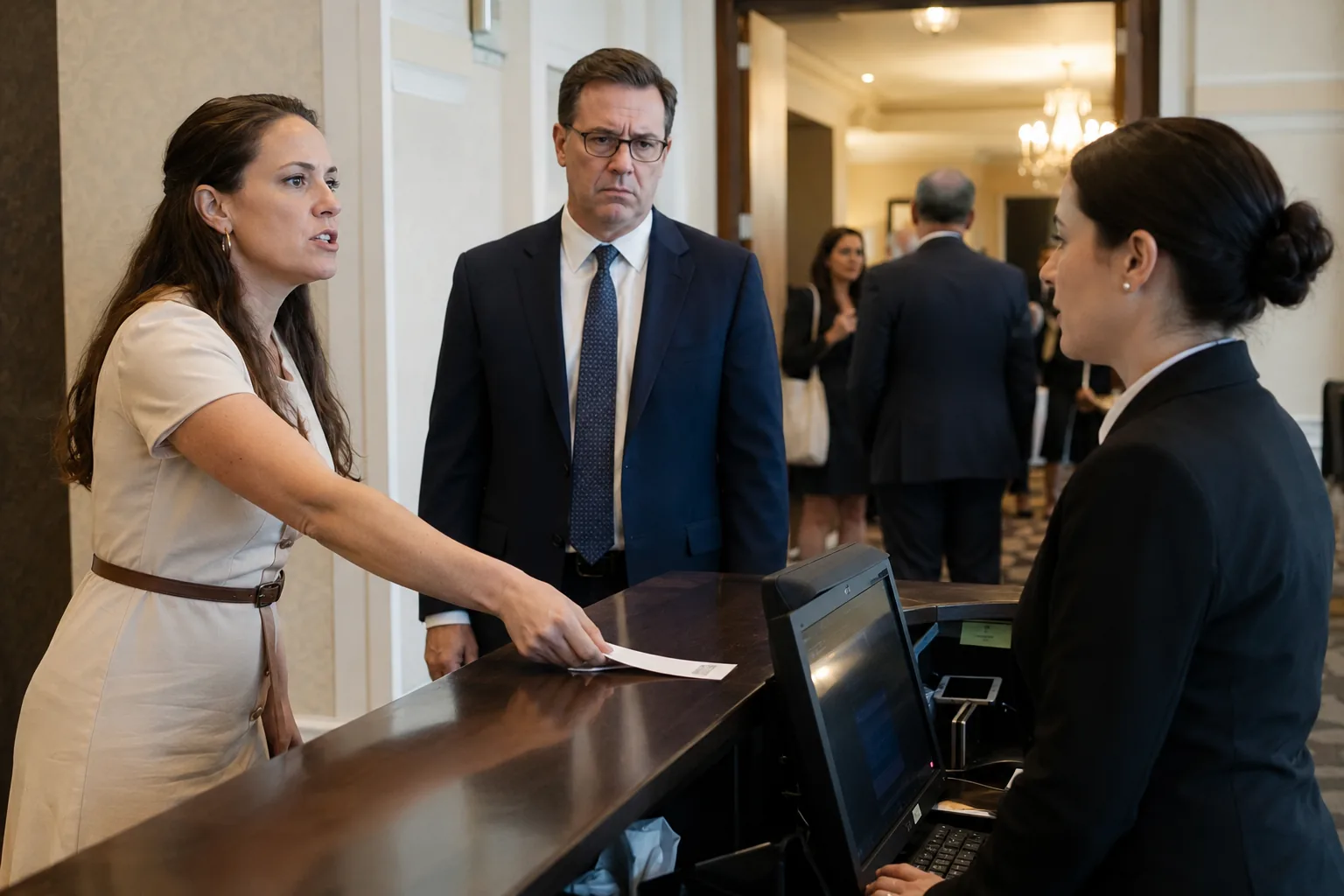
Mara shoved the payment slip toward me across the hotel ballroom desk and said, loud enough for the people in the hallway to hear, that if my card did not go through, I was not leaving the event center with the room balance unpaid. At the same time, the billing office phone kept ringing behind the counter, workers rolled carts past the open doorway, and the front desk clerk held up my card while the terminal flashed DECLINED in plain red letters. I was standing in the suburban hotel’s ballroom payment desk office, in the middle of a family bill fight that Mara had turned into a public trap, and she was using the whole process like it belonged to her.
The desk sat in the narrow billing office off the ballroom, with a manager table map spread open beside a deposit receipt, a bank alert printout, and a stack of folios the clerk kept straightening every time the phone rang again. Mara stood close enough to crowd me but not close enough to touch the screen. She kept talking over the clerk.
“Just run it again,” she said. “It was fine earlier.”
The clerk did not look at her. He looked at the terminal, then at my card, then at the manager who had just come out from the back office. Luis had his phone in one hand and the billing screen in the other, and he was already doing the flat, careful voice that staff use when they want a problem to stay inside the rules.
“The card is declining,” he said. “Do you want to try another form of payment?”
Mara snapped, “No. She needs to fix it.”
That was the first lie in the room, and it landed before I even got a clean sentence out. I had not booked the ballroom, I had not set the deposit timing, and I had not been the one standing at the desk when the first charge went through. I knew that because I had watched the process unfold in pieces all afternoon while the banquet staff kept moving chairs and the hallway stayed busy with carts. What I had in my hand was the only thing I could prove right then: a bank alert showing the card had just been tried and refused.
Mara leaned toward the clerk and said my name like it was a warning. “She said she’d handle it.”
I kept my voice even. “When exactly was I supposed to handle it?”
Mara turned fast. “Don’t do that. You know what you said.”
I looked at Luis instead of her. He was already watching the screen, not the argument. That mattered more than her volume. I set the bank alert on the counter beside the receipt and asked the only question that counted.
“What time did this charge get run?”
Luis glanced down at the timestamp, then at the deposit receipt, then back to the terminal. The clerk stopped talking for the first time since I had walked in. The phone kept ringing in the billing office, sharp and steady, and somewhere out in the hall a cart rattled hard enough to shake the glass in the office door.
Luis said, “Twelve forty-seven.”
I slid the deposit receipt closer. The printed time at the top was earlier than that.
Mara saw it too. She reached for the paper, but I pulled it back before her fingers touched it.
“That can’t be right,” I said, still looking at Luis. “Because the receipt says the payment window closed before that charge was run.”
The clerk finally spoke up, but only to the screen. “The terminal record shows the decline at twelve forty-seven.”
Mara cut in, “No, that is not what happened. The room was already supposed to be covered.”
I did not answer her. I held the receipt and the bank alert side by side and read the times again. The deposit receipt showed one sequence. The terminal showed another. The hallway carts kept rolling. The phone kept ringing. Luis’s face did not change, but his eyes stayed on the timestamps.
Then he said, very quietly, “If the deposit was logged before the decline, this charge should have been covered already.”
Mara went still for half a second, then she laughed once, sharp and thin. “That is not what the paper says.”
But it was exactly what the paper said, and that was the problem. The receipt time, the card decline, and the story Mara was forcing all could not be true at once.
So I asked again, right there at the ballroom payment desk, with the clerk staring at the screen and Luis staring at the timestamps: if the room was supposedly paid before the decline, why did the terminal show the card being run after the payment window had already closed?
Mara shoved the payment slip toward me across the hotel ballroom desk and said, loud enough for the people in the hallway to hear, that if my card did not go through, I was not leaving the event center with the room balance unpaid. At the same time, the billing office phone kept ringing behind the counter, workers rolled carts past the open doorway, and the front desk clerk held up my card while the terminal flashed DECLINED in plain red letters. I was standing in the suburban hotel’s ballroom payment desk office, in the middle of a family bill fight that Mara had turned into a public trap, and she was using the whole process like it belonged to her.
The desk sat in the narrow billing office off the ballroom, with a manager table map spread open beside a deposit receipt, a bank alert printout, and a stack of folios the clerk kept straightening every time the phone rang again. Mara stood close enough to crowd me but not close enough to touch the screen. She kept talking over the clerk.
“Just run it again,” she said. “It was fine earlier.”
The clerk did not look at her. He looked at the terminal, then at my card, then at the manager who had just come out from the back office. Luis had his phone in one hand and the billing screen in the other, and he was already doing the flat, careful voice that staff use when they want a problem to stay inside the rules.
“The card is declining,” he said. “Do you want to try another form of payment?”
Mara snapped, “No. She needs to fix it.”
That was the first lie in the room, and it landed before I even got a clean sentence out. I had not booked the ballroom, I had not set the deposit timing, and I had not been the one standing at the desk when the first charge went through. I knew that because I had watched the process unfold in pieces all afternoon while the banquet staff kept moving chairs and the hallway stayed busy with carts. What I had in my hand was the only thing I could prove right then: a bank alert showing the card had just been tried and refused.
Mara leaned toward the clerk and said my name like it was a warning. “She said she’d handle it.”
I kept my voice even. “When exactly was I supposed to handle it?”
Mara turned fast. “Don’t do that. You know what you said.”
I looked at Luis instead of her. He was already watching the screen, not the argument. That mattered more than her volume. I set the bank alert on the counter beside the receipt and asked the only question that counted.
“What time did this charge get run?”
Luis glanced down at the timestamp, then at the deposit receipt, then back to the terminal. The clerk stopped talking for the first time since I had walked in. The phone kept ringing in the billing office, sharp and steady, and somewhere out in the hall a cart rattled hard enough to shake the glass in the office door.
Luis said, “Twelve forty-seven.”
I slid the deposit receipt closer. The printed time at the top was earlier than that.
Mara saw it too. She reached for the paper, but I pulled it back before her fingers touched it.
“That can’t be right,” I said, still looking at Luis. “Because the receipt says the payment window closed before that charge was run.”
The clerk finally spoke up, but only to the screen. “The terminal record shows the decline at twelve forty-seven.”
Mara cut in, “No, that is not what happened. The room was already supposed to be covered.”
I did not answer her. I held the receipt and the bank alert side by side and read the times again. The deposit receipt showed one sequence. The terminal showed another. The hallway carts kept rolling. The phone kept ringing. Luis’s face did not change, but his eyes stayed on the timestamps.
Then he said, very quietly, “If the deposit was logged before the decline, this charge should have been covered already.”
Mara went still for half a second, then she laughed once, sharp and thin. “That is not what the paper says.”
But it was exactly what the paper said, and that was the problem. The receipt time, the card decline, and the story Mara was forcing all could not be true at once.
So I asked again, right there at the ballroom payment desk, with the clerk staring at the screen and Luis staring at the timestamps: if the room was supposedly paid before the decline, why did the terminal show the card being run after the payment window had already closed?