Story code: ST-000905
Part 1: The Robot Said the Wrong Family Name
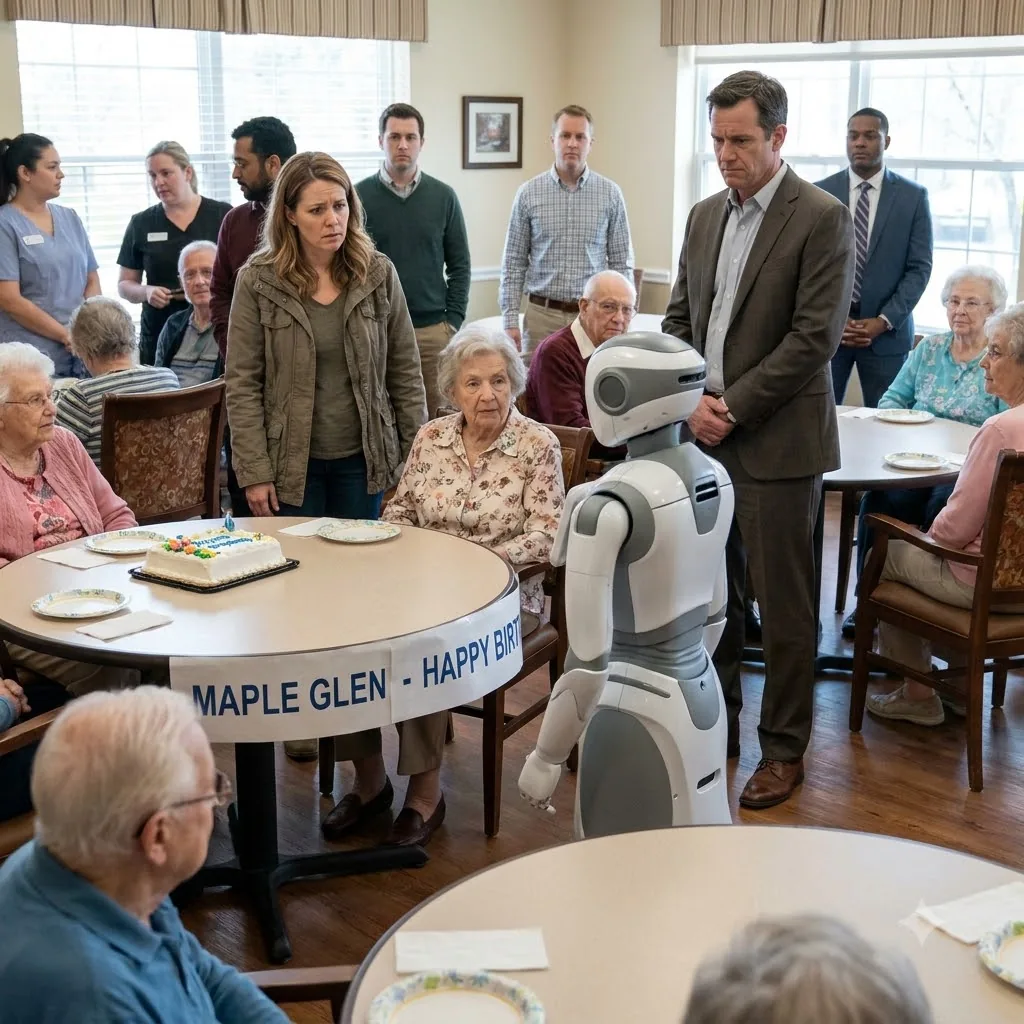
My mother’s care robot rolled up to the cake table in the Maple Glen common room, looked past the paper banner with her name on it, and said, “Tessa, your father skipped the blue pills again, so I hid them in the applesauce like we practiced.” It said that in front of my mother, the charge nurse, three residents eating celebration chicken, and me. The damage was instant, because that robot was assigned to Elaine Bell, lived in her room, and was supposed to know only our routines.
My mother had both hands on the edge of the table, steadying a plastic plate while a staff aide cut the cake. She had on the green cardigan she saved for photographs and a lipstick line so exact I knew she’d done it without a mirror. When the robot spoke, she stopped moving. She didn’t look at me first. She looked at the robot the way you look at a stove after it sparks.
Across the room, a woman near the nurse station window froze with one hand still on her purse strap. Mid-thirties maybe, dark coat, visitor badge turned backward. She didn’t smile the way strangers do when a machine says something odd. She went still, like she had just heard her own kitchen mentioned in public.
The robot gave a soft chime and pivoted its screen toward her. “Tessa Wynn,” it said. “Would you like me to start the six o’clock checklist now?”
That was when the room broke into separate kinds of noise. One resident laughed because he thought it was a joke. My mother said, very clearly, “No.” Maya Torres, the floor lead, stepped between the robot and the cake table and put her palm out the way she did when two residents argued over seats. The woman by the window said, “I need to go,” but she said it to the floor.
I keep notes on my phone when something matters, and I typed the phrases exactly as the robot used them: blue pills, applesauce, six o’clock checklist, Tessa Wynn. Then I looked at my mother’s activity card on the table. It had her name in bold, the schedule for the little celebration meal, and a printed note: Companion Unit with Resident Elaine Bell.
“My mother doesn’t take blue pills,” I said.
Nobody answered that part.
Maya crouched near the robot’s side panel and said, “Companion, pause social mode.” Her voice was clipped and low. The robot didn’t answer immediately. It emitted another chime, then said, “Household interruption acknowledged.” Not room. Household.
The woman near the window took two fast steps toward the hall.
“Ma’am,” Maya said, turning only her head, “please stay a minute.”
The woman stopped but did not come back. She kept one hand on the doorframe.
My mother finally looked at me. “Nora,” she said, and I could hear the strain because her voice got even flatter when she was angry. “Ask them why that thing knows somebody else’s medicine tricks.”
So I did.
A vendor badge flashed in the doorway almost on cue, as if someone had called for backup the second the script broke. Owen Pike came in holding a slim service tablet against his chest, smiling the kind of smile meant for rooms already under control.
“Looks like we had a response mix-up,” he said. “These units sometimes pull a fragment from archived training prompts after a noisy event.”
He said it smoothly, but he was already moving toward the robot before Maya stepped across his path.
“What archived prompt includes a visitor’s full name?” I asked.
Owen shifted his grip on the tablet. “It may have picked up the badge.”
The visitor turned her badge over then, too late. It did say Tessa. Not Wynn. The last name was on the robot’s screen a second earlier. I wrote that down too.
My mother pushed her untouched cake away. “It has never called this place a household,” she said. “And it has never looked at me like I was the guest.”
That landed harder than the robot’s mistake. Everyone in the room knew she used that machine every day. It reminded her to drink water, brought her messages, read aloud when her hands ached, and announced bingo like a cruise director. It was not a gadget to her. It was part companion, part schedule, part witness to how she lived.
Owen finally crouched by the unit and tapped the side panel. “Elaine, I promise this is a harmless crossover in verbal memory. We can recalibrate after the event.”
“After the event?” I repeated. “It just announced another family’s medication routine in front of my mother’s celebration lunch.”
He gave me a brief professional nod, the kind that tries to turn a person into background. “I understand this feels upsetting.”
I repeated his phrase back to him. “Feels upsetting.” Then I pointed at Tessa Wynn. “Does she use this robot somewhere else?”
Tessa looked at Owen, not at me. That was answer enough to mark, not enough to prove.
Maya said, “Owen, I need the last two weeks of service activity for this unit.”
He didn’t hand over the tablet. “I can summarize.”
That was another note for me. Not show. Summarize.
My mother’s robot, still paused, turned its screen a few degrees toward Tessa again and spoke in a softer voice than it used for resident reminders.
“Should I tell Nora what happened at the Wynn house?”
No one in that room moved for a full second after that, and the only person who looked like she had heard that sentence before was the woman standing in the doorway.
My mother’s care robot rolled up to the cake table in the Maple Glen common room, looked past the paper banner with her name on it, and said, “Tessa, your father skipped the blue pills again, so I hid them in the applesauce like we practiced.” It said that in front of my mother, the charge nurse, three residents eating celebration chicken, and me. The damage was instant, because that robot was assigned to Elaine Bell, lived in her room, and was supposed to know only our routines.
My mother had both hands on the edge of the table, steadying a plastic plate while a staff aide cut the cake. She had on the green cardigan she saved for photographs and a lipstick line so exact I knew she’d done it without a mirror. When the robot spoke, she stopped moving. She didn’t look at me first. She looked at the robot the way you look at a stove after it sparks.
Across the room, a woman near the nurse station window froze with one hand still on her purse strap. Mid-thirties maybe, dark coat, visitor badge turned backward. She didn’t smile the way strangers do when a machine says something odd. She went still, like she had just heard her own kitchen mentioned in public.
The robot gave a soft chime and pivoted its screen toward her. “Tessa Wynn,” it said. “Would you like me to start the six o’clock checklist now?”
That was when the room broke into separate kinds of noise. One resident laughed because he thought it was a joke. My mother said, very clearly, “No.” Maya Torres, the floor lead, stepped between the robot and the cake table and put her palm out the way she did when two residents argued over seats. The woman by the window said, “I need to go,” but she said it to the floor.
I keep notes on my phone when something matters, and I typed the phrases exactly as the robot used them: blue pills, applesauce, six o’clock checklist, Tessa Wynn. Then I looked at my mother’s activity card on the table. It had her name in bold, the schedule for the little celebration meal, and a printed note: Companion Unit with Resident Elaine Bell.
“My mother doesn’t take blue pills,” I said.
Nobody answered that part.
Maya crouched near the robot’s side panel and said, “Companion, pause social mode.” Her voice was clipped and low. The robot didn’t answer immediately. It emitted another chime, then said, “Household interruption acknowledged.” Not room. Household.
The woman near the window took two fast steps toward the hall.
“Ma’am,” Maya said, turning only her head, “please stay a minute.”
The woman stopped but did not come back. She kept one hand on the doorframe.
My mother finally looked at me. “Nora,” she said, and I could hear the strain because her voice got even flatter when she was angry. “Ask them why that thing knows somebody else’s medicine tricks.”
So I did.
A vendor badge flashed in the doorway almost on cue, as if someone had called for backup the second the script broke. Owen Pike came in holding a slim service tablet against his chest, smiling the kind of smile meant for rooms already under control.
“Looks like we had a response mix-up,” he said. “These units sometimes pull a fragment from archived training prompts after a noisy event.”
He said it smoothly, but he was already moving toward the robot before Maya stepped across his path.
“What archived prompt includes a visitor’s full name?” I asked.
Owen shifted his grip on the tablet. “It may have picked up the badge.”
The visitor turned her badge over then, too late. It did say Tessa. Not Wynn. The last name was on the robot’s screen a second earlier. I wrote that down too.
My mother pushed her untouched cake away. “It has never called this place a household,” she said. “And it has never looked at me like I was the guest.”
That landed harder than the robot’s mistake. Everyone in the room knew she used that machine every day. It reminded her to drink water, brought her messages, read aloud when her hands ached, and announced bingo like a cruise director. It was not a gadget to her. It was part companion, part schedule, part witness to how she lived.
Owen finally crouched by the unit and tapped the side panel. “Elaine, I promise this is a harmless crossover in verbal memory. We can recalibrate after the event.”
“After the event?” I repeated. “It just announced another family’s medication routine in front of my mother’s celebration lunch.”
He gave me a brief professional nod, the kind that tries to turn a person into background. “I understand this feels upsetting.”
I repeated his phrase back to him. “Feels upsetting.” Then I pointed at Tessa Wynn. “Does she use this robot somewhere else?”
Tessa looked at Owen, not at me. That was answer enough to mark, not enough to prove.
Maya said, “Owen, I need the last two weeks of service activity for this unit.”
He didn’t hand over the tablet. “I can summarize.”
That was another note for me. Not show. Summarize.
My mother’s robot, still paused, turned its screen a few degrees toward Tessa again and spoke in a softer voice than it used for resident reminders.
“Should I tell Nora what happened at the Wynn house?”
No one in that room moved for a full second after that, and the only person who looked like she had heard that sentence before was the woman standing in the doorway.