Story code: ST-000975
Part 1: She Wanted a Rule Broken Right Now
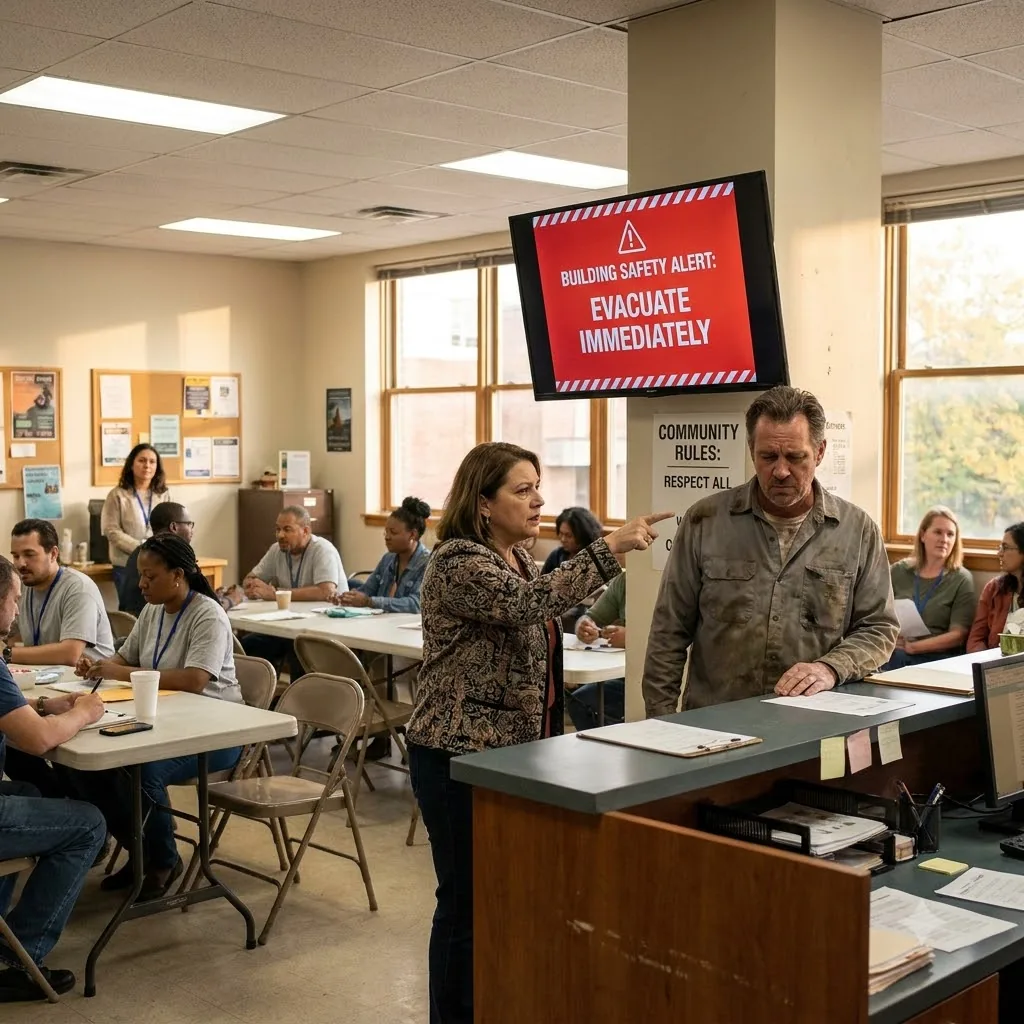
Dana Mercer pointed at the announcement screen over our multipurpose room and said, loud enough for every table to hear, that I was wasting time while the building sat in danger. We had kids doing poster boards, seniors setting out bingo cards, and volunteers carrying coffee urns, and she used all of them as an audience while demanding that I break our screen rules on the spot. Then the second Eli reached for the front desk radio to get the help she kept insisting we needed, Dana told him not to call anybody.
That was the moment the room changed.
Before that, it had been the usual Wednesday rush at the community center. Folding chairs scraped. Somebody was testing a microphone for the literacy program. Renee Wallace was at the nearest table sorting markers by color with two little girls who kept switching the caps around. The announcement screen above the supply cabinet was doing what it always did at that hour, rotating through room assignments, the posted closing reminders, and the line about the gym doors locking at nine.
Dana came in from the hallway fast enough that the lanyard on her chest bounced. She didn’t walk up to me quietly or ask what I was seeing on the screen. She planted herself in the middle aisle, threw one hand up at the monitor, and said, “Why is that still up? Take it down right now. You cannot leave that there if this building is in active danger.”
Conversations stopped in pieces around the room.
I was standing near the small console we use for the announcements, the one staff are supposed to touch only after checking with the front desk because the same system pushes notices to three shared rooms. I looked up at the screen. It was on the normal slide rotation. Then I looked back at Dana.
“What exactly needs to come down?” I asked.
She gave a short laugh with no smile in it. “Maya, this is not the time to play dumb. That message is telling people to stay put when they need to move.”
A few heads turned back to the screen. Renee stood up halfway from her chair and squinted at it. One of the volunteers near the coffee urn said, “What message?”
Dana didn’t answer him. She kept her eyes on me. “Fix it now. If you have to override the system, override it. If somebody gets hurt because you want to hide behind procedure, that’s on you.”
She said it with that flat, public certainty some people use when they want the room to decide the argument before the facts catch up. I could feel everyone waiting to see whether I would touch the console.
The problem was simple: I couldn’t just start changing a shared screen because someone was yelling. If the building had an actual emergency, we had a set process. Front desk confirms, the supervisor pushes the alert, and the screen changes everywhere at once. If I guessed wrong in front of a room full of people, I could send the wrong instruction to every hallway monitor in the building.
I kept my voice level. “Tell me what you’re seeing.”
Dana stepped closer and pointed hard enough that her finger almost lined up with the bottom corner of the monitor. “The evacuation language isn’t there. It should already be there. You need to put it up.”
That landed differently than what she said the first time. First she acted like something dangerous was already on the screen. Now she was saying the danger was that something wasn’t there.
Renee noticed it too. “Wait,” she said. “So the screen isn’t showing a warning? Or it is?”
Dana turned toward her without fully facing her. “I’m saying there is a safety issue and staff is delaying.”
That word staff did exactly what she wanted. People looked at me, then at the screen, then back at me. A boy carrying a stack of handouts stopped in the doorway and stayed there. The microphone squealed once from the other side of the room and then went dead.
I took one step back from the console so everyone could see I wasn’t touching it. “Eli needs to verify before I change shared announcements.”
Dana threw both hands out. “By the time Eli verifies, it will be too late.”
Eli had come in from the front desk by then, still holding the posted schedule sheet in one hand. He looked up at the screen, then at Dana. “What’s the emergency?”
“The screen is directing people wrong,” Dana said. “Call whoever you need and get this fixed now.”
Eli reached for the radio clipped to his belt.
Dana moved faster than she had with me. She put her palm up between Eli and the radio like she was stopping traffic. “No, don’t make it a whole scene,” she said. “Just have Maya change it. We do not need outside people flooding in here over a screen.”
Nobody spoke for a beat after that.
Eli’s hand stayed on the radio but didn’t move. Renee lowered herself back into her chair without taking her eyes off Dana. The room had heard the same thing I heard: Dana wanted emergency-level obedience, but not the emergency-level response that would put her claim on record.
I looked up at the announcement screen again as the next scheduled slide came up with the time stamp in the lower corner, bright and public over the room. If Dana was telling the truth, there was one reason to let Eli call it in. If she wasn’t, there was one reason to stop him.
And Dana had just stopped him in front of everybody.
Dana Mercer pointed at the announcement screen over our multipurpose room and said, loud enough for every table to hear, that I was wasting time while the building sat in danger. We had kids doing poster boards, seniors setting out bingo cards, and volunteers carrying coffee urns, and she used all of them as an audience while demanding that I break our screen rules on the spot. Then the second Eli reached for the front desk radio to get the help she kept insisting we needed, Dana told him not to call anybody.
That was the moment the room changed.
Before that, it had been the usual Wednesday rush at the community center. Folding chairs scraped. Somebody was testing a microphone for the literacy program. Renee Wallace was at the nearest table sorting markers by color with two little girls who kept switching the caps around. The announcement screen above the supply cabinet was doing what it always did at that hour, rotating through room assignments, the posted closing reminders, and the line about the gym doors locking at nine.
Dana came in from the hallway fast enough that the lanyard on her chest bounced. She didn’t walk up to me quietly or ask what I was seeing on the screen. She planted herself in the middle aisle, threw one hand up at the monitor, and said, “Why is that still up? Take it down right now. You cannot leave that there if this building is in active danger.”
Conversations stopped in pieces around the room.
I was standing near the small console we use for the announcements, the one staff are supposed to touch only after checking with the front desk because the same system pushes notices to three shared rooms. I looked up at the screen. It was on the normal slide rotation. Then I looked back at Dana.
“What exactly needs to come down?” I asked.
She gave a short laugh with no smile in it. “Maya, this is not the time to play dumb. That message is telling people to stay put when they need to move.”
A few heads turned back to the screen. Renee stood up halfway from her chair and squinted at it. One of the volunteers near the coffee urn said, “What message?”
Dana didn’t answer him. She kept her eyes on me. “Fix it now. If you have to override the system, override it. If somebody gets hurt because you want to hide behind procedure, that’s on you.”
She said it with that flat, public certainty some people use when they want the room to decide the argument before the facts catch up. I could feel everyone waiting to see whether I would touch the console.
The problem was simple: I couldn’t just start changing a shared screen because someone was yelling. If the building had an actual emergency, we had a set process. Front desk confirms, the supervisor pushes the alert, and the screen changes everywhere at once. If I guessed wrong in front of a room full of people, I could send the wrong instruction to every hallway monitor in the building.
I kept my voice level. “Tell me what you’re seeing.”
Dana stepped closer and pointed hard enough that her finger almost lined up with the bottom corner of the monitor. “The evacuation language isn’t there. It should already be there. You need to put it up.”
That landed differently than what she said the first time. First she acted like something dangerous was already on the screen. Now she was saying the danger was that something wasn’t there.
Renee noticed it too. “Wait,” she said. “So the screen isn’t showing a warning? Or it is?”
Dana turned toward her without fully facing her. “I’m saying there is a safety issue and staff is delaying.”
That word staff did exactly what she wanted. People looked at me, then at the screen, then back at me. A boy carrying a stack of handouts stopped in the doorway and stayed there. The microphone squealed once from the other side of the room and then went dead.
I took one step back from the console so everyone could see I wasn’t touching it. “Eli needs to verify before I change shared announcements.”
Dana threw both hands out. “By the time Eli verifies, it will be too late.”
Eli had come in from the front desk by then, still holding the posted schedule sheet in one hand. He looked up at the screen, then at Dana. “What’s the emergency?”
“The screen is directing people wrong,” Dana said. “Call whoever you need and get this fixed now.”
Eli reached for the radio clipped to his belt.
Dana moved faster than she had with me. She put her palm up between Eli and the radio like she was stopping traffic. “No, don’t make it a whole scene,” she said. “Just have Maya change it. We do not need outside people flooding in here over a screen.”
Nobody spoke for a beat after that.
Eli’s hand stayed on the radio but didn’t move. Renee lowered herself back into her chair without taking her eyes off Dana. The room had heard the same thing I heard: Dana wanted emergency-level obedience, but not the emergency-level response that would put her claim on record.
I looked up at the announcement screen again as the next scheduled slide came up with the time stamp in the lower corner, bright and public over the room. If Dana was telling the truth, there was one reason to let Eli call it in. If she wasn’t, there was one reason to stop him.
And Dana had just stopped him in front of everybody.