Story code: ST-000977
Part 2: Applied Everywhere Until It Broke
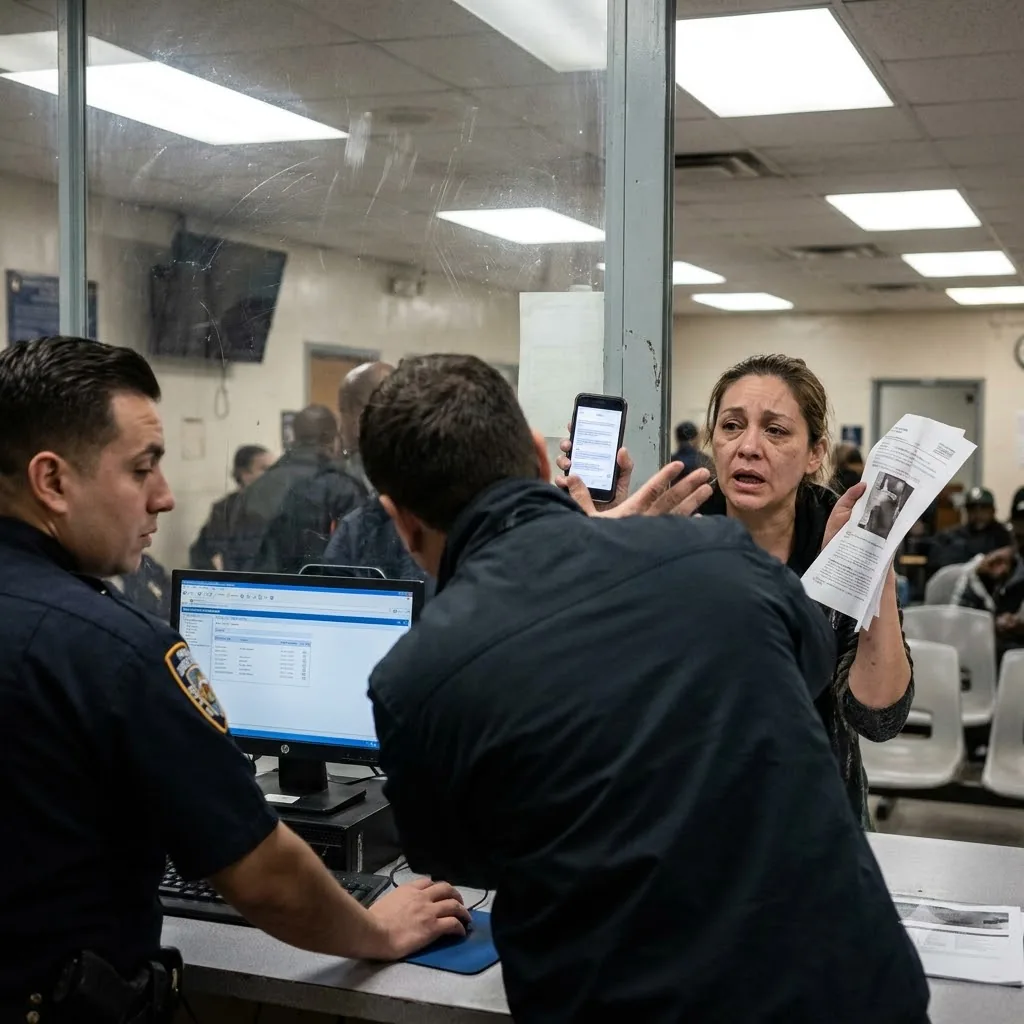
By the time Alyssa asked why the rule only existed at her window, the whole front counter had gone into that quiet sideways attention people pretend not to have. Nobody stopped their business. Pens still moved. The printer still spat out case slips. But every new intake step around Desk Sergeant Nina Carver made her rule look worse.
Alyssa did not switch into speeches. She kept doing the same thing she had done from the start: exact wording, exact time, exact screen.
“You said relationship exception,” she told Carver. “You said special authorization. You said you can’t open the report. I’m asking the same question again. What is the actual basis?”
Carver looked at the monitor, then at Trent. “It’s a domestic-linked digital access matter.”
“That is still not a basis,” Alyssa said.
Officer Ben Rourke was midway through another intake, this one for a woman documenting repeated unwanted calls from an ex-husband about a custody exchange. He asked for the number, the times, and whether there were saved voicemails. He did not ask for any relationship waiver. He did not stop because the two people had been married. He took the report because that was what the desk was there to do.
Alyssa waited until he finished printing the worksheet copy. Then she looked back at Carver.
“So if an ex sends threatening calls, that gets logged,” she said. “If a neighbor sends threats, that gets logged. If a former in-law damages property, that gets logged. But if my ex deletes intimate backup files and uses that access trail to pressure me, suddenly there’s a secret front-desk rule?”
Carver’s jaw tightened. “This involves consent history and digital materials.”
Rourke turned his head just enough to be heard without fully stepping in. “We log digital harassment and account interference all the time,” he said. “If there’s evidence, it gets documented.”
Carver answered him too fast. “Not when there’s restricted relationship overlap.”
That phrase landed badly because it sounded newer than the last one.
Alyssa lifted her phone again and flattened it against the glass. The screen showed a cloud storage activity page. Even from a few feet away, the structure was obvious: device name, login history, deletion notices, recovery window. She scrolled slowly, not for drama, just to keep the sequence visible.
“There,” she said. “That device was recognized. That deletion happened at 9:14. These recovery notices came after. And this is the message I got twelve minutes later.”
She opened the text thread. Trent’s name sat at the top. The message below it was short enough for Carver, Rourke, and anyone standing close to read without needing interpretation.
Don’t start problems you can’t undo. Leave it alone and I might help you get some of it back.
Nobody at the desk had to guess what “it” referred to. The phone was in one hand. The deletion log was still on screen in the other app. The printouts on the counter matched the times.
Carver’s next move was not to take the report. It was to narrow the argument.
“Those messages can be noted,” she said, “but if the underlying material comes from a prior intimate relationship, access and ownership can’t be assumed at intake.”
Alyssa pointed to her own account email, then to the cloud activity screen. “I’m not asking you to decide ownership of my body or my past relationship at the counter. I am asking you to document deletion, threatened exposure, and blocked account recovery tied to my own account.”
That was the sentence that shifted the room. Not because it was louder. Because it separated what Carver kept blurring together.
Rourke finally set down the stack in his hand. “Sarge,” he said, “if the issue is whether a report can be opened, we open first and sort legal questions after. Otherwise half this lobby goes home unlogged.”
Carver gave him a look that was supposed to close the discussion, but the comparison points were now stacked too high. Within ten minutes, the desk had accepted a complaint involving former roommates, another involving a separated couple disputing access to a shared mailbox, and a harassment report where the caller was identified as “current girlfriend of complainant’s ex.” Every one of those went through some version of normal intake. Names. Incident type. Evidence source. Case number.
Alyssa got none of that.
Trent tried to reclaim the ground with jargon. “This isn’t the same category,” he said. “Once private images are involved, the reporting party can’t unilaterally activate recovery channels if another connected party has standing.”
Alyssa held still for one beat, then asked the question that mattered.
“Connected party where?”
He blinked. “In the record.”
“What record?”
He gestured toward Carver’s computer. “The domestic-linked one.”
Carver did not confirm it. She also did not deny it.
That gap was visible enough that Rourke stepped closer to her station and lowered his voice only slightly. “What code are you using?” he asked. “If there’s a restriction flag, it should display.”
Carver touched the keyboard, clicked twice, and then stopped moving. Her face changed in a small practical way, not dramatic, just the way someone looks when the screen is not giving back what they expected.
Alyssa saw it too. “Read it out loud,” she said.
Carver didn’t.
She reached for the phone on the back counter instead and asked for a supervisor.
That was the first clean break in the bluff. If the rule had been real, she would have named it. If the flag had been there, she would have pointed to it. Instead she called Lt. Marcus Vale to the desk, while Trent kept one hand around his phone and stopped correcting anyone’s wording.
When Vale walked in from the back-counter station, he didn’t ask for the story first. He looked at the monitor and said one narrow sentence.
“Show me the policy or show me the system basis.”