Story code: ST-000977
Part 3: What the Screen Wouldn’t Back Up
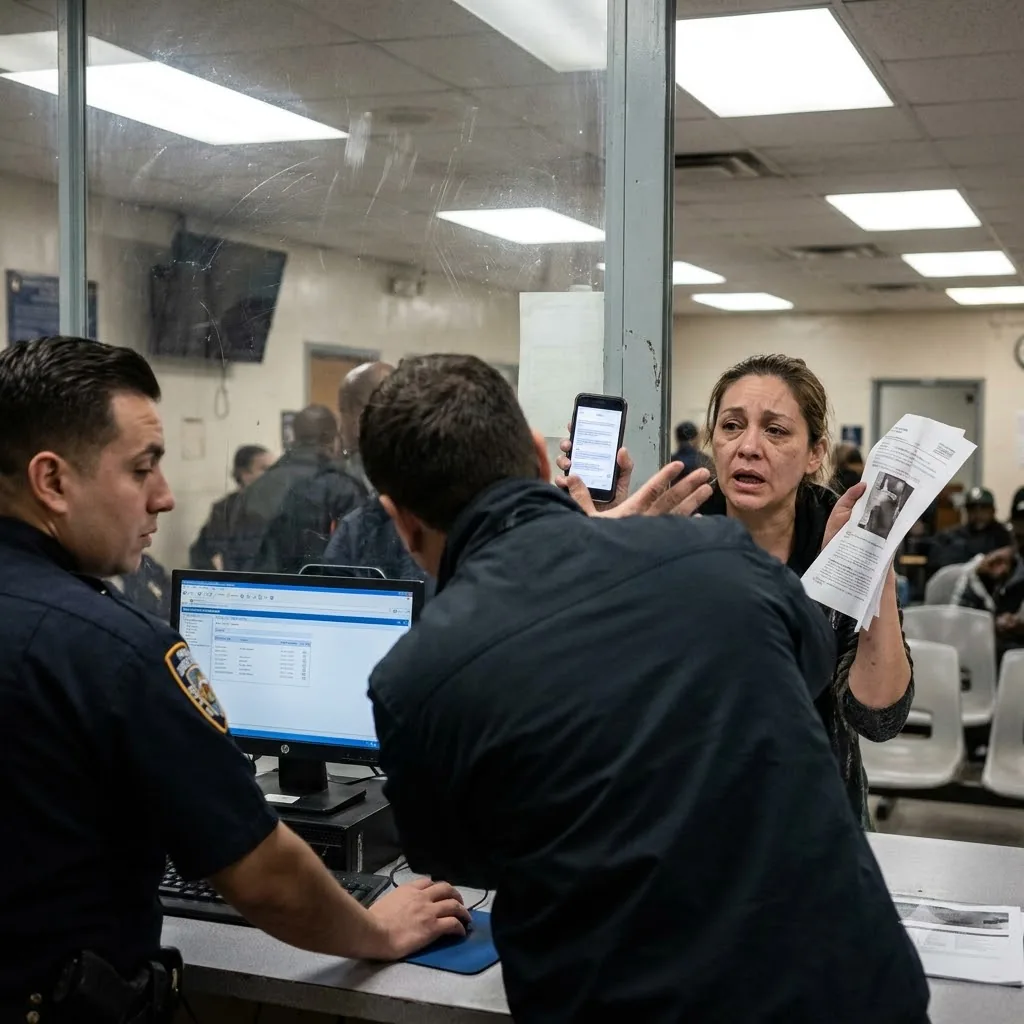
Lt. Marcus Vale came up behind the counter without raising his voice. He set one hand on the edge of Desk Sergeant Nina Carver’s station, looked at the monitor first, and repeated the same instruction he had used walking in.
“Show me the policy or show me the system basis.”
Carver angled the screen toward him. From the public side nobody could read the full text, but the pace of the check mattered more than the details. Vale didn’t nod along to shorthand. He used the mouse himself, clicked into the intake notes, then into the restriction field Rourke had mentioned. He asked narrow questions and waited for exact answers.
“What code did you apply?”
Carver cleared her throat. “I hadn’t applied one yet. I was holding the intake pending the relationship exception.”
“Where is the exception listed?”
“In domestic-linked guidance.”
“Open it.”
She opened a reference menu, scrolled, stopped, backed up, and tried a different tab. The waiting chairs had gone still in that careful public way where people keep their eyes on forms while listening to every word. Officer Ben Rourke stayed two stations over with a worksheet in his hand, but he wasn’t processing anyone now.
Carver found a guidance page at last. Vale read it in silence for several seconds.
“This is evidence-handling caution,” he said. “It says do not promise return or deletion of digital material at intake. It does not say a former partner cannot make a report.”
Nobody filled the gap after that.
Alyssa Moreno didn’t pounce. She slid her printouts forward again, square to the glass. “Then please log what happened,” she said. “Deleted backups, recovery interference, and threats tied to it.”
Vale held up one finger, not to stop her, just to keep the sequence tight. He looked at Trent Holloway.
“You said there was a policy. Name it.”
Trent’s answer came slower than it had before. “It’s the domestic-related digital property restriction.”
“That’s not a policy title,” Vale said. “What is the source?”
Trent unlocked his phone and pulled up the same cropped screenshot he had been holding at an angle all morning. This time Vale held out his hand and waited until Trent either passed it over or refused. Trent passed it over.
Up close, the problem was visible even from the public side by the way Vale’s thumb moved. He expanded the image, swiped once, and hit the share icon. No header. No department seal. No date. Just a paragraph of copied text with key words that sounded official if nobody asked where they came from.
Vale handed the phone back. “This is not department policy.”
Trent started talking before the sentence had fully landed. “It’s pulled from the guidance language. Same effect.”
“No,” Vale said. “Not same effect.”
That was the point where the room stopped treating it like a disagreement and started treating it like a failed process.
Vale turned to Alyssa’s side of the counter. “Show me the account timeline from the start.”
She did. She opened the cloud activity page, the deletion entries, the recovery notices, and the email warning that restoration would expire unless the account owner acted. Then she opened the text thread again. The timing sat there without much need for explanation: deletion activity, warning notices, then Trent’s message telling her not to start problems she couldn’t undo if she wanted help getting some of it back.
Vale asked for concrete identifiers the way Rourke had earlier. “Whose account email is this?”
Alyssa read it aloud. It matched the printed notices.
“Whose device is showing in the login history?”
She pointed to one recognized device she used and then to another access event marked with a familiar device name tied to an older shared setup. Rourke stepped nearer when Vale asked him to compare the printout times to the phone screen. He did it line by line.
“These match,” Rourke said. “Deletion notice, recovery window, then the text after.”
Vale looked back at Trent. “Do you have authorized access to this account right now?”
Trent shifted his weight. “I had shared access before. We both used parts of it.”
“That wasn’t my question. Do you have access now?”
Trent didn’t answer directly. He said, “If she starts changing recovery settings while this is disputed, that’s destruction too.”
The phrasing told on itself. Vale’s eyes went from Trent’s face to Alyssa’s phone to the monitor again.
“So there is an active recovery path to secure,” he said.
Alyssa said, “Yes. That’s why I’m here before the window closes.”
Vale asked Carver, “Can intake open digital coercion and unauthorized access interference?”
Carver answered softly this time. “Yes.”
“Open it.”
She began typing.
Then Vale added the sentence that changed the pressure from public argument into something sharp and procedural.
“And if Mr. Holloway claims any legitimate connection to the recovery channel,” he said, without looking away from the screen, “he can state it now on the record while we contact the provider’s law-enforcement preservation and account-security line from this desk. If he doesn’t, we proceed as unauthorized access and lock the recovery path around the account owner.”
For the first time all morning, Trent stopped correcting anyone’s wording.