Story code: ST-000979
Part 1: Trash Day Court
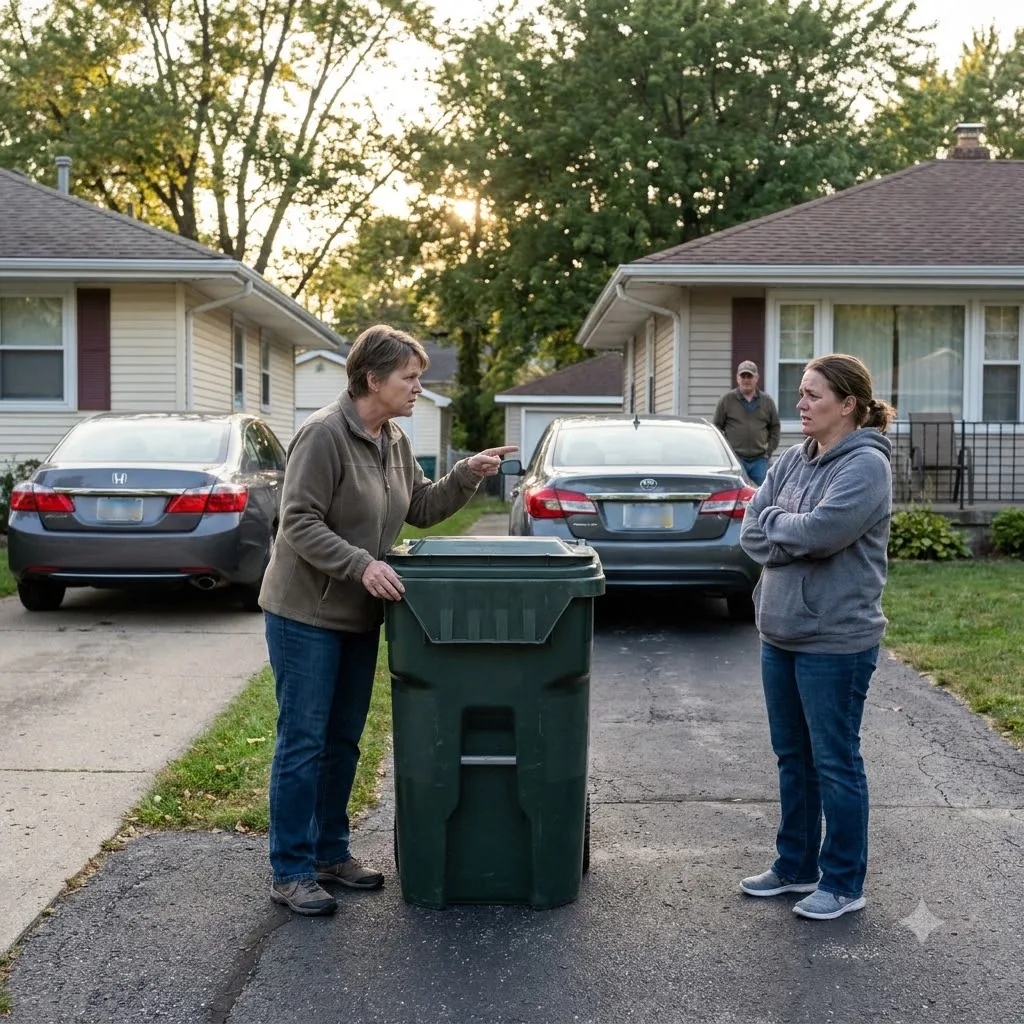
Darlene Pike blocked the shared driveway with her trash bin, pointed at Mara Jensen like she was announcing a sentence, and said in front of Evan, Mrs. Alvarez, and anyone passing the front walk that people who left bins in the drive were selfish and deserved to be shamed where everyone could see them. It happened beside the side fence line where both houses staged their cans, with fresh wheel marks still on the concrete and the smell of pickup residue hanging at the mouth of the drive. The unfair part was simple: Darlene was acting like Mara had committed some neighborhood offense, but the bin placement sitting there in plain view did not match the story she was telling.
The Jensen and Pike houses shared one narrow strip of driveway from the street back toward their garages. On trash mornings, the space worked only if both households kept their bins tight to the curb or lined them briefly by the fence until the truck came. Everyone knew it because everyone used that same strip: Evan backing out early for work, Mara loading groceries or school bags, Mrs. Alvarez cutting through on her regular walk and pausing when somebody started talking too loudly.
That morning, Darlene had waited until Mara came out with a tote over one shoulder. Her own bin stood crooked near the middle seam of the driveway, one wheel on the darker concrete of the Jensen side, lid half open. She tapped the rim with two fingers and raised her voice.
“This is exactly what I’m talking about,” she said. “Leaving trash out in shared space is disrespectful. It tells everybody what kind of people they’re dealing with.”
Mara stopped near the front walk and looked first at the bin, then at the narrow gap left for a car.
“That’s not our can,” she said.
Darlene did not lower her voice. “It was in my way this morning. I had to move it myself. If somebody can’t handle one simple rule, they need to be called on it.”
Evan, halfway to his car, pulled up and looked toward the curb. “Our trash can has the white scrape on the left side,” he said. “This one doesn’t.”
Darlene gave him a quick glance and kept going as if he had not spoken. “I don’t care whose excuse is whose. The point is, nobody decent leaves a bin where the other household has to deal with it. If you do that, you should be embarrassed.”
Mrs. Alvarez had slowed near the mailbox cluster at the mouth of the drive. She did not step in, but she heard every word. That gave Darlene an audience, and she used it. She repeated herself with more polish the second time, like she was laying down neighborhood law instead of having an argument over trash day.
“In a shared driveway,” she said, “you either respect people or you don’t. There’s no gray area.”
Mara did not answer right away. She was looking at the ground. Two narrow wheel tracks cut from the side fence line toward the middle of the driveway. Near the curb, the recycling bin stood where the Jensen household usually kept it as a comparison point, straight and close to the edge. Darlene’s trash bin sat several feet back from that line, angled inward, as if it had not been rolled directly out for pickup and left there.
The truck had already come through once. The loose paper scraps and damp streak at the curb showed that much. If Darlene’s bin had been waiting properly at the street, it should have been forward with the rest, not stranded halfway into the shared lane after collection.
Still, proof was not something Mara could announce just because a pattern looked wrong. She knew what she had seen when she stepped out. She knew what Evan had pointed out about the scrape mark. She knew Darlene had chosen the loudest possible version of this conversation.
What she also knew was that the words mattered as much as the bin. Darlene was not just complaining. She was turning a piece of driveway routine into a measure of character, and she was doing it where anybody could carry the comment farther than the concrete.
Mrs. Alvarez finally said, “Whose bin is it, then?”
Darlene answered too quickly. “That isn’t the issue.”
Evan let out one short breath through his nose and opened his car door. Mara stayed where she was.
“It is if you’re naming people,” Mara said.
Darlene folded her arms. “If a bin is left obstructing shared access, whoever did it deserves to be corrected. Publicly. Maybe then it stops happening.”
She said publicly like she wanted the word to stick.
No one moved for a second. The only sound was Evan’s engine turning over and the low clatter of an empty lid shifting in the breeze. Mara looked again at the bin in the drive. On the right side of its black plastic body there was a long chalky rub, low and curved, the kind left by scraping a fence post or garage trim. Mara had seen that mark before, not on her side of the house, but near Darlene’s garage when the cans were brought back in.
Darlene had just demanded public punishment for whoever left a bin where it did not belong.
And the mark on the bin she was using as evidence looked very much like it belonged to her.
Darlene Pike blocked the shared driveway with her trash bin, pointed at Mara Jensen like she was announcing a sentence, and said in front of Evan, Mrs. Alvarez, and anyone passing the front walk that people who left bins in the drive were selfish and deserved to be shamed where everyone could see them. It happened beside the side fence line where both houses staged their cans, with fresh wheel marks still on the concrete and the smell of pickup residue hanging at the mouth of the drive. The unfair part was simple: Darlene was acting like Mara had committed some neighborhood offense, but the bin placement sitting there in plain view did not match the story she was telling.
The Jensen and Pike houses shared one narrow strip of driveway from the street back toward their garages. On trash mornings, the space worked only if both households kept their bins tight to the curb or lined them briefly by the fence until the truck came. Everyone knew it because everyone used that same strip: Evan backing out early for work, Mara loading groceries or school bags, Mrs. Alvarez cutting through on her regular walk and pausing when somebody started talking too loudly.
That morning, Darlene had waited until Mara came out with a tote over one shoulder. Her own bin stood crooked near the middle seam of the driveway, one wheel on the darker concrete of the Jensen side, lid half open. She tapped the rim with two fingers and raised her voice.
“This is exactly what I’m talking about,” she said. “Leaving trash out in shared space is disrespectful. It tells everybody what kind of people they’re dealing with.”
Mara stopped near the front walk and looked first at the bin, then at the narrow gap left for a car.
“That’s not our can,” she said.
Darlene did not lower her voice. “It was in my way this morning. I had to move it myself. If somebody can’t handle one simple rule, they need to be called on it.”
Evan, halfway to his car, pulled up and looked toward the curb. “Our trash can has the white scrape on the left side,” he said. “This one doesn’t.”
Darlene gave him a quick glance and kept going as if he had not spoken. “I don’t care whose excuse is whose. The point is, nobody decent leaves a bin where the other household has to deal with it. If you do that, you should be embarrassed.”
Mrs. Alvarez had slowed near the mailbox cluster at the mouth of the drive. She did not step in, but she heard every word. That gave Darlene an audience, and she used it. She repeated herself with more polish the second time, like she was laying down neighborhood law instead of having an argument over trash day.
“In a shared driveway,” she said, “you either respect people or you don’t. There’s no gray area.”
Mara did not answer right away. She was looking at the ground. Two narrow wheel tracks cut from the side fence line toward the middle of the driveway. Near the curb, the recycling bin stood where the Jensen household usually kept it as a comparison point, straight and close to the edge. Darlene’s trash bin sat several feet back from that line, angled inward, as if it had not been rolled directly out for pickup and left there.
The truck had already come through once. The loose paper scraps and damp streak at the curb showed that much. If Darlene’s bin had been waiting properly at the street, it should have been forward with the rest, not stranded halfway into the shared lane after collection.
Still, proof was not something Mara could announce just because a pattern looked wrong. She knew what she had seen when she stepped out. She knew what Evan had pointed out about the scrape mark. She knew Darlene had chosen the loudest possible version of this conversation.
What she also knew was that the words mattered as much as the bin. Darlene was not just complaining. She was turning a piece of driveway routine into a measure of character, and she was doing it where anybody could carry the comment farther than the concrete.
Mrs. Alvarez finally said, “Whose bin is it, then?”
Darlene answered too quickly. “That isn’t the issue.”
Evan let out one short breath through his nose and opened his car door. Mara stayed where she was.
“It is if you’re naming people,” Mara said.
Darlene folded her arms. “If a bin is left obstructing shared access, whoever did it deserves to be corrected. Publicly. Maybe then it stops happening.”
She said publicly like she wanted the word to stick.
No one moved for a second. The only sound was Evan’s engine turning over and the low clatter of an empty lid shifting in the breeze. Mara looked again at the bin in the drive. On the right side of its black plastic body there was a long chalky rub, low and curved, the kind left by scraping a fence post or garage trim. Mara had seen that mark before, not on her side of the house, but near Darlene’s garage when the cans were brought back in.
Darlene had just demanded public punishment for whoever left a bin where it did not belong.
And the mark on the bin she was using as evidence looked very much like it belonged to her.