Story code: ST-001009
Part 1: He Said I Didn’t Count in My Own Yard
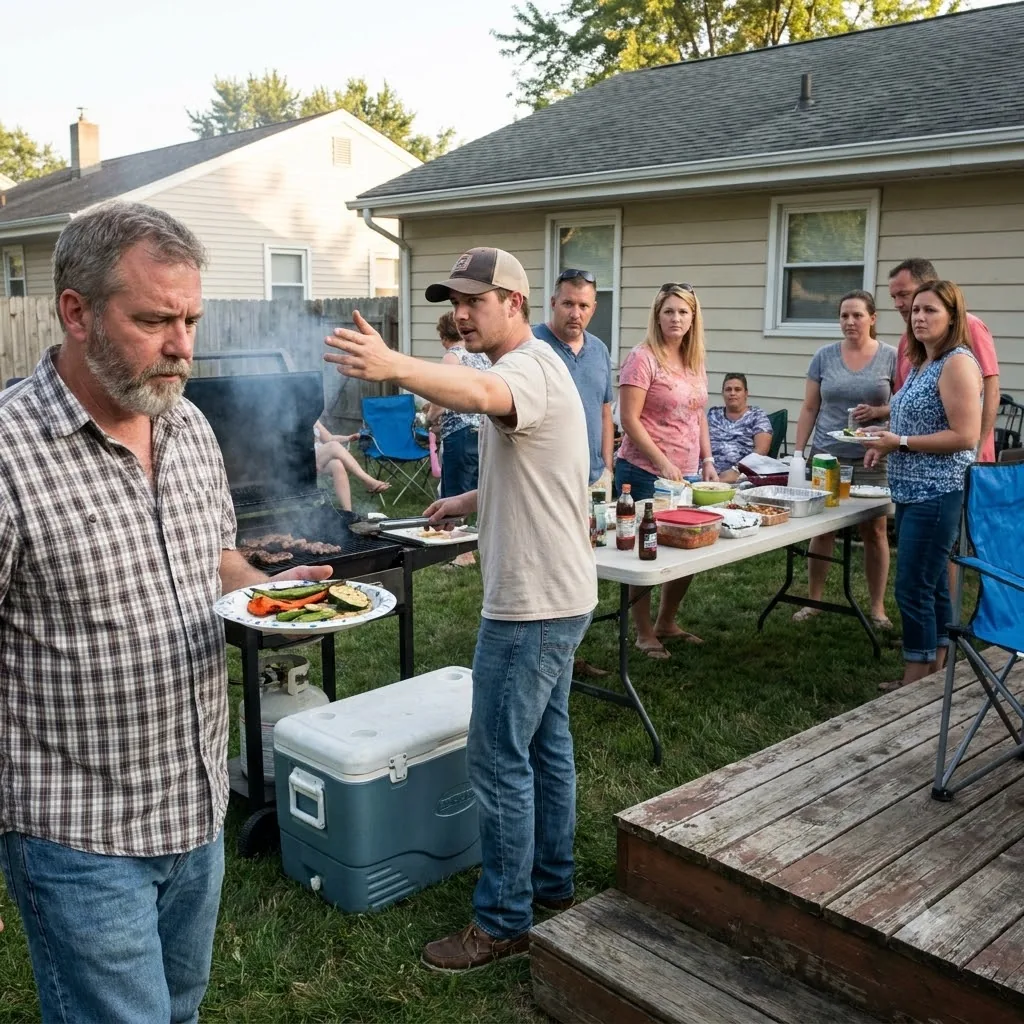
Daniel Mercer had barely set his meatless platter on the folding buffet table when his son said, loud enough for the people by the grill and drink tub to hear, “Don’t put that with the family food. You’re not really family anymore.” The tongs stopped clinking. A paper plate slipped sideways in somebody’s hand. In one sentence, in the middle of a backyard barbecue full of cousins, neighbors, and introduction hugs, Evan Mercer stripped Daniel of a place he had been standing in all afternoon and, from what the yard itself showed, for a lot longer than that.
I was near the cooler when it happened, close enough to hear the exact words and see how Daniel held the platter with both hands for a second before setting it down anyway. It was one of those long white platters with rows of grilled mushroom caps, charred zucchini, and corn cut into bright rounds, arranged too carefully to be last-minute. Somebody had tucked index-card labels along the table edge already: burgers, buns, fruit salad, potato salad. Daniel’s dish had no card yet.
Evan moved first. He slid one of the blank index cards away from Daniel’s end of the table and tapped the wood with two fingers.
“I said not on the family spread.”
Daniel looked at him, then at the table. “It’s food for everybody.”
Evan’s voice stayed level, which made it carry farther. “You can leave it on the side table if you want. But don’t act like this is your event.”
That line traveled. A few people near the patio door stopped talking mid-sentence. Linda Mercer came out with a foil pan and a stack of napkins resting against her hip. She paused when she saw where Evan was standing.
“Linda,” Evan said, without taking his eyes off Daniel, “tell him. We’re keeping this for family.”
That was the first real pressure point, and everybody close enough to hear seemed to know it. Linda set the foil pan down beside the buns, smoothed one corner of the tablecloth, and said, “Let’s just keep the line moving.”
She did not say Daniel belonged there. She did not tell Evan to stop. In a yard like that, silence was not neutral.
Daniel adjusted the platter so it sat straight with the table edge. “I brought what people here actually eat,” he said.
One of the aunts made a small throat-clearing sound and reached for ice she did not need. A couple of younger cousins looked down at their phones without using them. Ray Bishop came through the side gate carrying two folding chairs, took in the scene, and slowed without interrupting.
Evan laughed once through his nose, not big, just enough to mark the moment. “That’s exactly it. You always do this. You show up with your version and act like it counts the same.”
Daniel did not raise his voice. “My version of what?”
“Of us.” Evan gave a quick glance toward the people around the table, checking faces before he went on. “You were around. That’s not the same thing.”
That was the sentence that changed the dispute from food placement to family identity. Not he brought the wrong dish. Not he ignored the menu. Around. Like a handyman. Like a regular guest who stayed too late. Like the years could be flattened if the wording was tidy enough.
Tessa Ruiz, standing with a sleeve of cups under one arm, said, “If he’s not family, why is everybody waiting for him to carve the watermelon the way he always does?”
Nobody answered her right away.
It was a simple question, and that made it sharper. The watermelon was still sitting uncut by the sink bucket, exactly where it always ended up before the serving line formed. Daniel glanced toward it, then back at Evan.
Evan kept his place by the table. “Traditions change.”
Ray set the folding chairs down by the fence with a metallic click. “That so?” he said, looking at the grill station and then at Daniel. “Because I’ve watched this man run these cookouts since before that maple tree was taller than the fence.”
Evan’s jaw tightened, but he did not turn toward Ray. “This is family business.”
Ray lifted one shoulder and stepped back, but he didn’t take it back.
Linda began passing napkins out of an old metal tray covered in family photo magnets, the kind people use every year because it’s there and nobody thinks to replace it. Her hands moved fast. Her face didn’t. She reached under the table once, came up empty, then looked toward the patio door like she was checking for something stored inside.
Daniel finally moved the platter himself, but not to the side table. He placed it at the end of the buffet, parallel with the burger tray, and laid the serving tongs across it.
“If I don’t count,” he said, quiet enough that people leaned in, “then somebody else can explain why your mother still keeps the apron with my stitching on it.”
Linda stopped with a stack of napkins halfway out of the tray.
Evan turned to her so fast the tablecloth shifted.
And that was the first time all afternoon the yard went fully still, because everybody there could tell Daniel had just named an object the host had not wanted brought into the open.
Daniel Mercer had barely set his meatless platter on the folding buffet table when his son said, loud enough for the people by the grill and drink tub to hear, “Don’t put that with the family food. You’re not really family anymore.” The tongs stopped clinking. A paper plate slipped sideways in somebody’s hand. In one sentence, in the middle of a backyard barbecue full of cousins, neighbors, and introduction hugs, Evan Mercer stripped Daniel of a place he had been standing in all afternoon and, from what the yard itself showed, for a lot longer than that.
I was near the cooler when it happened, close enough to hear the exact words and see how Daniel held the platter with both hands for a second before setting it down anyway. It was one of those long white platters with rows of grilled mushroom caps, charred zucchini, and corn cut into bright rounds, arranged too carefully to be last-minute. Somebody had tucked index-card labels along the table edge already: burgers, buns, fruit salad, potato salad. Daniel’s dish had no card yet.
Evan moved first. He slid one of the blank index cards away from Daniel’s end of the table and tapped the wood with two fingers.
“I said not on the family spread.”
Daniel looked at him, then at the table. “It’s food for everybody.”
Evan’s voice stayed level, which made it carry farther. “You can leave it on the side table if you want. But don’t act like this is your event.”
That line traveled. A few people near the patio door stopped talking mid-sentence. Linda Mercer came out with a foil pan and a stack of napkins resting against her hip. She paused when she saw where Evan was standing.
“Linda,” Evan said, without taking his eyes off Daniel, “tell him. We’re keeping this for family.”
That was the first real pressure point, and everybody close enough to hear seemed to know it. Linda set the foil pan down beside the buns, smoothed one corner of the tablecloth, and said, “Let’s just keep the line moving.”
She did not say Daniel belonged there. She did not tell Evan to stop. In a yard like that, silence was not neutral.
Daniel adjusted the platter so it sat straight with the table edge. “I brought what people here actually eat,” he said.
One of the aunts made a small throat-clearing sound and reached for ice she did not need. A couple of younger cousins looked down at their phones without using them. Ray Bishop came through the side gate carrying two folding chairs, took in the scene, and slowed without interrupting.
Evan laughed once through his nose, not big, just enough to mark the moment. “That’s exactly it. You always do this. You show up with your version and act like it counts the same.”
Daniel did not raise his voice. “My version of what?”
“Of us.” Evan gave a quick glance toward the people around the table, checking faces before he went on. “You were around. That’s not the same thing.”
That was the sentence that changed the dispute from food placement to family identity. Not he brought the wrong dish. Not he ignored the menu. Around. Like a handyman. Like a regular guest who stayed too late. Like the years could be flattened if the wording was tidy enough.
Tessa Ruiz, standing with a sleeve of cups under one arm, said, “If he’s not family, why is everybody waiting for him to carve the watermelon the way he always does?”
Nobody answered her right away.
It was a simple question, and that made it sharper. The watermelon was still sitting uncut by the sink bucket, exactly where it always ended up before the serving line formed. Daniel glanced toward it, then back at Evan.
Evan kept his place by the table. “Traditions change.”
Ray set the folding chairs down by the fence with a metallic click. “That so?” he said, looking at the grill station and then at Daniel. “Because I’ve watched this man run these cookouts since before that maple tree was taller than the fence.”
Evan’s jaw tightened, but he did not turn toward Ray. “This is family business.”
Ray lifted one shoulder and stepped back, but he didn’t take it back.
Linda began passing napkins out of an old metal tray covered in family photo magnets, the kind people use every year because it’s there and nobody thinks to replace it. Her hands moved fast. Her face didn’t. She reached under the table once, came up empty, then looked toward the patio door like she was checking for something stored inside.
Daniel finally moved the platter himself, but not to the side table. He placed it at the end of the buffet, parallel with the burger tray, and laid the serving tongs across it.
“If I don’t count,” he said, quiet enough that people leaned in, “then somebody else can explain why your mother still keeps the apron with my stitching on it.”
Linda stopped with a stack of napkins halfway out of the tray.
Evan turned to her so fast the tablecloth shifted.
And that was the first time all afternoon the yard went fully still, because everybody there could tell Daniel had just named an object the host had not wanted brought into the open.