Story code: ST-000004
Part 1: He Thanked the Wrong House
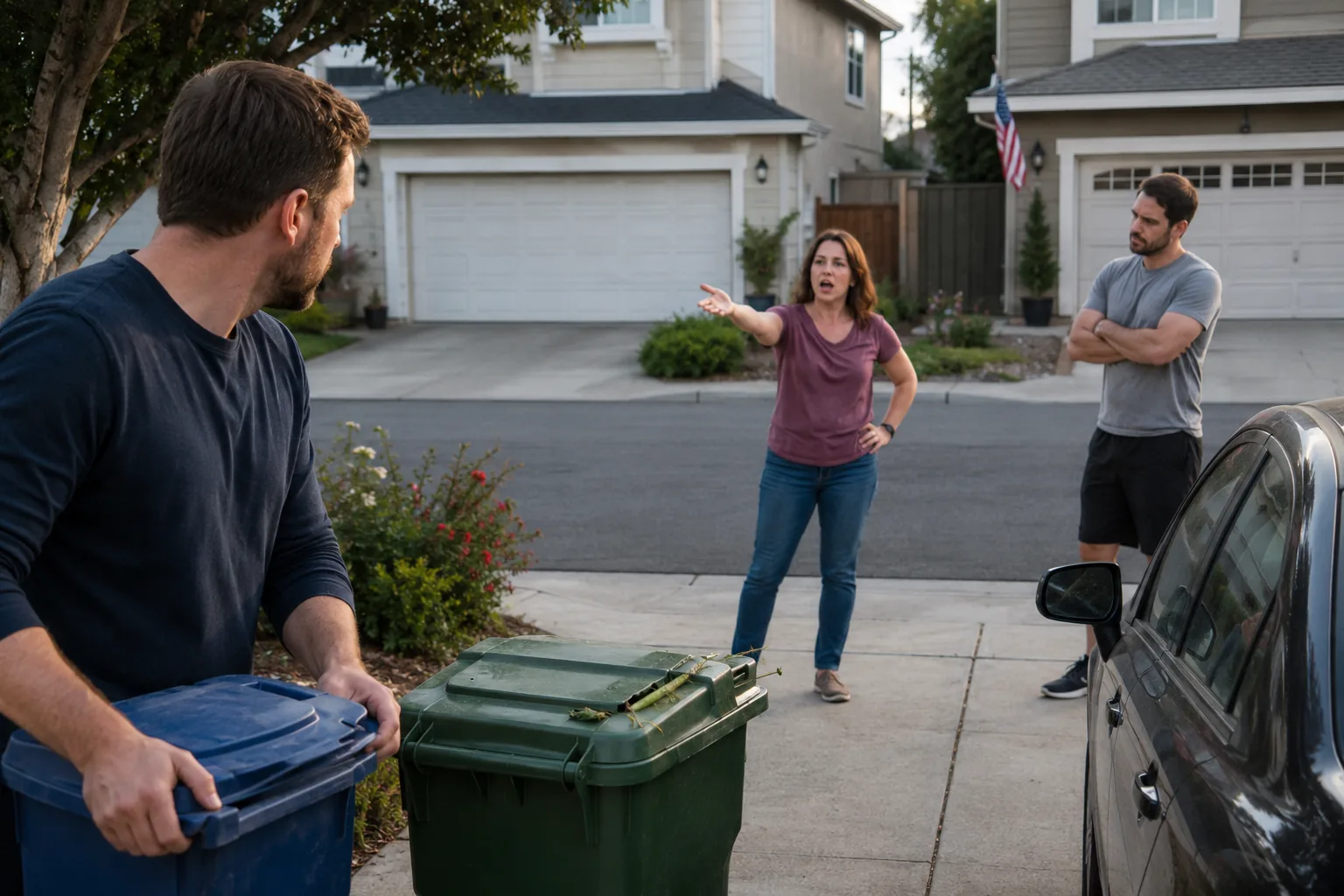
Last Tuesday I was dragging our trash bins down the shared driveway, one hand on the recycling, the other flipping the yard-waste lid shut, when Tina Alvarez called across the street, “Derek, you are so good about keeping all this straight.” Derek lifted two fingers at her like a man accepting a compliment he had earned, and I was standing right there with my own bin handle in my hand.
That was the moment my stomach went tight, not because of the bins themselves, but because he did not correct her. He did not even glance at me. He just stood on his side of the driveway edge in clean sneakers and said, “Yeah, if you don’t stay on top of pickup day, it gets ugly fast.”
I said, “They’re mine. I do the schedule.”
Tina looked embarrassed for half a second, the way people do when they realize they stepped into something. Then she laughed lightly and said, “Oh, I just always see him out here.”
And that was the problem in one sentence.
Our houses share a long driveway until it splits near the garages. Mine has the garage-side bin area, tucked just enough out of sight that the work happens before anyone is paying attention. Every Monday night, I sort what has to be sorted, tie replacement bags into the kitchen can, rinse what needs rinsing, wipe the sticky rim on the recycling if something leaked, and line all three bins up so I can roll them out in one trip before bed. By seven the next morning, they are already at the curb in the pickup line, lids facing the truck, wheels turned so they don’t drift, numbers visible.
It is not complicated if you already know the routine. It is just constant. And because it is constant, nobody notices until it stops.
Derek had started making himself visible at the easiest part.
At first it looked small. A few weeks earlier I came out after dinner and found my recycling bin already angled toward the driveway mouth. He was beside it with his phone in one hand. He said, “I moved it up for you,” like he had done me a favor. I told him I had a system and pulled it back because the truck arm catches better when I line them in order. He smiled, stepped aside, and watched me reset all three.
The next week he was out there again, this time rolling his own trash bin to the curb right behind mine so it looked like one neat row he had handled together. Then he started arriving at the exact moment neighbors were leaving for work or pulling kids into cars. He would touch a lid, tug a bin forward six inches, or stand there looking over the lineup like he was checking it.
It sounds petty until you live in a place where everybody half-knows everybody and most impressions are made in ten-second driveway conversations.
Soon Tina was not the only one. A man walking his dog nodded toward Derek and said, “You keep this side organized.” A delivery driver asked him where “the bins go after pickup” while I was sweeping the garage lip. Derek answered before I could open my mouth.
I started hearing my own work described back to me in his voice.
That alone would have been insulting enough, but there was a money piece too. I buy the heavy bags we use in the yard-waste bin because the paper ones split. I keep cleaning spray by the side door because one summer a bag tore and the smell sat there for days. I am the one checking holiday pickup changes so we do not miss a week and end up with overflowing trash baking next to the garage. When he slid himself into the visible part, he was not just borrowing space. He was standing in the credit attached to the labor.
Eli noticed before I said much. That night he leaned on the kitchen counter, looking out toward the driveway, and said, “He’s timing himself for the audience.”
“I know,” I said.
“Then stop helping him look useful.”
I wanted to say I wasn’t helping him. I wanted to say he was just being annoying in a shared space. But when I replayed it, the pattern was hard to ignore. Derek only ever looked competent after I had already done the real setup. The bins were clean because I cleaned them. They were lined up correctly because I lined them up. Pickup never got missed because I tracked the schedule on my phone calendar and the city app.
The first real crack showed up two mornings later.
Pickup had been delayed by one day for the holiday, something the city posts online but does not explain well unless you already know where to check. I had not rolled the bins out yet because I was waiting until evening, and at nine that morning Derek marched his own trash bin halfway down the driveway, looked at my garage-side area, and then stopped.
He stood there longer than he needed to, staring at the recycling and yard-waste bins like he was waiting for them to tell him what came next. He touched the wrong lid first. Then he looked toward the street, then back at my garage, then at the curb line.
He knew how to stand in front of finished work.
What he did not seem to know was how to start it when I hadn’t already gone first.
Last Tuesday I was dragging our trash bins down the shared driveway, one hand on the recycling, the other flipping the yard-waste lid shut, when Tina Alvarez called across the street, “Derek, you are so good about keeping all this straight.” Derek lifted two fingers at her like a man accepting a compliment he had earned, and I was standing right there with my own bin handle in my hand.
That was the moment my stomach went tight, not because of the bins themselves, but because he did not correct her. He did not even glance at me. He just stood on his side of the driveway edge in clean sneakers and said, “Yeah, if you don’t stay on top of pickup day, it gets ugly fast.”
I said, “They’re mine. I do the schedule.”
Tina looked embarrassed for half a second, the way people do when they realize they stepped into something. Then she laughed lightly and said, “Oh, I just always see him out here.”
And that was the problem in one sentence.
Our houses share a long driveway until it splits near the garages. Mine has the garage-side bin area, tucked just enough out of sight that the work happens before anyone is paying attention. Every Monday night, I sort what has to be sorted, tie replacement bags into the kitchen can, rinse what needs rinsing, wipe the sticky rim on the recycling if something leaked, and line all three bins up so I can roll them out in one trip before bed. By seven the next morning, they are already at the curb in the pickup line, lids facing the truck, wheels turned so they don’t drift, numbers visible.
It is not complicated if you already know the routine. It is just constant. And because it is constant, nobody notices until it stops.
Derek had started making himself visible at the easiest part.
At first it looked small. A few weeks earlier I came out after dinner and found my recycling bin already angled toward the driveway mouth. He was beside it with his phone in one hand. He said, “I moved it up for you,” like he had done me a favor. I told him I had a system and pulled it back because the truck arm catches better when I line them in order. He smiled, stepped aside, and watched me reset all three.
The next week he was out there again, this time rolling his own trash bin to the curb right behind mine so it looked like one neat row he had handled together. Then he started arriving at the exact moment neighbors were leaving for work or pulling kids into cars. He would touch a lid, tug a bin forward six inches, or stand there looking over the lineup like he was checking it.
It sounds petty until you live in a place where everybody half-knows everybody and most impressions are made in ten-second driveway conversations.
Soon Tina was not the only one. A man walking his dog nodded toward Derek and said, “You keep this side organized.” A delivery driver asked him where “the bins go after pickup” while I was sweeping the garage lip. Derek answered before I could open my mouth.
I started hearing my own work described back to me in his voice.
That alone would have been insulting enough, but there was a money piece too. I buy the heavy bags we use in the yard-waste bin because the paper ones split. I keep cleaning spray by the side door because one summer a bag tore and the smell sat there for days. I am the one checking holiday pickup changes so we do not miss a week and end up with overflowing trash baking next to the garage. When he slid himself into the visible part, he was not just borrowing space. He was standing in the credit attached to the labor.
Eli noticed before I said much. That night he leaned on the kitchen counter, looking out toward the driveway, and said, “He’s timing himself for the audience.”
“I know,” I said.
“Then stop helping him look useful.”
I wanted to say I wasn’t helping him. I wanted to say he was just being annoying in a shared space. But when I replayed it, the pattern was hard to ignore. Derek only ever looked competent after I had already done the real setup. The bins were clean because I cleaned them. They were lined up correctly because I lined them up. Pickup never got missed because I tracked the schedule on my phone calendar and the city app.
The first real crack showed up two mornings later.
Pickup had been delayed by one day for the holiday, something the city posts online but does not explain well unless you already know where to check. I had not rolled the bins out yet because I was waiting until evening, and at nine that morning Derek marched his own trash bin halfway down the driveway, looked at my garage-side area, and then stopped.
He stood there longer than he needed to, staring at the recycling and yard-waste bins like he was waiting for them to tell him what came next. He touched the wrong lid first. Then he looked toward the street, then back at my garage, then at the curb line.
He knew how to stand in front of finished work.
What he did not seem to know was how to start it when I hadn’t already gone first.