Story code: ST-001057
Part 2: The Telemetry Lock
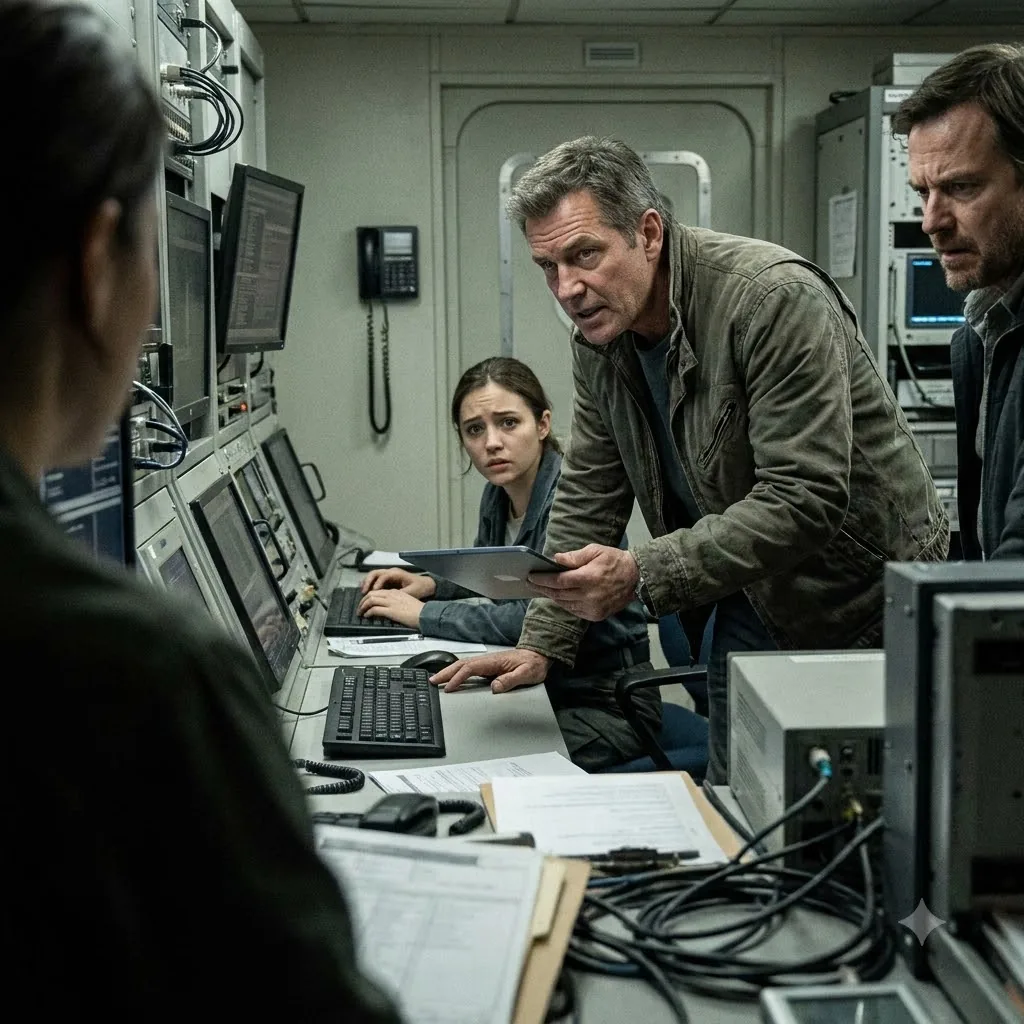
The escalation began at 09:12 UTC, as recorded by the station’s environmental and communications monitors. Following his assertion that Subsection 9-E applied universally to prevent queue corruption, Raymond Vance used his console access to extend the hold rule. The diagnostic logs show that he flagged the primary telemetry streams-including the real-time life-support diagnostic data from the lower decks-under the same local quarantine protocol. Immediately, the yellow warning lights at Counter Desk Delta began to pulse. In the audio recordings, the low-frequency drone of the station’s warning klaxon cuts through the ambient hum of the cooling fans. “Liaison,” Sarah Chen says, her voice rising slightly above the hum but remaining controlled. “The telemetry stream is blocked. The system is treating the life-support logs as an unverified queue packet. We have lost real-time sensor updates for the reactor coolant levels.” Vance does not remove his Security Token Keycard. “It is a queued process,” he says, his defensive tone sharpening. “The safety protocol will release the stream once the queue clears.” “The queue cannot clear,” Chen points out, tapping her screen. “The Model-9 capsule is still blocking the physical track, and the system is routing all logical streams through the same queue hierarchy. You locked the physical gate.” My diagnostic pad shows the system trying to resolve the conflict. By applying the fabricated Subsection 9-E to the telemetry streams, Vance has forced the automated routing system to treat vital station health data as low-priority bulk mail. The contradiction in the public story becomes undeniable: Vance claimed the rule was a standard local safety measure, yet the station’s safety systems are now actively failing because of it. On the video log, Vance’s face remains rigid, but a bead of sweat runs down his temple. He stands before the flashing terminal, his hands clasped tightly behind his back. “The protocol is designed to protect the integrity of the station’s outbound records,” Vance tells me as I record his statements on my pad. “The telemetry block is a temporary routing anomaly. It will resolve.” “It will not resolve,” I state, showing him the diagnostic screen. “The system charter states that if a local queue rule blocks critical telemetry for more than forty-five minutes, an automated system audit is triggered. The audit requires the physical presence of the liaison’s token to verify the policy code.” The terminal screen at Counter Desk Delta flashes red. The text on the monitor reads: CRITICAL TELEMETRY HOLD. ENTER VALID POLICY HASH OR DISMISS QUEUE. Vance reaches for his keycard, but the console’s physical lock engages. The card is held in place by the terminal’s security solenoid. The automated system has detected the discrepancy between Vance’s asserted rule and the actual station database. The proof lane is now fully visible. The system logs reveal that there is no policy hash for Subsection 9-E. If Vance cannot input a valid hash, the system will escalate the conflict to the station’s central core. Chen steps back from the console, leaving the flashing red screen entirely in Vance’s field of view. “I can’t bypass it, Liaison. The terminal is demanding the policy registration file.” Vance stares at the screen. He does not type. The silence in the room is broken only by the rhythmic pulse of the alarm. The audit timer counts down from five minutes. If the timer reaches zero without a valid policy file, the automated system will assume a security breach has occurred at Counter Desk Delta. The question is no longer just about a delayed message capsule; the question is, what will the system do to the liaison when the countdown ends and the fake policy is officially logged as an unauthorized system lock?