Story code: ST-001098
Part 1: The Rule of the Platter
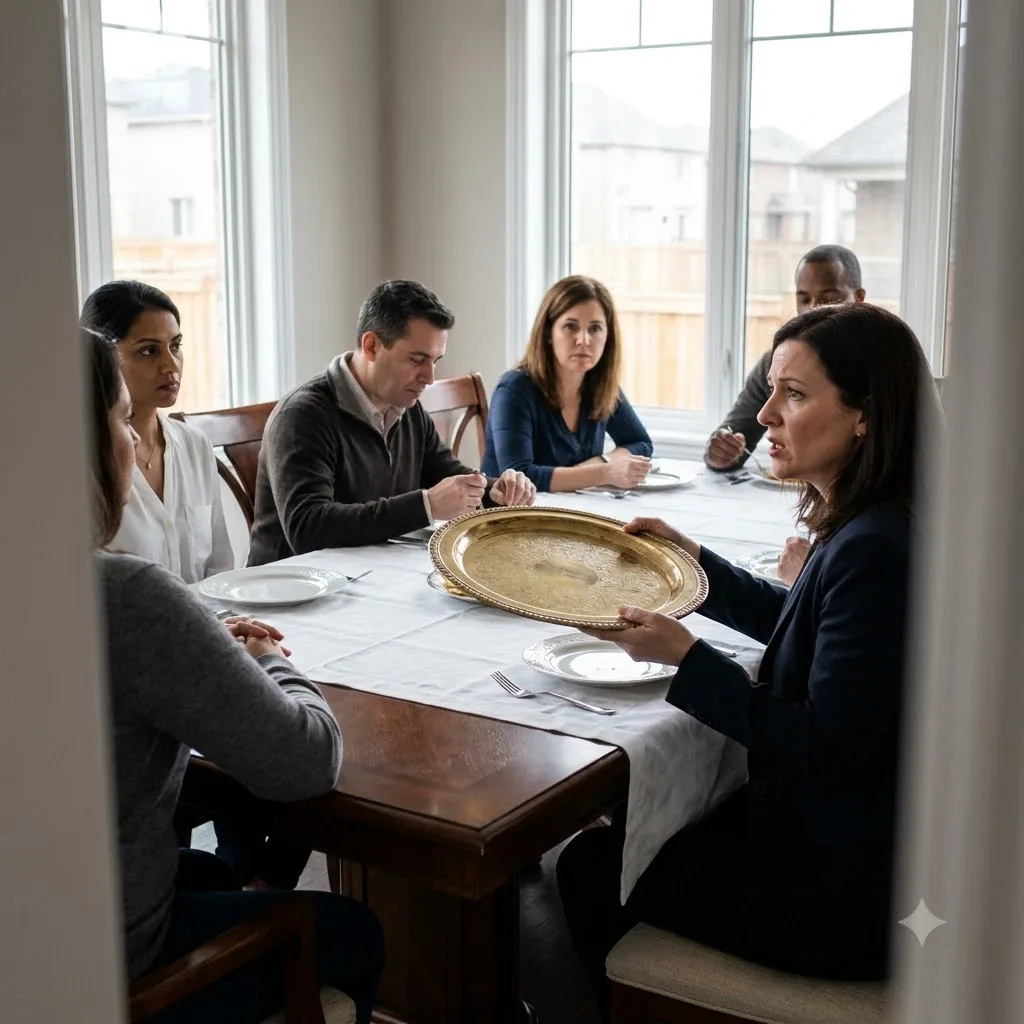
I was adjusting the heavy silver dessert forks in the formal dining room of the suburban estate when Victoria, holding the heavy brass heirloom platter with its elaborate geometric engravings, loudly announced to the dinner guests that her daughter-in-law, Meera, had committed a grave cultural error by misaligning the ceremony plate. Victoria spoke with a sharp, clipped authority, using complex technical jargon about ancestral heritage to make it clear that Meera was simply too ignorant of her own husband’s family traditions to place the dish correctly. Meera stood by the sideboard, her hands resting flat against the polished mahogany, her face perfectly still as Victoria held the heavy platter up for the guests to see.
The formal dining room was silent, save for the low hum of the air conditioning and the faint clinking of ice melting in Julian’s glass. Julian, Victoria’s son and Meera’s husband, sat at the head of the long table, staring down at his plate and tracing the edge of his napkin with a thumb. The dinner was supposed to be a celebratory multicultural gathering, but the atmosphere had shifted the moment Victoria stood up and seized the brass heirloom.
“The vithana-chakra boundary rule,” Victoria said, her manicured finger tracing the outermost geometric ring of the brass plate. “It is a fundamental principle of traditional presentation. The primary concentric rings must never face the eastern door during a gathering of mixed lineages. To do otherwise is to insult the host’s maternal line. It is a shame that this basic rule was completely overlooked tonight.”
I stood near the service station, holding a glass water pitcher, watching the interaction. Meera did not flinch or look away. Her shoulders remained square, and her eyes stayed fixed on Victoria’s face.
“I’m sure Meera didn’t mean anything by it, Mom,” Julian said, his voice low and placating. “It’s just a platter.”
“It is not just a platter, Julian,” Victoria snapped, her voice rising slightly. “It is a sacred element of the shastri protocol, which I studied extensively during my years in the diplomatic service. It is a pity Meera didn’t consult someone with actual knowledge of our customs before displaying it so carelessly. In our culture, ignoring the vithana-chakra is equivalent to a public rejection of the family’s legacy.”
Meera took a slow breath, her chest rising and falling evenly. She did not raise her voice or show any sign of anger. Instead, she took a step closer to the table, her gaze steady.
“The vithana-chakra rule,” Meera repeated slowly, her voice clear. “I want to make sure I understand it completely. Could you explain the exact historical context of that rule for everyone here, Victoria?”
Victoria smiled, a sharp, quick gesture that did not reach her eyes. She adjusted her posture, pulling her shoulders back, clearly pleased by the invitation to lecture.
I was adjusting the heavy silver dessert forks in the formal dining room of the suburban estate when Victoria, holding the heavy brass heirloom platter with its elaborate geometric engravings, loudly announced to the dinner guests that her daughter-in-law, Meera, had committed a grave cultural error by misaligning the ceremony plate. Victoria spoke with a sharp, clipped authority, using complex technical jargon about ancestral heritage to make it clear that Meera was simply too ignorant of her own husband’s family traditions to place the dish correctly. Meera stood by the sideboard, her hands resting flat against the polished mahogany, her face perfectly still as Victoria held the heavy platter up for the guests to see.
The formal dining room was silent, save for the low hum of the air conditioning and the faint clinking of ice melting in Julian’s glass. Julian, Victoria’s son and Meera’s husband, sat at the head of the long table, staring down at his plate and tracing the edge of his napkin with a thumb. The dinner was supposed to be a celebratory multicultural gathering, but the atmosphere had shifted the moment Victoria stood up and seized the brass heirloom.
“The vithana-chakra boundary rule,” Victoria said, her manicured finger tracing the outermost geometric ring of the brass plate. “It is a fundamental principle of traditional presentation. The primary concentric rings must never face the eastern door during a gathering of mixed lineages. To do otherwise is to insult the host’s maternal line. It is a shame that this basic rule was completely overlooked tonight.”
I stood near the service station, holding a glass water pitcher, watching the interaction. Meera did not flinch or look away. Her shoulders remained square, and her eyes stayed fixed on Victoria’s face.
“I’m sure Meera didn’t mean anything by it, Mom,” Julian said, his voice low and placating. “It’s just a platter.”
“It is not just a platter, Julian,” Victoria snapped, her voice rising slightly. “It is a sacred element of the shastri protocol, which I studied extensively during my years in the diplomatic service. It is a pity Meera didn’t consult someone with actual knowledge of our customs before displaying it so carelessly. In our culture, ignoring the vithana-chakra is equivalent to a public rejection of the family’s legacy.”
Meera took a slow breath, her chest rising and falling evenly. She did not raise her voice or show any sign of anger. Instead, she took a step closer to the table, her gaze steady.
“The vithana-chakra rule,” Meera repeated slowly, her voice clear. “I want to make sure I understand it completely. Could you explain the exact historical context of that rule for everyone here, Victoria?”
Victoria smiled, a sharp, quick gesture that did not reach her eyes. She adjusted her posture, pulling her shoulders back, clearly pleased by the invitation to lecture.