Story code: ST-001163
Part 4: The Administrative Report
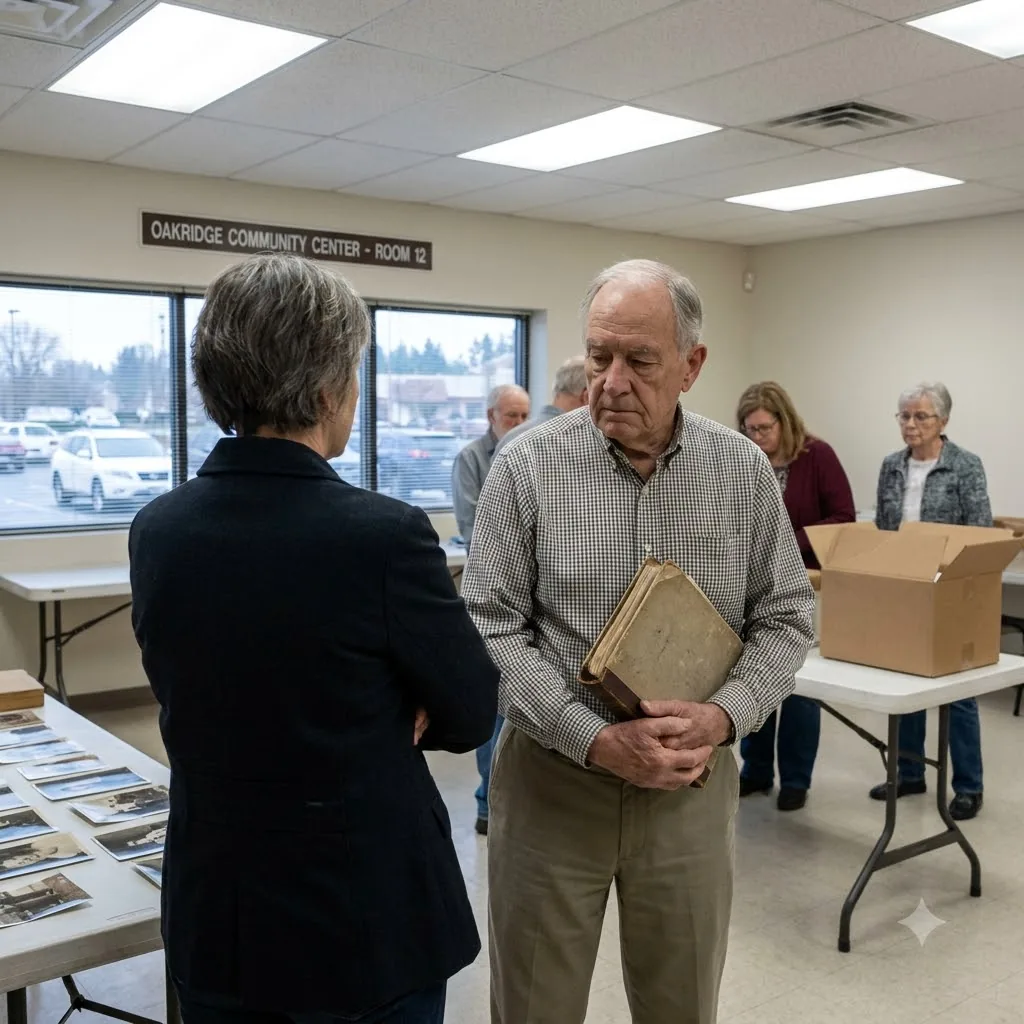
Four weeks after the meeting, the Oakridge genealogy group received its monthly update. Mark sat at Arthur’s desk as Arthur opened the digital mailbag from the genetic registry. There was no personal email from Evelyn, nor had Brenda attended any community planning sessions since the meetup. Instead, the resolution arrived in the form of a physical administrative letter on standard white paper, bearing the logo of the Ancestral Heritage Compliance Registry. Arthur laid the letter flat on the desk. Mark read the dry, typed lines. ‘Re: Registration Rejection for Kit Barcode AH-99210-X.’ The letter stated that the sample submitted under the barcode had been flagged and permanently deleted from the database. According to the registry’s compliance logs, the physical kit code had been purchased and pre-registered three months prior under an institutional account belonging to Vanguard Development Partners. The pre-registration was filed in connection with a pending estate partition claim under the name of Thomas Vance, a male legal representative. The administrative note detailed the conflict: ‘The physical sample submitted in the pre-registered kit was determined to be female. Because the physical donor sample did not match the registered profile owner, and because the registration code was linked to an active corporate proxy account rather than an individual family member, the sample has been rejected for registry fraud.’ Mark recalled Evelyn’s repeated phrase. Her slip-up-using the word ‘deposition’ instead of ‘disposition’-now aligned with the developer’s pre-registered legal claim. She had been sent to the meetup with a kit pre-linked to the corporate database, prepared only to recite the legal disclaimer that would insert her physical DNA into the developer’s pending estate case. She had stayed completely silent when Arthur asked her to explain the terms, relying entirely on Brenda’s borrowed defense of ‘systematic exclusion’ to shield her from revealing the corporate setup. But the physical sealing of the DNA kit in Room 12 had set an administrative machine in motion that could not be swayed by scripted arguments or family accusations. The proxy scam collapsed not under a dramatic confrontation, but under the weight of automated verification. Arthur scanned the document, saved the PDF to the family database, and sent a copy to the group mailing list. Brenda’s name was on the recipient list, but no reply came. When Arthur checked the registry portal later that evening, the profile associated with Evelyn Oakridge had already been deactivated by the system administrators, leaving only a blank row and a locked account indicator. The dry process of the registry had broken the lie, leaving only the administrative rejection note as the final, cold record of her visit. The family tree on Arthur’s table remained clean of her name, the space where she tried to assert a right left entirely blank. Arthur folded the letter and slid it into a grey filing cabinet labeled ‘Inactive Queries.’ Mark watched him turn the key, locking the metal drawer. The room was quiet, much like Room 12 had been, but this time there was no expectation of an answer.