Story code: ST-001196
Part 3: The Metric Truth
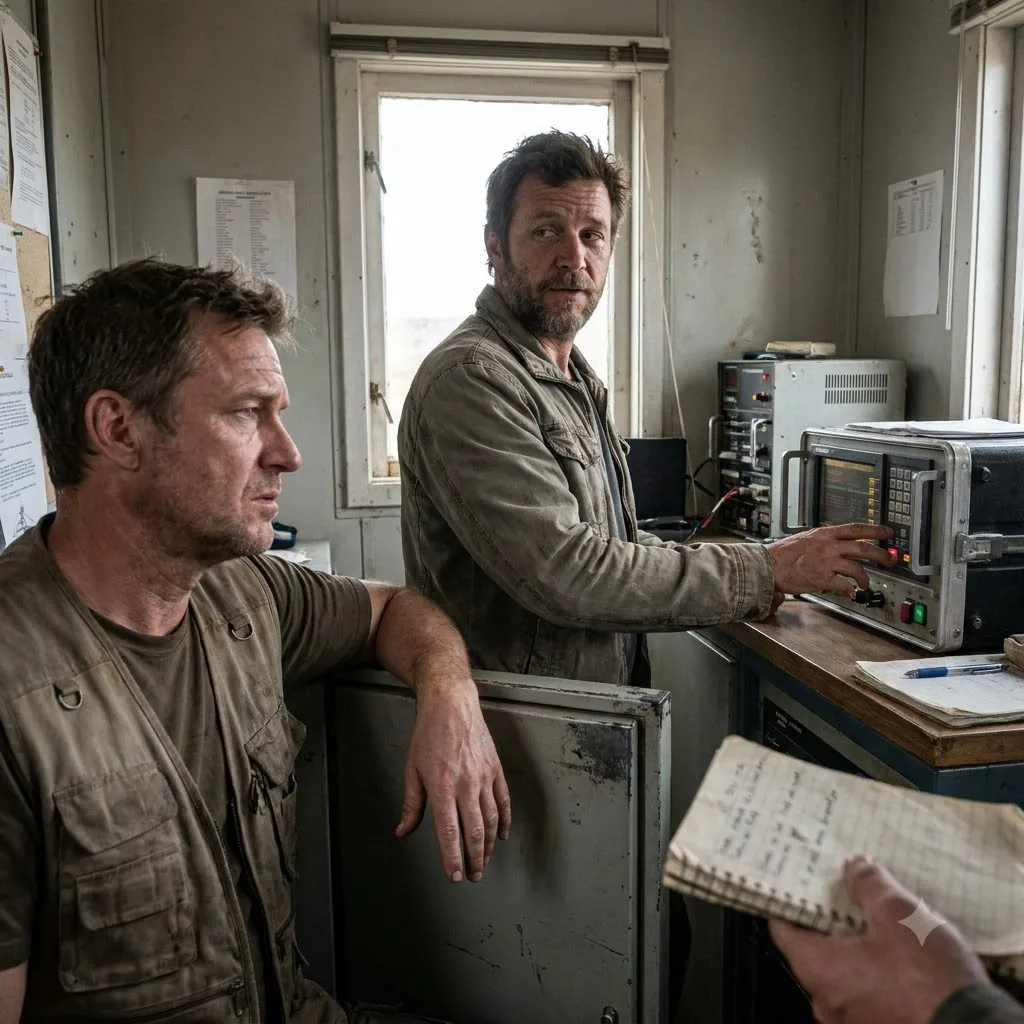
Vance’s fingers moved across the interface panel with a precision that didn’t match his excuses from the last three weeks. On my monitor, the terminal tracking system updated in real-time, showing the raw inputs. He didn’t look at the quick-reference guide taped to the chassis. He didn’t pause to calculate the drift vectors. His right hand controlled the manual resistance dial, adjusting for solar wind shear with tiny, micro-inch increments, while his left hand entered the hexadecimal routing keys in rapid-fire succession.
“Ten seconds,” Marcus said. His voice was level, almost clinical.
Vance did not look up. A bead of sweat slid down his temple, tracing a line to his jaw, which was clamped tight. He struck the final sequence-a complex series of seven-digit offsets that bypassed the normal interface menus-and pressed his palm onto the lock switch.
The capsule chamber hissed. The amber warning light turned a solid, steady green. The system log updated on our shared display: Capsule Alpha-09 calibrated and routed. Transmission successful.
Vance let out a long, ragged breath, his shoulders dropping. He pulled his hands back from the console, rubbing his knuckles. The stylus he had been playing with earlier lay forgotten on the floor near my chair.
“There,” Vance said, turning his head toward Marcus. His voice had regained some of its pitch, though his breathing was still fast. “I got lucky. The alignment must have snapped into place on the last rotation. I told you, Marcus, the system is erratic.”
Marcus did not agree or disagree. He reached over his console and touched his screen, refreshing the master diagnostic interface. “The blind test protocol doesn’t use standard snap-alignments, Vance. It disables them to measure raw operator response.”
I looked at the shared diagnostic window on my own monitor. The system was already drawing the performance graph. Two lines appeared on the plot. The first line, representing Vance’s previous thirty calibration attempts over the past month, was an erratic, jagged trail of delayed keypresses, incorrect axis entries, and three-second pauses. The second line, representing the emergency calibration he had just completed, was a flat, near-perfect vector of execution.
Underneath the graph, the automated system displayed a metric comparison:
Input Latency: 120ms (Standard: 450ms)
Precision Rating: 99.4% (Minimum required: 70%)
Historical Correlation Discrepancy: 84.2%
“That’s a Master-level execution curve,” I said, pointing at the screen. “Core Academy standards require a sub-150ms latency for orbital commanders. You beat the station average by twenty percent.”
Vance’s hand froze halfway to his water cup. He stared at the screen, his fingers twitching slightly. “The terminal was lagging. It must have buffered the inputs and released them in a single burst. That’s a system artifact.”
“The hardware logs latency at the physical switch level,” Marcus said. “It doesn’t buffer manual resistance dials.”
The terminal did not return to the standard menu. Instead, a blue progress bar appeared at the bottom of Vance’s screen: Submitting Emergency Performance Metrics to Central Command Audit.
Vance stood up, his chair scraping loudly against the metal floor plating of the relay room. He reached for the terminal’s physical power toggle, but the safety lock-plate was already down, sealed shut by the emergency sequence.
“Cancel the upload, Marcus,” Vance said. His voice was low, stripped of its usual light, friendly cadence. “It’s an uncalibrated test. The data is corrupt.”
Marcus kept his hands on his desk, his fingers linked. “The system manages the audit, Vance. It’s automated.”