Story code: ST-001196
Part 2: The Emergency Protocol
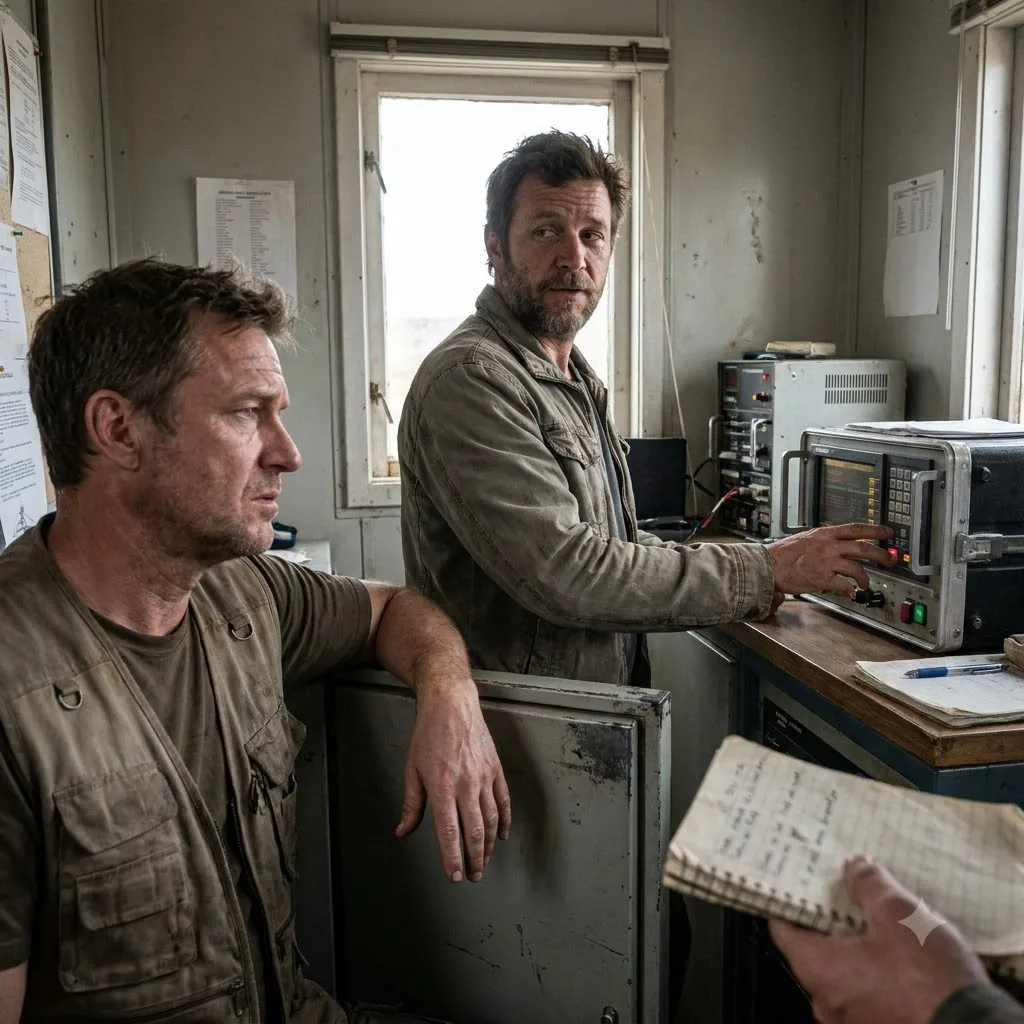
The red warning light from the delayed capsule cast a steady, dull glow over Terminal B. A sharp alert chimed from the overhead speaker, indicating that Central Command had registered the transmission failure.
I watched Vance finish typing his incident report. He pressed the submit key with a firm tap of his finger.
“I had to log it,” Vance said aloud, addressing the room but looking directly at Marcus. “Protocol dictates we report any refused assistance during a calibration failure. I told the supervisor that the UI desynced and that I requested your help, but you declined to intervene. It’s on your shift log now.”
Marcus did not flinch. He sat perfectly still, his eyes fixed on his monitor. The only movement was the rapid blinking of his cursor as he opened the station’s security control panel. He clicked through several administrative menus, bypassing the standard logging interface to access the system’s emergency test protocols.
I leaned closer to my screen. On Marcus’s shared terminal display, I saw him toggle the blind calibration test sequence. The rules of the blind test were clear in the station handbook: it was an emergency diagnostic tool designed to measure an operator’s physical input accuracy under pressure. It hid the capsule’s destination and alignment markers, forcing the operator to rely entirely on manual coordinate adjustments based on physical resistance feedback from the controls. The system recorded every millisecond of key latency and every micro-newton of pressure applied to the dials, matching them against certification standards.
“You should have just helped me, Marcus,” Vance said, his tone light but his eyes narrow. “Now we both have to explain this to the shift supervisor.”
Marcus did not answer. He finished configuring the blind test, locking it to Vance’s terminal biometrics for the next incoming queue item.
Five minutes later, a loud, repeating klaxon echoed through the relay room. The primary console screen flashed red: Priority Alpha Capsule Incoming. Automated Routing Disabled. Manual Emergency Calibration Required.
Under the station’s safety bylaws, an emergency calibration could not be delegated or overridden once initialized. The terminal screen at Vance’s desk locked, displaying a single prompt: Liaison Vance: Execute Emergency Calibration or Initiate Negligence Log.
If Vance selected the negligence log, the system would immediately suspend his clearance and transmit a formal misconduct report to Central Command, carrying an automatic demotion.
Vance stared at his screen. The light from the emergency prompt turned his face a stark, pale red. He looked over at Marcus. “Marcus, my terminal is locked. I can’t transfer this to you. Override it.”
Marcus kept his hands folded in his lap. “I can’t override a priority emergency lock, Vance. Only the logged-in liaison can input the sequence.”
“I don’t know the sequence!” Vance’s voice lost its easy tone. He gripped the edge of his desk. “I’ll dump the capsule. I’ll lose the alignment completely.”
“Then let it dump,” Marcus said quietly.
Vance looked back at his screen. The timer showed fifteen seconds before the capsule would be automatically ejected into the void, logging a critical mission failure. He placed his hands on the console. His shoulders braced, and his fingers hovered over the keyboard. The hesitation vanished, and his fingers began to move across the keys with sudden, striking fluid speed.