Story code: ST-001230
Part 2: The Master File
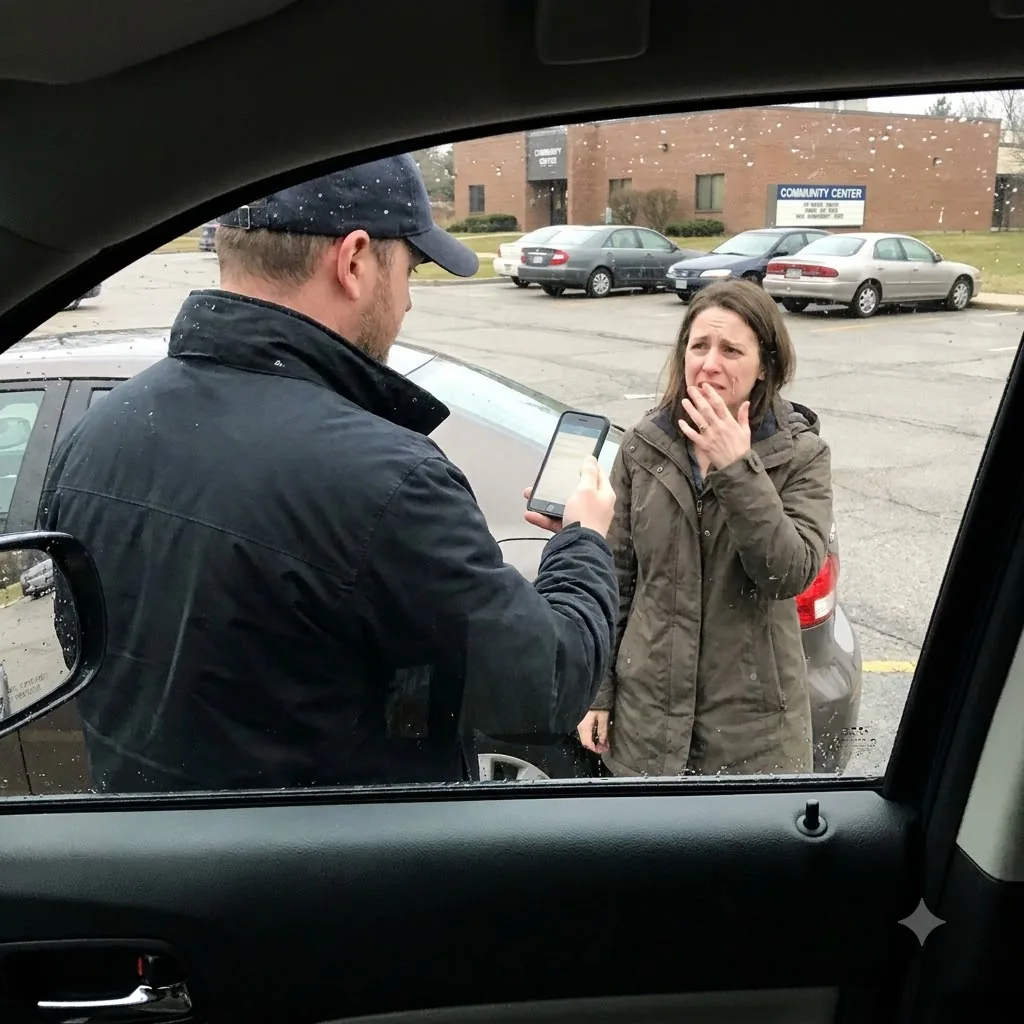
The uncropped master video file begins three minutes before the viral clip, exposing a completely different sequence of events in the Northside Store Parking Lot. On the raw footage, the camera lens captures Officer Thomas Vance walking toward Karen Miller’s stationary vehicle while she is speaking on her phone. The ambient light from the store facade illuminates Vance’s personal truck, parked at an angle that effectively blocks Karen’s sedan from backing out of the space. As Vance approaches the driver-side window, his hand rests visibly on the holster of his service weapon, despite the fact that he was off-duty and out of uniform. The audio, completely absent from the cropped version that went viral, captures the immediate pressure Vance placed on Karen. He did not identify himself as a police officer at first. Instead, he tapped his heavy metal flashlight against her glass, demanding she end her phone call and produce identification immediately. When Karen rolled her window down slightly and asked why she was being questioned, Vance warned her that sitting in a parking space for too long constituted suspicious behavior in a high-crime area. Karen’s face on the high-definition recording is pale, her eyes darting toward the open parking lot space behind her, which was obstructed by Vance’s truck. Her voice, preserved on the audio track, is controlled as she asks him to step away so she can leave. The footage shows Vance leaning closer into the window frame, his bodycam capturing a tight angle that she could not escape. He told her she was not free to go until he verified her identity, moving his body directly against the driver-side door. Inside the precinct audit room, I played the full clip on the main monitor. Vance watched the screen, his posture stiffening as the audio of his own voice filled the room. He spoke rapidly, citing officer safety protocols and asserting that off-duty status did not limit his authority to investigate suspicious vehicles. However, the system logs showed that Vance bypassed the standard approval queue to export this specific file to his personal device, violating the precinct’s strict consent policies for non-arrest footage. ‘She was resisting a lawful inquiry,’ Vance said, his hand twitching toward his pocket. ‘I had reasonable suspicion based on the duration of her stay in that parking spot. I was acting in my capacity as an officer of the law.’ ‘The store manager confirmed she had been inside shopping ten minutes prior,’ I replied, pointing to the printed transaction log sheet on the desk between us. ‘She was checking her grocery receipt when you approached her car. There was no suspicious behavior.’ The uncropped version directly contradicted the public narrative of an unprovoked civilian attack, showing instead an abuse of authority captured by the officer’s own equipment. The raw footage clearly showed Karen opening her car door only after Vance refused to step back, using the physical barrier of the door to push him away from her immediate personal space. This was the exact moment Vance had cropped to make her look like the aggressor. But as the true timeline became clear within the department, a new issue emerged from the transfer logs. The metadata revealed that Vance did not just upload the file to the community chat. The digital file transfer receipt showed the cropped video had been sent to a secondary IP address registered to the local police union’s private server two hours before it appeared online. The log indicated the transfer was marked as complete, raising the question of who else was actively helping Vance package the footage to protect him from accountability before the department could investigate.