Story code: ST-001230
Part 1: The Fifteen-Second Loop
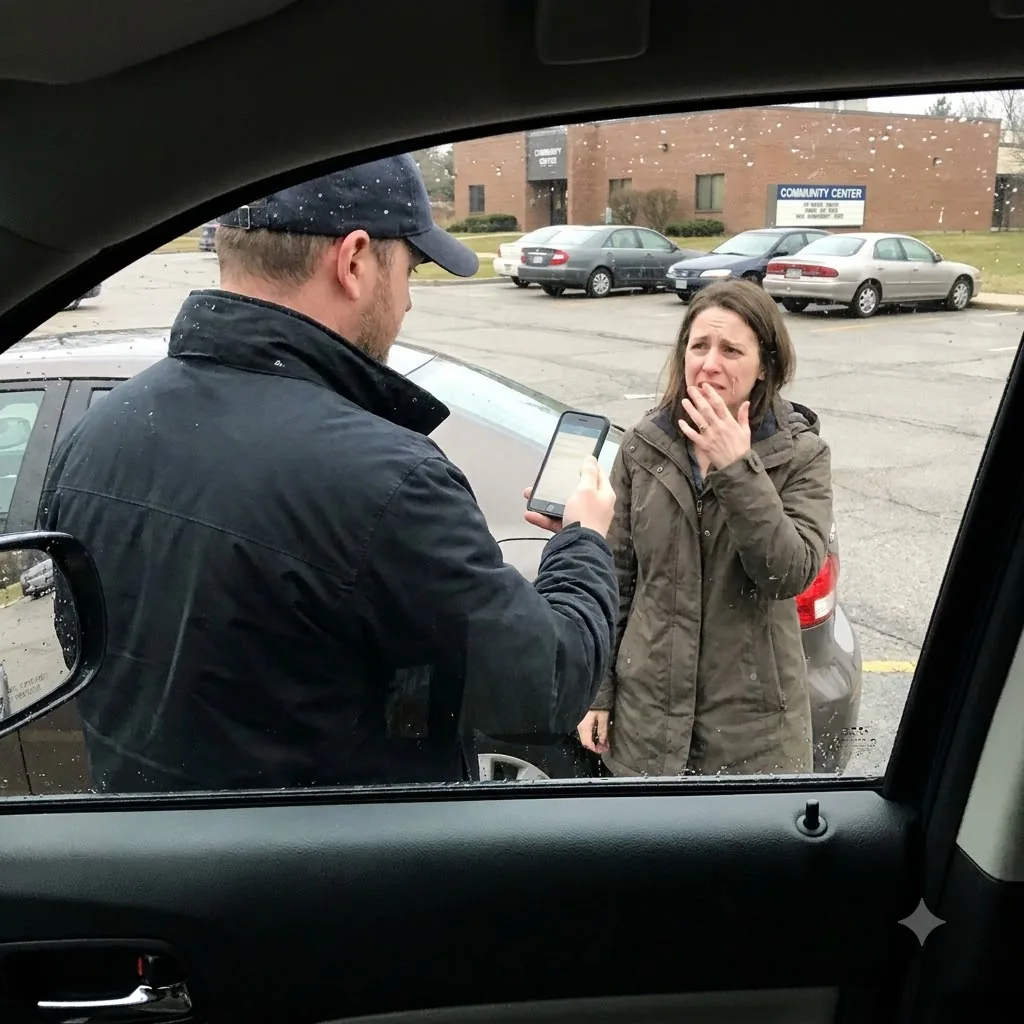
The digital humiliation of Karen Miller began when an off-duty officer leaked a cropped bodycam clip to a local neighborhood watch group chat, turning her private parking lot conversation into viral public entertainment. In the footage recorded at the Northside Store Parking Lot, Karen appears to scream hysterically at Officer Thomas Vance, creating a false accusation that instantly destroyed her local reputation. As investigator Mark Davis reconstructing this incident from the precinct audit logs, I watched the fifteen-second video loop alongside the system metadata that proved Vance shared it without consent. The clip had already accumulated hundreds of shares and thousands of comments calling Karen a menace, demanding that she be banned from the property or arrested for assaulting an officer. Inside the precinct audit room, Karen sat across from me. She did not look at the screen where the viral clip played on a loop. Instead, she kept her eyes fixed on the metal surface of the table. Her hands trembled slightly as she clasped them together, and when she spoke, her voice was quiet but controlled. She stated that she had simply been sitting in her car finishing a phone call when Vance approached her. She did not raise her voice in the room, but her knuckles turned white as the audio of her own screaming voice echoed from the monitor. On the other side of the room stood Officer Thomas Vance. He maintained a stiff, defensive posture, his back close to the doorframe. Every few seconds, he fidgeted with his uniform collar, adjusting it as if it were suddenly too tight. He spoke rapidly when I pointed to the station’s server log on my screen. According to the database, an official bodycam file had been accessed and exported using Vance’s unique credentials at 11:14 PM the night of the incident, just hours after the parking lot encounter. The digital file transfer receipt showed that the exported file was originally four minutes and twelve seconds long. However, the video file uploaded to the community chat was exactly fifteen seconds long. The file size of the master copy in our secure precinct database was over eighty megabytes, whereas the clip circulating online was a mere three megabytes. The metadata showed a clear truncation process executed on a mobile device matching Vance’s personal IP address, using a consumer video-cropping application. ‘I shared it as a matter of public safety,’ Vance said, his voice rising slightly in pitch as he looked toward the security camera in the corner of the audit room. ‘She was acting erratically in a high-traffic area. People in this neighborhood need to know who they are dealing with when they go shopping. She was hostile from the second I walked up.’ I pointed to the station’s strict data security policy manual lying on the desk. The rules explicitly forbid off-duty officers from exporting, editing, or sharing bodycam footage involving private citizens without supervisor approval and written consent, unless an active arrest is logged. There was no arrest logged that night. Karen had not been cited, detained, or charged with any crime. She had merely been parked in a public space. The viral video only showed Karen slamming her car door and shouting at Vance to get away from her. It did not show what happened before she opened the door. It did not explain why an off-duty officer in plain clothes was standing inches from her driver-side window in the dark. The uncropped master video file remained secure on the precinct server, untouched by the external editing software. The truth of the entire interaction was locked inside those first three minutes of missing footage, and as I clicked the playback button on the master file, the screen began to render the unedited truth.
The digital humiliation of Karen Miller began when an off-duty officer leaked a cropped bodycam clip to a local neighborhood watch group chat, turning her private parking lot conversation into viral public entertainment. In the footage recorded at the Northside Store Parking Lot, Karen appears to scream hysterically at Officer Thomas Vance, creating a false accusation that instantly destroyed her local reputation. As investigator Mark Davis reconstructing this incident from the precinct audit logs, I watched the fifteen-second video loop alongside the system metadata that proved Vance shared it without consent. The clip had already accumulated hundreds of shares and thousands of comments calling Karen a menace, demanding that she be banned from the property or arrested for assaulting an officer. Inside the precinct audit room, Karen sat across from me. She did not look at the screen where the viral clip played on a loop. Instead, she kept her eyes fixed on the metal surface of the table. Her hands trembled slightly as she clasped them together, and when she spoke, her voice was quiet but controlled. She stated that she had simply been sitting in her car finishing a phone call when Vance approached her. She did not raise her voice in the room, but her knuckles turned white as the audio of her own screaming voice echoed from the monitor. On the other side of the room stood Officer Thomas Vance. He maintained a stiff, defensive posture, his back close to the doorframe. Every few seconds, he fidgeted with his uniform collar, adjusting it as if it were suddenly too tight. He spoke rapidly when I pointed to the station’s server log on my screen. According to the database, an official bodycam file had been accessed and exported using Vance’s unique credentials at 11:14 PM the night of the incident, just hours after the parking lot encounter. The digital file transfer receipt showed that the exported file was originally four minutes and twelve seconds long. However, the video file uploaded to the community chat was exactly fifteen seconds long. The file size of the master copy in our secure precinct database was over eighty megabytes, whereas the clip circulating online was a mere three megabytes. The metadata showed a clear truncation process executed on a mobile device matching Vance’s personal IP address, using a consumer video-cropping application. ‘I shared it as a matter of public safety,’ Vance said, his voice rising slightly in pitch as he looked toward the security camera in the corner of the audit room. ‘She was acting erratically in a high-traffic area. People in this neighborhood need to know who they are dealing with when they go shopping. She was hostile from the second I walked up.’ I pointed to the station’s strict data security policy manual lying on the desk. The rules explicitly forbid off-duty officers from exporting, editing, or sharing bodycam footage involving private citizens without supervisor approval and written consent, unless an active arrest is logged. There was no arrest logged that night. Karen had not been cited, detained, or charged with any crime. She had merely been parked in a public space. The viral video only showed Karen slamming her car door and shouting at Vance to get away from her. It did not show what happened before she opened the door. It did not explain why an off-duty officer in plain clothes was standing inches from her driver-side window in the dark. The uncropped master video file remained secure on the precinct server, untouched by the external editing software. The truth of the entire interaction was locked inside those first three minutes of missing footage, and as I clicked the playback button on the master file, the screen began to render the unedited truth.