Story code: ST-000005
Part 1: He Picked My Brother in Front of Everyone
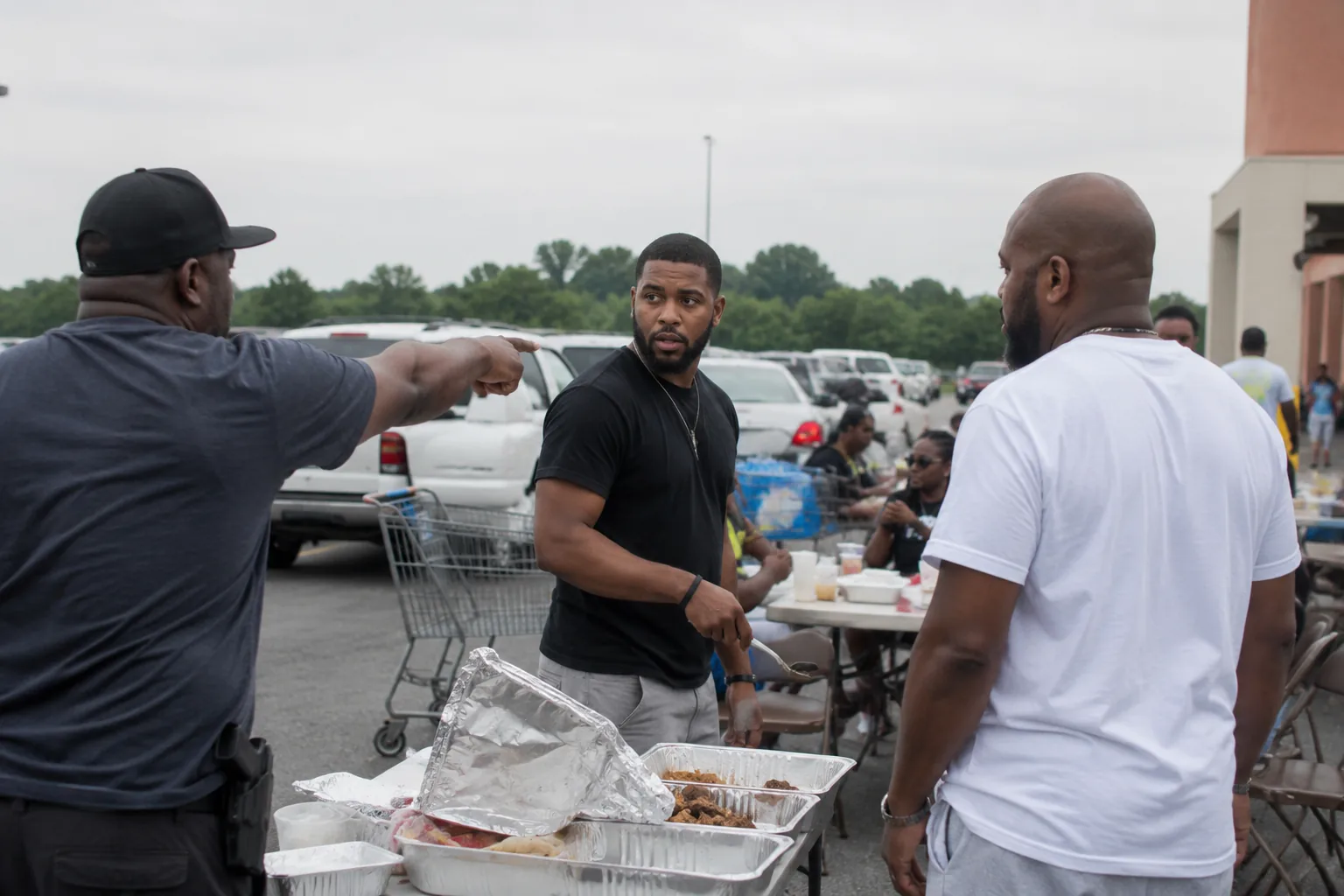
My brother was holding a serving spoon over a foil tray in a store parking lot when an off-duty cop pointed at him and said, loud enough for three tables and a cart return to hear, that Eli had just tried to steal from a truck. The worst part was not the finger in his face. It was Janelle pulling her chair back with her serving gloves still on and looking at Eli like she did not know whether to stand beside him or step away.
We had folding tables set up beside the curb lane outside the big-box store, the kind of family meal where half the group is eating and half is still carrying drinks from the entrance. Carts rattled past. A pickup order runner pushed a blue bin toward a minivan. My nephew was asking for extra forks when the whole thing snapped sideways.
The man who started it was Officer Dean Mercer. I did not know his name yet. I knew the type of voice. Civilian clothes, but command voice. One hand near his beltline, the other holding a phone like it was already evidence.
“Don’t move any closer,” he told Eli.
Eli did the first thing people always say to do when somebody with a badge voice locks on you. He opened both hands and kept them where everybody could see. “I’m not moving,” he said. “I’ve been right here. Ask anybody here.”
Mercer did not look at anybody here. He looked over the table, over the trays, over the chairs, building his version out loud. He said a truck owner had flagged him down. He said Eli matched what he had just seen. He said he had already called it in. He kept saying “just now” and “right there” while pointing toward the row behind us.
The wrong detail hit me before anything else. He pointed to a dark F-150 near the cart return and said Eli had been at the passenger side.
That truck had not been there when we unloaded the trays.
I knew because I keep stupid details when I am trying to hold a family event together. I had the pickup receipt on my phone. I had backed my own car wide because that space was open then. Ten minutes later a different truck came in crooked, too close to the painted curb, and everybody at our table complained about it because the tailgate blocked the walking path.
I did not make a speech. I asked, “Which truck?”
Mercer swung his phone toward me without showing the screen. “Ma’am, stay out of this unless you saw him touch it.”
“You said passenger side,” I said.
He ignored that. He stepped half a pace toward Eli instead. Eli stayed by the table like he was nailed there.
Janelle had been handing out plates. Now she had stopped in the middle of it. One glove on, one glove off. She looked at Eli, then at Mercer, then at the row of parked cars. That was the first real damage. Not the accusation itself. The pause. People notice a pause faster than they notice facts.
“Eli,” she said, and then stopped.
He turned to her. “I didn’t touch anybody’s truck.”
Mercer cut across him. “Funny how that’s the first thing you say.”
A few people from nearby cars slowed down. Store customers coming out with paper towels and dog food started watching from the walkway. Once enough strangers stop, a scene becomes its own proof to people who just walked into it.
I asked Mercer if he was on duty. He said that did not matter. He said he was a police officer and knew what he saw. He said if Eli cooperated, this would go easier.
That was when Nate Holloway from asset protection came out near the entrance doors. I knew him by face because he was the person employees called when carts got jammed or somebody argued at self-checkout. He did not come in hot. He asked one question: “Whose vehicle are we talking about?”
Mercer answered too fast. Make, color, row, passenger side, exact minute. Clean, clipped, practiced. Eli said he had not left the table except to grab napkins from the end display by the walkway. I said we had receipts and timestamps from the food pickup. Mercer said none of that changed what he witnessed.
Then the trust crack got wider.
Janelle set the plate stack down and asked Eli, in a voice that had gone thin, “Why were you by the cars at all?”
He said, “I wasn’t. I went ten steps for napkins. That’s it.”
Mercer looked at her when he answered, not at Eli. “That’s not what I saw.”
The whole table went still except for one person coming back from the store with a cardboard drink carrier.
She froze so hard the cups knocked together.
She stared at Mercer and said, without officer, without sir, without any pause to dress it up, “Dean?”
Mercer turned toward her. For the first time since he started, his timing broke.
The woman lowered the drinks slowly and looked from his face to the phone in his hand. “No,” she said. “You told people you were at Brookline at noon.”
Nobody at our table knew who she was talking to.
But Mercer did, and so did she, and the second that name landed in our parking lot, his neat little story stopped matching the truck he had pointed at, the time he kept repeating, or the life he was trying to wear in front of us.
My brother was holding a serving spoon over a foil tray in a store parking lot when an off-duty cop pointed at him and said, loud enough for three tables and a cart return to hear, that Eli had just tried to steal from a truck. The worst part was not the finger in his face. It was Janelle pulling her chair back with her serving gloves still on and looking at Eli like she did not know whether to stand beside him or step away.
We had folding tables set up beside the curb lane outside the big-box store, the kind of family meal where half the group is eating and half is still carrying drinks from the entrance. Carts rattled past. A pickup order runner pushed a blue bin toward a minivan. My nephew was asking for extra forks when the whole thing snapped sideways.
The man who started it was Officer Dean Mercer. I did not know his name yet. I knew the type of voice. Civilian clothes, but command voice. One hand near his beltline, the other holding a phone like it was already evidence.
“Don’t move any closer,” he told Eli.
Eli did the first thing people always say to do when somebody with a badge voice locks on you. He opened both hands and kept them where everybody could see. “I’m not moving,” he said. “I’ve been right here. Ask anybody here.”
Mercer did not look at anybody here. He looked over the table, over the trays, over the chairs, building his version out loud. He said a truck owner had flagged him down. He said Eli matched what he had just seen. He said he had already called it in. He kept saying “just now” and “right there” while pointing toward the row behind us.
The wrong detail hit me before anything else. He pointed to a dark F-150 near the cart return and said Eli had been at the passenger side.
That truck had not been there when we unloaded the trays.
I knew because I keep stupid details when I am trying to hold a family event together. I had the pickup receipt on my phone. I had backed my own car wide because that space was open then. Ten minutes later a different truck came in crooked, too close to the painted curb, and everybody at our table complained about it because the tailgate blocked the walking path.
I did not make a speech. I asked, “Which truck?”
Mercer swung his phone toward me without showing the screen. “Ma’am, stay out of this unless you saw him touch it.”
“You said passenger side,” I said.
He ignored that. He stepped half a pace toward Eli instead. Eli stayed by the table like he was nailed there.
Janelle had been handing out plates. Now she had stopped in the middle of it. One glove on, one glove off. She looked at Eli, then at Mercer, then at the row of parked cars. That was the first real damage. Not the accusation itself. The pause. People notice a pause faster than they notice facts.
“Eli,” she said, and then stopped.
He turned to her. “I didn’t touch anybody’s truck.”
Mercer cut across him. “Funny how that’s the first thing you say.”
A few people from nearby cars slowed down. Store customers coming out with paper towels and dog food started watching from the walkway. Once enough strangers stop, a scene becomes its own proof to people who just walked into it.
I asked Mercer if he was on duty. He said that did not matter. He said he was a police officer and knew what he saw. He said if Eli cooperated, this would go easier.
That was when Nate Holloway from asset protection came out near the entrance doors. I knew him by face because he was the person employees called when carts got jammed or somebody argued at self-checkout. He did not come in hot. He asked one question: “Whose vehicle are we talking about?”
Mercer answered too fast. Make, color, row, passenger side, exact minute. Clean, clipped, practiced. Eli said he had not left the table except to grab napkins from the end display by the walkway. I said we had receipts and timestamps from the food pickup. Mercer said none of that changed what he witnessed.
Then the trust crack got wider.
Janelle set the plate stack down and asked Eli, in a voice that had gone thin, “Why were you by the cars at all?”
He said, “I wasn’t. I went ten steps for napkins. That’s it.”
Mercer looked at her when he answered, not at Eli. “That’s not what I saw.”
The whole table went still except for one person coming back from the store with a cardboard drink carrier.
She froze so hard the cups knocked together.
She stared at Mercer and said, without officer, without sir, without any pause to dress it up, “Dean?”
Mercer turned toward her. For the first time since he started, his timing broke.
The woman lowered the drinks slowly and looked from his face to the phone in his hand. “No,” she said. “You told people you were at Brookline at noon.”
Nobody at our table knew who she was talking to.
But Mercer did, and so did she, and the second that name landed in our parking lot, his neat little story stopped matching the truck he had pointed at, the time he kept repeating, or the life he was trying to wear in front of us.