Story code: ST-001267
Part 2: The Digital Discrepancy
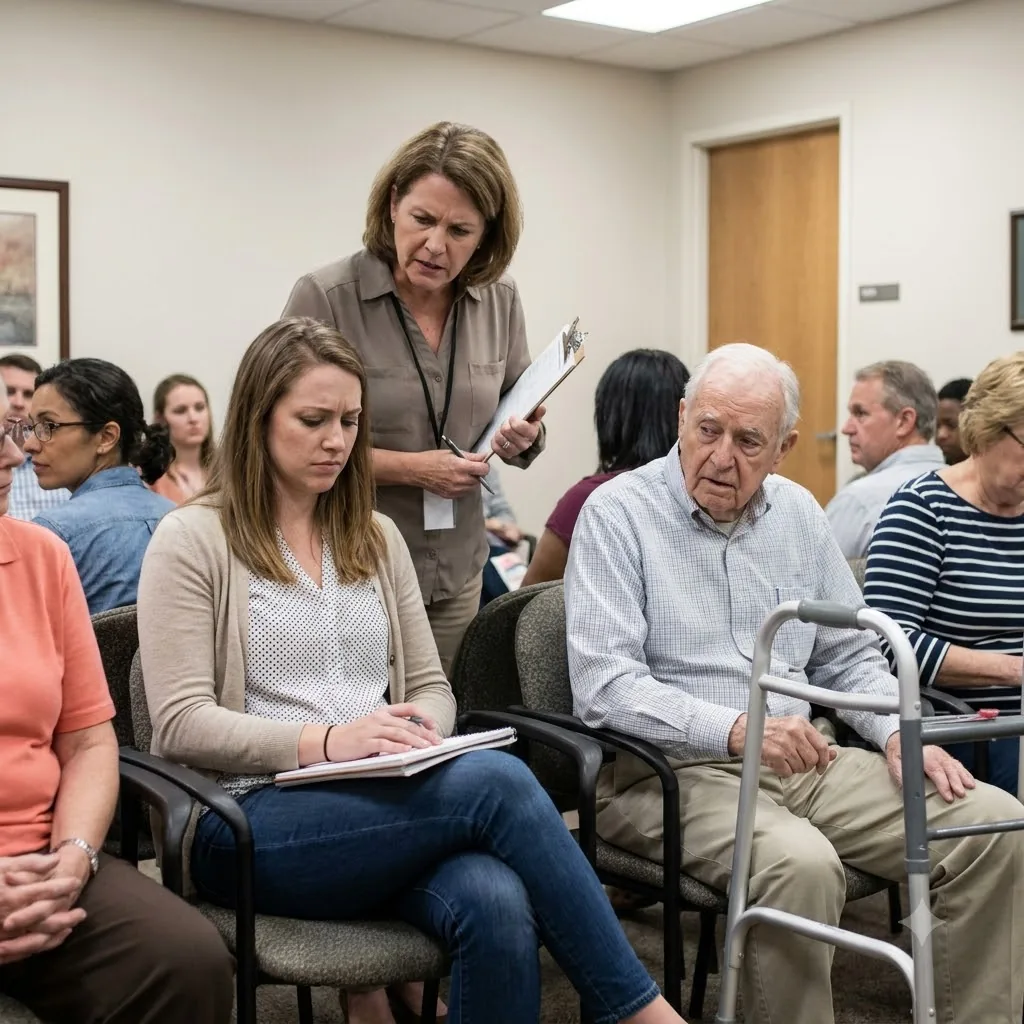
The presence of the physical card immediately shifted the dynamic in Oakridge Clinic Waiting Room B, though the supervisor refused to concede. My reconstruction of the next minutes shows that instead of examining the stamped card, Diane Vance pushed it aside with the tip of her pen, maintaining her rigid stance behind the counter.
“Our electronic health record is the official schedule,” Diane said, her tone defensive as she pointed to her monitor. “Cards are typed up by front-desk interns. They are not official. The system log is what governs our physician hours, and the system log has you marked as a no-show for nine-thirty this morning.”
“The stamp is from your office,” Sarah replied, pointing to the blue ink. “The ink matches the stamp your staff uses at the discharge desk. I did not print this card. Your receptionist handed it to me three weeks ago.”
A patient waiting for an allergy shot reported that Diane’s posture remained stiff, her eyes scanning the waiting room to see if others were watching the exchange. To maintain control of the lobby, Diane leaned over the counter, lowering her voice but maintaining a sharp edge.
“I manage this office, Ms. Jenkins, and I trust the database over a slip of paper. If you cannot manage to arrive at the times logged in our system, you are failing to provide proper care for your uncle. We will have to discuss whether this clinic remains the right fit for Arthur’s needs.”
According to the security footage, Sarah did not flinch. She kept her hand flat on the card, anchoring it to the counter. “My uncle has been a patient here for ten years,” she said. “We do not miss appointments.”
My audit of the Oakridge Family Health Clinic’s digital scheduling database log later revealed the hidden mechanism behind this dispute. When I pulled the electronic access records for Arthur Jenkins’s file, I discovered a series of anomalies that the patients in the waiting room could not see.
The digital database did indeed show that Arthur’s appointment was set for 9:00 AM on November 14. However, the system’s background metadata tells a different story. The audit trail shows that a manual override entry had been made in the database exactly forty-eight hours prior to the appointment.
The original entry-which matched Sarah’s blue-stamped card for 2:15 PM-had been overwritten. The slot had been shifted back to 9:00 AM without any automated notification sent to the family. This override had effectively created a double-booking, allowing another patient to occupy the afternoon slot while automatically flagging Arthur Jenkins as a “no-show” when the morning hour passed.
The physical card proved that Sarah had followed the rules, while the system log showed a deliberate alteration. The question that remained for my investigation was not whether the schedule had been changed, but who had authorized the database override to cover up the clinic’s own double-booking error.