Story code: ST-001267
Part 3: The Audit Trail
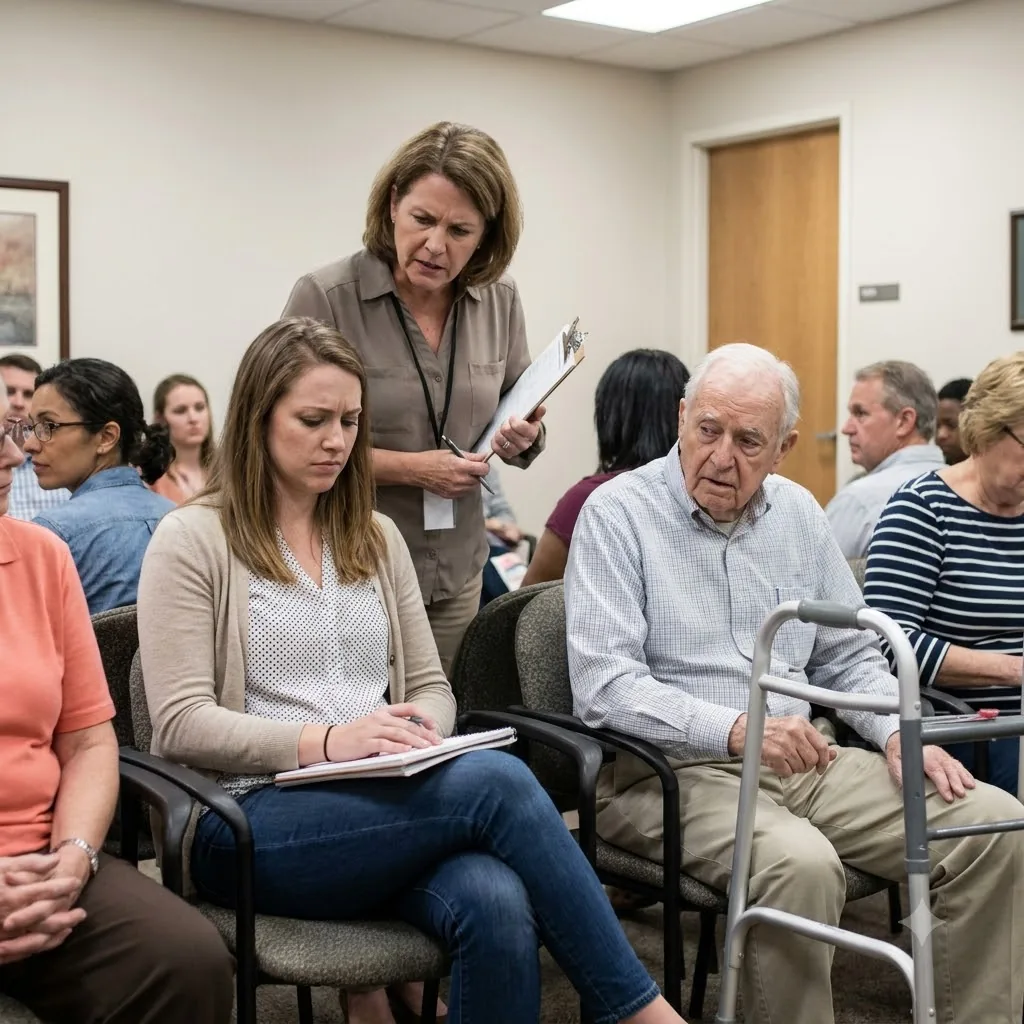
At 2:22 PM, security footage from the lobby camera shows Sarah Jenkins refusing to retreat from the reception counter. Her stance remained quiet and still, contrasting with the animated gestures of the office supervisor. When Diane Vance threatened to call security to escort Arthur out for what she described to the desk staff as ‘disruptive behavior’, Sarah did not raise her voice, adjust her posture, or show visible signs of distress. Instead, she retrieved a black ballpoint pen from her canvas bag and slid the blue-stamped physical appointment card across the laminate surface. Sarah requested that the supervisor sign the back of the card, writing a brief statement confirming that the clinic was denying care today despite the family presenting a physical receipt stamped by clinic staff. The receptionist’s desk microphone captured the brief silence that followed. Rather than signing the document, which would create a legally binding paper trail of denied medical access, Diane Vance gestured toward the hallway. To avoid a growing spectacle in Waiting Room B, where several patients had lowered their tablets to watch the confrontation, Diane directed Sarah and Arthur into Supervisor Office Room 104. The receptionist’s statement notes that Diane’s face was flushed a deep red as she pulled the heavy wooden door shut behind them, cutting off the whispers that had begun to circulate among the waiting patients. Arthur sat quietly in his wheelchair, his hands folded over the light blue blanket, as Sarah pushed him past the threshold. Inside the quiet environment of Office Room 104, the confrontation shifted from the public counter to the terminal on the supervisor’s desk. My forensic review of the clinic’s internal server logs indicates that Diane logged into her terminal at 2:25 PM using her unique administrator credentials. She immediately pulled up Arthur Jenkins’s electronic health record, positioning the screen to show Sarah the list of missed appointments. Sarah did not look at the main database dashboard. Instead, she placed the blue-stamped card directly on the desk beside the monitor. ‘The card was stamped by your check-out clerk during our visit on October 24’, Sarah said, pointing to the blue ink. ‘If the system shows nine o’clock this morning, the entry was modified after we walked out of this clinic.’ According to the receptionist, who entered the office at 2:28 PM to deliver a physical medical history file, Diane insisted that the database automatically optimized schedules based on real-time physician availability. She claimed the shift was an automated system correction beyond her control, blaming a background synchronization error for the mismatch. However, Sarah remained quiet, keeping her eyes fixed on the screen and requesting to see the change history log for that specific date. Under the clinic’s network security guidelines, all manual modifications to patient scheduling records require a system audit trail to prevent unauthorized billing and scheduling changes. When Diane reluctantly opened the database metadata log for the November 14 appointment, the screen displayed the detailed audit trail. The log entries contradicted Diane’s explanation. The history showed that the original 2:15 PM booking had been manually deleted and replaced with a 9:00 AM slot exactly forty-eight hours prior. Crucially, the system log recorded that the user account responsible for the manual override was not an automated system utility, but the specific credentials registered to the supervisor: DVANCE-09. The receptionist observed Diane begin to reorganize folders on her desk in rapid, silent movements, refusing to look directly at Sarah or the computer monitor where the login ID remained displayed. This digital override log created an irreversible pressure point, revealing that the supervisor herself had executed the change that created the double-booking conflict.