Story code: ST-000114
Part 1: She Said We Owed Her
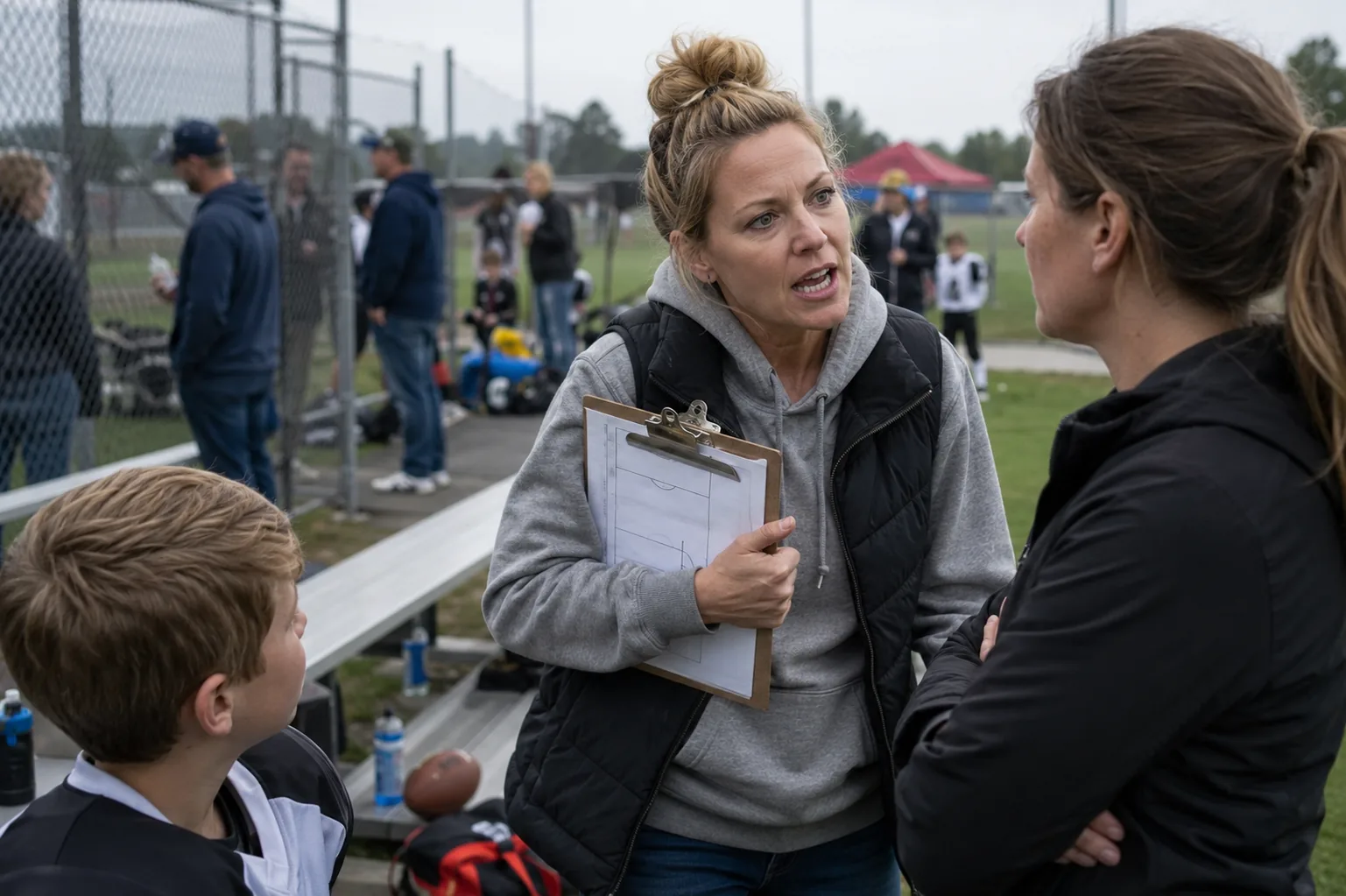
Dana Holloway stopped me at the practice field bench with the lineup clipboard tucked against her chest and said, loud enough for the other parents filling water bottles to hear, “After everything I’ve given up for your family and this team, I need you to start being a little more cooperative.” My son was ten feet away tying his cleats on the foldout bench, Coach Raul Bennett was calling out warm-up groups by the cones, and somehow Dana had turned a youth practice into a debt collection. The part that made my stomach go tight was that she said it like there was a bill everyone else already knew I hadn’t paid. I had been dealing with Dana’s comments for weeks by then, always in that same half-public space where people were close enough to hear the shape of a conversation without hearing every word. She never came at me directly in private. She preferred the bench, the shuffle of equipment bags, the kids jogging past, the moments when other adults were close enough to catch one line and build the rest in their heads. That day she had the clipboard in one hand and a pen in the other, tapping it against the page like punctuation. I said, “Cooperative about what, exactly?” She gave me a look over the top edge of the clipboard. “Megan, come on. I’ve covered so much. I stayed late after practice to sort rotations. I drove extra gear back when people forgot things. I gave up whole evenings so boys like Eli could have stability.” She tilted the board a little toward the field. “The least I should get is parents who don’t make this harder.” That was how she always did it. She listed tasks anybody could have declined or shared, then slid from that list into the suggestion that she now had some claim over our reactions, our schedule, even our tone. I kept my voice even because Eli was close enough to look over if I sharpened it. “If you need help with team stuff, just ask for help. Don’t put my son into that sentence like we owe you personally.” She smiled, but it was the tight kind that doesn’t reach anywhere else. “There you go again. Every time someone sacrifices for this team, you make it sound transactional.” I almost laughed at that, not because it was funny, but because she had just said I owed her and then accused me of making it transactional. Behind her, Coach Raul blew his whistle and called, “Midfield group, blue cones.” Eli stood up with his water bottle and looked at me for a beat. I nodded toward the field, and he ran over. I waited until he was moving before I said, “You literally just told me to be more cooperative after everything you’ve supposedly done for us. What is that if not transactional?” Dana shifted the clipboard to her other arm. “Supposedly? That’s interesting. I guess the rides I rearranged and the time I spent on lineups don’t count when it’s your kid benefitting.” There it was. The line she liked to circle back to: lineups. Never a direct threat. Never anything I could point to and say, See? She said she’d bench him. Just that word, dropped into the air like a reminder that she was close to where playing time got organized. I looked at the board because she wanted me to. Names, positions, columns in black marker. Nothing secret. Nothing dramatic. But she held it like it was proof of rank. I said, “Coach Bennett handles lineups.” “And who do you think keeps this mess straight so he can coach?” she shot back, tapping the clipboard again. “Who do you think stays after to make sure kids who show commitment aren’t overlooked?” One of the assistant volunteers came over to grab pinnies from the bench, and Dana lowered her voice just enough to make me step closer if I wanted every word. “I’m tired of acting like I haven’t bent over backward,” she said. “Some parents know how to appreciate that. Some parents keep pushing.” I knew exactly what she wanted me to do then. Thank her. Smooth it over. Accept the frame where she was the exhausted savior and I was the difficult parent whose child still depended on her goodwill. Instead I said, “If this is too much, stop doing extra for us. I mean that. We didn’t ask you to give up evenings for our family. Please stop carrying anything you resent.” Her hand stopped tapping the board. That was the first clean thing I’d said to her in weeks, and for a second I thought she’d take it. If all she wanted was relief, I had just offered it in plain English. No fight. No audience. No humiliation. She didn’t answer right away. She stared at me, then glanced toward the field where Eli had joined the drill line. After that she tucked the clipboard tighter against her side like I had tried to take it from her. “That’s not how this works,” she said. I felt my whole body go still. Because if the sacrifice was real, releasing her from it should have solved the problem. Instead, she looked offended that I had tried. Then she leaned in and said, very carefully, “You should think about how much flexibility people have when they’re deciding who they can count on.” Coach Raul called for a water break, kids started jogging back toward the bench, and Dana stepped away before I could answer, already smiling at another parent like nothing had happened. She had just told me to let her stop if she was burdened, and she rejected it like I’d broken some rule I wasn’t supposed to see. I watched her keep one hand on that clipboard while the boys came in, and all I could think was: if this was really sacrifice, why was she so determined not to be released from.
Dana Holloway stopped me at the practice field bench with the lineup clipboard tucked against her chest and said, loud enough for the other parents filling water bottles to hear, “After everything I’ve given up for your family and this team, I need you to start being a little more cooperative.” My son was ten feet away tying his cleats on the foldout bench, Coach Raul Bennett was calling out warm-up groups by the cones, and somehow Dana had turned a youth practice into a debt collection. The part that made my stomach go tight was that she said it like there was a bill everyone else already knew I hadn’t paid. I had been dealing with Dana’s comments for weeks by then, always in that same half-public space where people were close enough to hear the shape of a conversation without hearing every word. She never came at me directly in private. She preferred the bench, the shuffle of equipment bags, the kids jogging past, the moments when other adults were close enough to catch one line and build the rest in their heads. That day she had the clipboard in one hand and a pen in the other, tapping it against the page like punctuation. I said, “Cooperative about what, exactly?” She gave me a look over the top edge of the clipboard. “Megan, come on. I’ve covered so much. I stayed late after practice to sort rotations. I drove extra gear back when people forgot things. I gave up whole evenings so boys like Eli could have stability.” She tilted the board a little toward the field. “The least I should get is parents who don’t make this harder.” That was how she always did it. She listed tasks anybody could have declined or shared, then slid from that list into the suggestion that she now had some claim over our reactions, our schedule, even our tone. I kept my voice even because Eli was close enough to look over if I sharpened it. “If you need help with team stuff, just ask for help. Don’t put my son into that sentence like we owe you personally.” She smiled, but it was the tight kind that doesn’t reach anywhere else. “There you go again. Every time someone sacrifices for this team, you make it sound transactional.” I almost laughed at that, not because it was funny, but because she had just said I owed her and then accused me of making it transactional. Behind her, Coach Raul blew his whistle and called, “Midfield group, blue cones.” Eli stood up with his water bottle and looked at me for a beat. I nodded toward the field, and he ran over. I waited until he was moving before I said, “You literally just told me to be more cooperative after everything you’ve supposedly done for us. What is that if not transactional?” Dana shifted the clipboard to her other arm. “Supposedly? That’s interesting. I guess the rides I rearranged and the time I spent on lineups don’t count when it’s your kid benefitting.” There it was. The line she liked to circle back to: lineups. Never a direct threat. Never anything I could point to and say, See? She said she’d bench him. Just that word, dropped into the air like a reminder that she was close to where playing time got organized. I looked at the board because she wanted me to. Names, positions, columns in black marker. Nothing secret. Nothing dramatic. But she held it like it was proof of rank. I said, “Coach Bennett handles lineups.” “And who do you think keeps this mess straight so he can coach?” she shot back, tapping the clipboard again. “Who do you think stays after to make sure kids who show commitment aren’t overlooked?” One of the assistant volunteers came over to grab pinnies from the bench, and Dana lowered her voice just enough to make me step closer if I wanted every word. “I’m tired of acting like I haven’t bent over backward,” she said. “Some parents know how to appreciate that. Some parents keep pushing.” I knew exactly what she wanted me to do then. Thank her. Smooth it over. Accept the frame where she was the exhausted savior and I was the difficult parent whose child still depended on her goodwill. Instead I said, “If this is too much, stop doing extra for us. I mean that. We didn’t ask you to give up evenings for our family. Please stop carrying anything you resent.” Her hand stopped tapping the board. That was the first clean thing I’d said to her in weeks, and for a second I thought she’d take it. If all she wanted was relief, I had just offered it in plain English. No fight. No audience. No humiliation. She didn’t answer right away. She stared at me, then glanced toward the field where Eli had joined the drill line. After that she tucked the clipboard tighter against her side like I had tried to take it from her. “That’s not how this works,” she said. I felt my whole body go still. Because if the sacrifice was real, releasing her from it should have solved the problem. Instead, she looked offended that I had tried. Then she leaned in and said, very carefully, “You should think about how much flexibility people have when they’re deciding who they can count on.” Coach Raul called for a water break, kids started jogging back toward the bench, and Dana stepped away before I could answer, already smiling at another parent like nothing had happened. She had just told me to let her stop if she was burdened, and she rejected it like I’d broken some rule I wasn’t supposed to see. I watched her keep one hand on that clipboard while the boys came in, and all I could think was: if this was really sacrifice, why was she so determined not to be released from.