Story code: ST-001289
Part 1: The Boundary Line
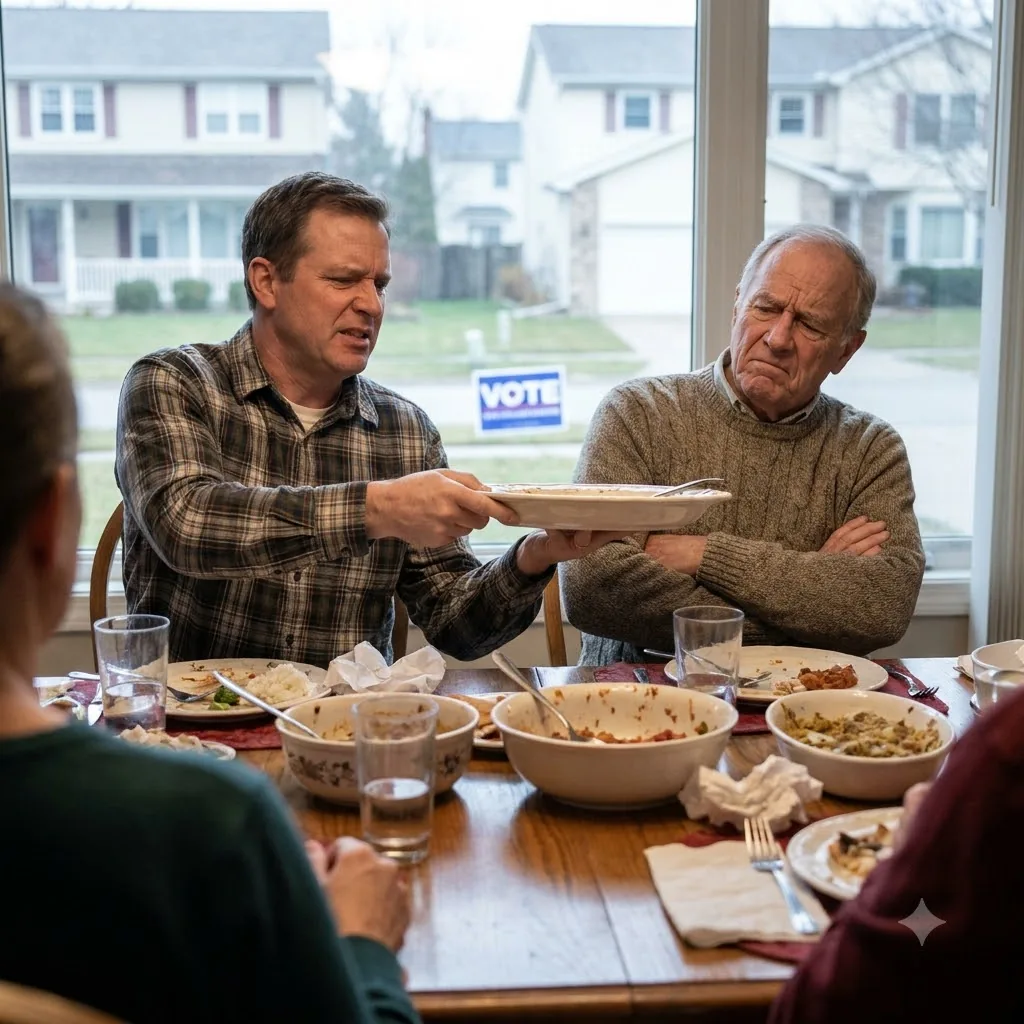
According to the audio recording recovered from Julian’s mobile device, the confrontation began during the passing of the holiday platters in the dining room. Richard, sitting at the head of the table, gestured toward the front lawn where a wire-mounted political yard sign had been freshly hammered into the turf. The sign, bearing bold lettering that aligned with Richard’s ideological faction, served as a clear marker of who was welcome. “If you don’t support what this family stands for, you don’t belong on this property,” Richard said, his voice rising above the clink of silverware. The statement publicly stripped Julian of his family identity in front of eight gathered relatives. Witness statements from Julian’s cousins confirm that no one spoke; eyes remained fixed on plates as the ambient sounds of dinner subsided into a tense silence.
My reconstruction of the scene, based on the sheriff’s log and subsequent deposition transcripts, shows that Julian did not leave the table. Instead, he sat upright, his hands flat against the mahogany surface. Richard’s face was flushed, his fingers drumming against his water glass. Richard reiterated that the house was his, that the family legacy belonged to those who fell in line, and that Julian was nothing more than an uninvited guest. Julian’s response, captured clearly on the recording, was a quiet request for Richard to clarify whether he was formally demanding Julian leave. Richard replied, “I’m telling you that you don’t count here anymore. The sign on the lawn says it all. You’re an outsider.”
The physical environment of the dining room was characterized by traditional holiday decorations, which contrasted sharply with the sudden hostility. Family members reported that Richard’s wife quietly stood up to close the drapes, obscuring the yard sign from view, but Richard ordered her to leave them open. He wanted the sign visible. He wanted the statement to remain public. Julian did not flinch or offer a verbal defense of his political beliefs. Instead, he maintained a steady, level gaze, refusing to engage in the ideological debate his uncle was attempting to provoke.
The yard sign itself, which I later photographed as part of the evidence file, was constructed of cheap corrugated plastic, yet its placement at the very entrance of the driveway was intentional. It was positioned so that Julian had to drive past it to park. Richard had spent the morning securing it with metal stakes. During the meal, Richard made sure every guest knew the sign was a test of loyalty.
It was at this point that the trajectory of the holiday reunion shifted. According to the deposition of Julian’s aunt, Julian did not raise his voice or gather his coat. Instead, he reached into his leather portfolio, which he had placed beside his chair, and withdrew a laminated, multi-page document. He slid it across the table, past the gravy boat, until it rested directly in front of Richard. The document was a grandfathered land deed from 1984, bearing the original signature of their late grandfather and the official seal of the county registrar. Julian looked at his uncle and said, “Read paragraph four.”
According to the audio recording recovered from Julian’s mobile device, the confrontation began during the passing of the holiday platters in the dining room. Richard, sitting at the head of the table, gestured toward the front lawn where a wire-mounted political yard sign had been freshly hammered into the turf. The sign, bearing bold lettering that aligned with Richard’s ideological faction, served as a clear marker of who was welcome. “If you don’t support what this family stands for, you don’t belong on this property,” Richard said, his voice rising above the clink of silverware. The statement publicly stripped Julian of his family identity in front of eight gathered relatives. Witness statements from Julian’s cousins confirm that no one spoke; eyes remained fixed on plates as the ambient sounds of dinner subsided into a tense silence.
My reconstruction of the scene, based on the sheriff’s log and subsequent deposition transcripts, shows that Julian did not leave the table. Instead, he sat upright, his hands flat against the mahogany surface. Richard’s face was flushed, his fingers drumming against his water glass. Richard reiterated that the house was his, that the family legacy belonged to those who fell in line, and that Julian was nothing more than an uninvited guest. Julian’s response, captured clearly on the recording, was a quiet request for Richard to clarify whether he was formally demanding Julian leave. Richard replied, “I’m telling you that you don’t count here anymore. The sign on the lawn says it all. You’re an outsider.”
The physical environment of the dining room was characterized by traditional holiday decorations, which contrasted sharply with the sudden hostility. Family members reported that Richard’s wife quietly stood up to close the drapes, obscuring the yard sign from view, but Richard ordered her to leave them open. He wanted the sign visible. He wanted the statement to remain public. Julian did not flinch or offer a verbal defense of his political beliefs. Instead, he maintained a steady, level gaze, refusing to engage in the ideological debate his uncle was attempting to provoke.
The yard sign itself, which I later photographed as part of the evidence file, was constructed of cheap corrugated plastic, yet its placement at the very entrance of the driveway was intentional. It was positioned so that Julian had to drive past it to park. Richard had spent the morning securing it with metal stakes. During the meal, Richard made sure every guest knew the sign was a test of loyalty.
It was at this point that the trajectory of the holiday reunion shifted. According to the deposition of Julian’s aunt, Julian did not raise his voice or gather his coat. Instead, he reached into his leather portfolio, which he had placed beside his chair, and withdrew a laminated, multi-page document. He slid it across the table, past the gravy boat, until it rested directly in front of Richard. The document was a grandfathered land deed from 1984, bearing the original signature of their late grandfather and the official seal of the county registrar. Julian looked at his uncle and said, “Read paragraph four.”